Author

admin

Browsing

Statistics Canada released its August job numbers on Friday (September 5). The report indicated a loss of 66,000 jobs in the Canadian economy and an increase in the unemployment rate to 7.1 percent from the 6.9 percent recorded in July.

The losses were primarily felt in the professional, scientific and technical services sector with a decrease of 26,000 jobs, followed by losses of 23,000 jobs in the transportation and warehousing sector and 19,000 jobs in manufacturing.

One small caveat: of the 66,000 jobs lost, 60,000 were part-time workers, while full-time employment saw little change after shedding 51,000 positions the previous month.

South of the border, the US Bureau of Labor Statistics (BLS) also released its August jobs report on Friday. The report is the first jobs report since Donald Trump fired the head of the BLS after the release of July’s labor report showed weakness trickling into the economy.

The economy added an estimated 22,000 jobs during August, well below analysts’ expectations of 75,000 new jobs. The unemployment rate also ticked up to 4.3 percent from 4.2 percent in July.

The federal workforce saw the largest job decline, losing 15,000 jobs. The mining, quarrying and oil and gas extraction sector also saw its most significant change over the last 12 months, shedding 6,000 workers.

Additionally, the BLS revised June and July’s figures. While July’s numbers rose to 79,000 added jobs from the 73,000 first reported, the agency made a significant downward revision to June’s numbers, indicating the economy lost 13,000 jobs for the month instead of gaining 14,000.

Jobs data from the last few months will play an important role when the Federal Reserve next meets on September 16 and 17 to discuss changes to the Federal Funds Rate, which is currently set in the 4.25 to 4.5 percent range. Most analysts are predicting the Fed to make a 25 point cut to the benchmark rate, with some now eyeing a larger 50 point cut.

Markets and commodities react

Canadian equity markets were mostly positive during the shortened trading week. The S&P/TSX Composite Index (INDEXTSI:OSPTX) set another new record high on Friday, closing the week up 1.7 percent to 29,050.63. The S&P/TSX Venture Composite Index (INDEXTSI:JX) did even better, climbing 3.34 percent to finish Friday at 857.25. However, the CSE Composite Index (CSE:CSECOMP) went the opposite direction, falling 5.16 percent to end the week at 158.32.

US equity markets were volatile this week, falling sharply at the open of the trading week Tuesday (September 2) before moving back into positive territory. Although the S&P 500 (INDEXSP:INX) pulled back slightly on Friday’s weak jobs data, it ultimately ended the week up 0.33 percent at 6,481.51. The Dow Jones Industrial Average (INDEXDJX:.DJI) took a larger hit Friday, and closed down 0.32 percent on the week at 45,400.87. Of the three, the Nasdaq 100 (INDEXNASDAQ:NDX) was the week’s biggest winner, rising 1.01 percent to 23,652.44.

The gold price was in focus this week as it climbed to a new record high Wednesday (September 3) on expectations of a September rate cut by the Federal Reserve and news on August 29 that a Federal Appellate court had struck down the majority of Donald Trump’s reciprocal tariffs. Gold ended the week up 4.03 percent at US$3,586.27 per ounce after the lackluster jobs report pushed gold above Wednesday’s highs.

Silver had a similarly explosive week, climbing past US$40 for the first time since 2011 and moving as high as US$41.38 on Wednesday. The precious metal finished Friday with a 3.32 percent weekly gain at US$41.07 per ounce.

On the other hand, copper was off this week, shedding 0.87 percent to US$4.54 per pound. The S&P Goldman Sachs Commodities Index (INDEXSP:SPGSCI) posted a decrease of 1.17 percent by close on Friday, finishing at 543.28.

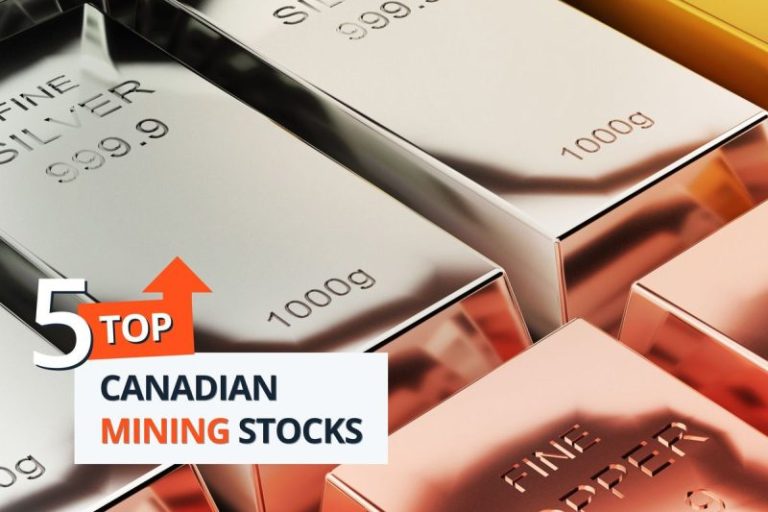
Top Canadian mining stocks this week

How did mining stocks perform against this backdrop?

Take a look at this week’s five best-performing Canadian mining stocks below.

Stocks data for this article was retrieved at 4:00 p.m. EDT on Friday using TradingView’s stock screener. Only companies trading on the TSX, TSXV and CSE with market caps greater than C$10 million are included. Mineral companies within the non-energy minerals, energy minerals, process industry and producer manufacturing sectors were considered.

1. Carlton Precious (TSXV:CPI)

Weekly gain: 77.78 percent
Market cap: C$17.74 million
Share price: C$0.24

Carlton Precious is a mineral exploration company focused on a portfolio of precious metals projects in the Americas and Australia.

Its flagship Esquilache silver project, located in Peru, consists of two mining concessions covering an area of 1,600 hectares. Unsubstantiated records from the property indicate historic mining produced 10 million ounces of silver between 1950 and 1962. Exposed structures on the property show mineralization of silver, lead, zinc, copper and gold.

On March 19, Carlton reported assay results from a 2024 surface channel sampling program, with grades peaking at 13.45 grams per metric ton (g/t) gold and 1,018 g/t silver.

The company’s most recent announcement came on July 14, when Carlton signed an agreement with the community of San Antonio de Esquilache for the project allowing for further exploration at the property. Carlton added that its staff has designed a program of up to 40 drill holes that it expects to commence in fall 2025.

In its September 2025 investor presentation, the company stated it is submitting its drill permit applications.

2. Quantum Critical Metals (TSXV:LEAP)

Weekly gain: 73.68 percent
Market cap: C$17.31 million
Share price: C$0.165

Formerly Durango Resources, Quantum Critical Metals is a polymetallic exploration company developing a portfolio of projects in Québec and British Columbia, Canada.

Its flagship NMX East critical metals project is in the Eeyou Istchee James Bay region of Québec and lies adjacent to Nemaska Lithium’s Whabouchi mine. According to the project page, the company has drilled four holes at the property, producing a highlighted assay of 107.68 meters from surface containing average grades of 38.85 g/t gallium, 701.03 g/t rubidium, 24.98 g/t cesium and 3.61 g/t thallium.

Quantum Critical Metals has also been working to advance its Victory antimony project in Haida Gwaii, British Columbia. The site was initially discovered in the 1980s and hosts mineralization of arsenic, antimony and mercury. On August 25, the company announced it submitted an application to expand the property to 1,444 hectares.

The company’s most recent news came on Thursday (September 4), when it identified mica as a key carrier of critical minerals at its NMX project. Quantum selected samples from the 107 meter interval mentioned above, and the samples with the highest mica content returning significantly higher grades of critical metals, including gallium, rubidium, lithium and niobium.

Quantum has now sent the samples for further testing. If the testing confirms the results, stated the discovery will allow for easier removal of these elements from the rock, as the company can first isolate the mica.

3. Electric Metals (TSXV:EML)

Weekly gain: 66.67 percent
Market cap: C$79.98 million
Share price: C$0.45

Electric Metals is a mineral development company focused on advancing its flagship North Star manganese project in Minnesota, US. According to the company, the asset is North America’s highest-grade manganese resource. It plans to produce high-purity manganese sulphate monohydrate for lithium-ion batteries.

On August 26, Electric Metals released its preliminary economic assessment (PEA) for North Star. The assessment demonstrated a base-case after-tax net present value of US$1.39 billion, with an internal rate of return of 43.5 percent and a payback period of 23 months.

The report also included an updated mineral resource estimate with an indicated resource of 7.6 million metric tons of ore grading 19.07 percent manganese, 22.33 percent iron and 30.94 percent silicon, and an inferred resource of 3.73 million metric tons of ore grading 17.04 percent manganese, 19.04 percent iron and 30.03 percent silicon.

Momentum from the PEA release landed Electric Metals on this list of top performers last week, and its shares climbed even higher this week after the company announced the results of its annual and special shareholder meeting.

Shareholders approved all resolutions, including two related to Electric Metals’ plan to redomicile its business in Delaware, US. The first is continuance from the Canada Business Corporations Act to the Business Corporations Act of British Columbia. Shareholders also voted to authorize a continuance of the company to the Delaware General Corporation Law, with the condition of a successful corporate move to BC.

Electric Metals CEO Brian Savage said the change is intended to align its corporate home with the company’s mission to build a fully domestic US supply of manganese.

4. Valhalla Metals (TSXV:VMXX)

Weekly gain: 66.67 percent
Market cap: C$11.53 million
Share price: C$0.15

Valhalla Metals is a polymetallic exploration company working to advance a pair of projects in Alaska’s Ambler Mining District. Its Sun project consists of 392 claims that cover an area of 25,382 hectares.

A May 2022 technical report states that the indicated mineral resource for the project is 1.71 million metric tons of ore containing 162.96 million pounds of zinc, 55.85 million pounds of copper, 42.04 million pounds of lead, 3.3 million ounces of silver and 12,000 ounces of gold.

It also reported an inferred resource of 9.02 million metric tons containing 831.33 million pounds of zinc, 239.64 million pounds of copper, 290.26 million pounds of lead, 23.68 million ounces of silver and 73,000 ounces of gold.

The project is largely dependent on the construction of the 211 mile Ambler Access Road, which Donald Trump approved in his first term as president. Joe Biden rescinded the federal permit in 2024 due to environmental concerns.

Shares in Valhalla gained momentum this week after Congress voted 215 to 210 on Wednesday to move ahead with the project. It’s expected that the Senate will follow suit when it votes on the resolution in the next few weeks.

5. Orosur Mining (TSXV:OMI)

Weekly gain: 65.31 percent
Market cap: C$108.97 million
Share price: C$0.405

Orosur Mining is an exploration company focused on the development of early to advanced-stage assets in South America.

Exploration has revealed multiple gold deposits at its flagship Anzá gold project in Colombia, which is located 50 kilometers west of Medellin and sits along Colombia’s primary gold belt.

Orosur acquired the project, previously a 49/51 joint venture between Newmont and Agnico Eagle, in November 2024.

Since that time, the company has been working to explore the property and has made several announcements regarding its exploration efforts. The most recent came on August 26, when it reported highlights from infill drilling being carried out at the property, including one hole with 6.13 g/t gold over 71.85 meters from near surface at the Pepas gold prospect.

Orosur also owns several early-stage projects, the El Pantano gold-silver project in Argentina, the Lithium West project in Nigeria and the Ariquemes project in Brazil, which is prospective for tin, niobium and rare earths.

On Monday (September 1), Orosur reported that in August, it had issued 3.28 million new common shares for a total consideration of US$174,711.67 following its exercise of the same number of warrants. It also stated that 31.51 million warrants remained outstanding.

FAQs for Canadian mining stocks

What is the difference between the TSX and TSXV?

The TSX, or Toronto Stock Exchange, is used by senior companies with larger market caps, and the TSXV, or TSX Venture Exchange, is used by smaller-cap companies. Companies listed on the TSXV can graduate to the senior exchange.

How many mining companies are listed on the TSX and TSXV?

As of May 2025, there were 1,565 companies listed on the TSXV, 910 of which were mining companies. Comparatively, the TSX was home to 1,899 companies, with 181 of those being mining companies.

Together, the TSX and TSXV host around 40 percent of the world’s public mining companies.

How much does it cost to list on the TSXV?

There are a variety of different fees that companies must pay to list on the TSXV, and according to the exchange, they can vary based on the transaction’s nature and complexity. The listing fee alone will most likely cost between C$10,000 to C$70,000. Accounting and auditing fees could rack up between C$25,000 and C$100,000, while legal fees are expected to be over C$75,000 and an underwriters’ commission may hit up to 12 percent.

The exchange lists a handful of other fees and expenses companies can expect, including but not limited to security commission and transfer agency fees, investor relations costs and director and officer liability insurance.

These are all just for the initial listing, of course. There are ongoing expenses once companies are trading, such as sustaining fees and additional listing fees, plus the costs associated with filing regular reports.

How do you trade on the TSXV?

Investors can trade on the TSXV the way they would trade stocks on any exchange. This means they can use a stock broker or an individual investment account to buy and sell shares of TSXV-listed companies during the exchange’s trading hours.

Article by Dean Belder; FAQs by Lauren Kelly.

Securities Disclosure: I, Dean Belder, hold no direct investment interest in any company mentioned in this article.

Securities Disclosure: I, Lauren Kelly, hold no direct investment interest in any company mentioned in this article.


This post appeared first on investingnews.com

Lode Gold Resources Inc. (TSXV: LOD,OTC:LODFF) (OTCQB: LODFF) (‘Lode Gold’ or the ‘Company’) is pleased to announce that it has now closed its previously announced non-brokered private placement offering for $1.0 million (the ‘Offering’). In three tranches, the Company raised total gross proceeds of $1,513,768 through the issuance of 8,409,825 units of the Company (‘Unit’) at a price of $0.18 per Unit, (see related Company news first tranche, second tranche, and final tranche).

Each Unit consists of one common share of the Company (‘Common Share’) and one common share purchase warrant (‘Warrant’). Each Warrant shall entitle the holder to purchase one Common Share at an exercise price of $0.35 per share for a period of 36 months following the date of closing. The Company may accelerate the Warrant expiry date if the Company’s shares trade at $0.65 or more for a period of 10 days, including days where no trading occurs.

In conjunction with the private placement finder’s fees of $16,039 will be paid in cash and 89,100 Finders’ Warrants will be issued. Each Finders’ Warrant shall entitle the holder to purchase one Common Share of the Company at an exercise price of $0.35 per share for a period of 36 months following the date of closing.

Insiders of the Company subscribed to 1,022,111 Units of the private placement.

All securities issued pursuant to this private placement, including common shares underlying the Warrants, are subject to a statutory hold period which expires 4 months from the date of closing.

The completion of the private placement remains subject to the final acceptance of the TSX Venture Exchange.

The proceeds raised from the Offering will go toward execution of the business plans for Lode Gold and its subsidiary, Gold Orogen (1475039 B.C. Ltd.).

Management Changes
Winfield Ding has resigned as the CFO with immediate effect. The Company has initiated a search for a new CFO and has identified several potential candidates for the position. Wayne Moorhouse has agreed to act as the Company’s Acting CFO. Wayne has a wealth of senior company management experience including holding the position of CFO for Roxgold Inc. (TSXV), Midnight Sun Mining Corp. (TSXV), Genco Resources Inc. (TMX), Bluestar Gold (TSXV), and other private and public companies.

Construction Loan Extension
The Company has entered into an amending agreement with Romspen Investment Corporation (the ‘Lender’) to extend the maturity date of a construction loan agreement. The new maturity date of the loan is October 31, 2025. In consideration for extending the maturity date of the loan, the Company will pay the Lender $200,000 of interest owing consisting of $100,000 to be paid in cash and $100,000 to be paid in shares subject to final approval of the TSX Venture Exchange.

Legal Update
As part of the 2024 Restructuring and Growth Plans, a senior secured debt holder, aligned with the Company’s new strategic direction, converted to become one of the largest shareholders, exceeding 19.9%. The former CEO resigned, citing change of control as the reason and proceeded to make a severance compensation claim. The Company disagreed that compensation is due as this debt holder is an existing key shareholder and a Director of the Board. A claim was filed and the court ruled in favor of the claimant for a payment of $222,469. The outcome will have no material impact on the Company’s 2025 financial results as this amount had been accrued in the Company’s accounting records in a prior period.

About Lode Gold

Lode Gold (TSXV: LOD,OTC:LODFF) is an exploration and development company with projects in highly prospective and safe mining jurisdictions in Canada and the United States.

In Canada Lode Gold holds assets in the Yukon and New Brunswick. Lode Gold’s Yukon assets are located on the southern portion of the prolific Tombstone Belt and cover approximately 99.5 km2 across a 27 km strike. Over 4,500 m have been drilled on the Yukon assets with confirmed gold endowment and economic drill intercepts over 50 m. There are four reduced-intrusive targets (RIRGS), in addition to sedimentary-hosted orogenic exploration gold.

In New Brunswick, Lode Gold, through its subsidiary 1475039 B.C. Ltd., has created one of the largest land packages in the province with its Acadian Gold Joint Venture, consisting of an area that spans 445 km2 with a 44 km strike. It has confirmed gold endowment with mineralized rhyolites.

In the United States, the Company is focused on its advanced exploration and development asset, the Fremont Mine in Mariposa, California. It has a recent 2025 NI 43-101 report and compliant MRE that can be accessed here https://lode-gold.com/project/freemont-gold-usa/

Fremont was previously mined until gold mining prohibition in WWII, when its mining license was suspended. Only 8% of the resource identified in the 2025 MRE has been extracted. This asset has exploration upside and is open at depth (three step-out holes at 1,300 m hit structure and were mineralized) and on strike. This is a brownfield project with over 43,000 m drilled, 23 km of underground workings and 14 adits. The project has excellent infrastructure with close access to electricity, water, state highways, railhead and port.

The Company recently completed an internal scoping study evaluating the potential to resume operations at Fremont based on 100% underground mining. Previously, in March 2023, the Company completed a Preliminary Economic Assessment (‘PEA’) in accordance with NI 43-101 which evaluated a mix of open pit and underground mining. The PEA and other technical reports prepared on the Company’s properties are available on the Company’s profile on SEDAR+ (www.sedarplus.ca) and the Company’s website (www.lode-gold.com)

ON BEHALF OF THE COMPANY
Wendy T. Chan
CEO & Director

Information Contact:

Wendy T. Chan
CEO
info@lode-gold.com
+1-(604)-977-GOLD (4653)

Kevin Shum
Investor Relations
kevin@lode-gold.com
+1 (604) -977-GOLD (4653)

Cautionary Statement Regarding Forward-Looking Information

Neither the TSX Venture Exchange nor its Regulation Services Provider (as that term is defined in the policies of the TSX Venture Exchange) accepts responsibility for the adequacy or accuracy of this release.

This news release includes ‘forward-looking statements’ and ‘forward-looking information’ within the meaning of Canadian securities legislation. All statements included in this news release, other than statements of historical fact, are forward-looking statements including, without limitation, statements with respect to the use of proceeds, advancement and completion of resource calculation, feasibility studies, and exploration plans and targets. Forward-looking statements include predictions, projections and forecasts and are often, but not always, identified by the use of words such as ‘anticipate’, ‘believe’, ‘plan’, ‘estimate’, ‘expect’, ‘potential’, ‘target’, ‘budget’ and ‘intend’ and statements that an event or result ‘may’, ‘will’, ‘should’, ‘could’ or ‘might’ occur or be achieved and other similar expressions and includes the negatives thereof.

Forward-looking statements are based on a number of assumptions and estimates that, while considered reasonable by management based on the business and markets in which the Company operates, are inherently subject to significant operational, economic, and competitive uncertainties, risks and contingencies. These include assumptions regarding, among other things: the status of community relations and the security situation on site; general business and economic conditions; the availability of additional exploration and mineral project financing; the supply and demand for, inventories of, and the level and volatility of the prices of metals; relationships with strategic partners; the timing and receipt of governmental permits and approvals; the timing and receipt of community and landowner approvals; changes in regulations; political factors; the accuracy of the Company’s interpretation of drill results; the geology, grade and continuity of the Company’s mineral deposits; the availability of equipment, skilled labour and services needed for the exploration and development of mineral properties; currency fluctuations; and impact of the COVID-19 pandemic.

There can be no assurance that forward-looking statements will prove to be accurate and actual results, and future events could differ materially from those anticipated in such statements. Important factors that could cause actual results to differ materially from the Company’s expectations include a deterioration of security on site or actions by the local community that inhibits access and/or the ability to productively work on site, actual exploration results, interpretation of metallurgical characteristics of the mineralization, changes in project parameters as plans continue to be refined, future metal prices, availability of capital and financing on acceptable terms, general economic, market or business conditions, uninsured risks, regulatory changes, delays or inability to receive required approvals, unknown impact related to potential business disruptions stemming from the COVID-19 outbreak, or another infectious illness, and other exploration or other risks detailed herein and from time to time in the filings made by the Company with securities regulators, including those described under the heading ‘Risks and Uncertainties’ in the Company’s most recently filed MD&A. The Company does not undertake to update or revise any forward-looking statements, except in accordance with applicable law.

To view the source version of this press release, please visit https://www.newsfilecorp.com/release/265413

News Provided by Newsfile via QuoteMedia

This post appeared first on investingnews.com

Gold has long been considered a store of wealth, and the price of gold often makes its biggest gains during turbulent times as investors look for cover in this safe-haven asset.

The 21st century has so far been heavily marked by episodes of economic and sociopolitical upheaval. Uncertainty has pushed the precious metal to record highs as market participants seek its perceived security.

And each time the gold price rises, there are calls for even higher record-breaking levels.

Gold market gurus from Lynette Zang to Chris Blasi to Jordan Roy-Byrne have shared eye-popping predictions on the gold price that would intrigue any investor — gold bug or not.

Some have posited that the gold price may rise as high as US$4,000 or US$5,000 per ounce, and there are those who believe that US$10,000 gold or even US$40,000 gold could become a reality.

These impressive price predictions have investors wondering, what is gold’s all-time high (ATH)?

In the past year, gold has reached a new all-time high dozens of times. Find out what has driven it to these levels, plus how the gold price has moved historically and what has driven its performance in recent years.

In this article

    How is gold traded?

    Before discovering what the highest gold price ever was, it’s worth looking at how the precious metal is traded. Knowing the mechanics behind gold’s historical moves can help illuminate why and how its price changes.

    Gold bullion is traded in dollars and cents per ounce, with activity taking place worldwide at all hours, resulting in a live price for the metal. Investors trade gold in major commodities markets such as New York, London, Tokyo and Hong Kong. London is seen as the center of physical precious metals trading, including for silver. The COMEX division of the New York Mercantile Exchange is home to most paper trading.

    There are many popular ways to invest in gold. The first is through purchasing gold bullion products such as bullion bars, bullion coins and rounds. Physical gold is sold on the spot market, meaning that buyers pay a specific price per ounce for the metal and then have it delivered. In some parts of the world, such as India, buying gold in the form of jewelry is the largest and most traditional route to investing in gold.

    Another path to gold investment is paper trading, which is done through the gold futures market. Participants enter into gold futures contracts for the delivery of gold in the future at an agreed-upon price.

    In such contracts, two positions can be taken: a long position under which delivery of the metal is accepted or a short position to provide delivery of the metal. Paper trading as a means to invest in gold can provide investors with the flexibility to liquidate assets that aren’t available to those who possess physical gold bullion.

    One significant long-term advantage of trading in the paper market is that investors can benefit from gold’s safe-haven status without needing to store it. Furthermore, gold futures trading can offer more financial leverage in that it requires less capital than trading in the physical market.

    Interestingly, investors can also purchase physical gold via the futures market, but the process is complicated and lengthy and comes with a large investment and additional costs.

    Aside from those options, market participants can invest in gold through exchange-traded funds (ETFs). Investing in a gold ETF is similar to trading a gold stock on an exchange, and there are numerous gold ETF options to choose from. For instance, some ETFs focus solely on physical gold bullion, while others focus on gold futures contracts. Other gold ETFs center on gold-mining stocks or follow the gold spot price.

    It is important to understand that you will not own any physical gold when investing in an ETF — in general, even a gold ETF that tracks physical gold cannot be redeemed for tangible metal.

    With regards to the performance of gold versus trading stocks, gold has an interesting relationship with the stock market. The two often move in sync during “risk-on periods” when investors are bullish. On the flip side, they tend to become inversely correlated in times of volatility. There are a variety of options for investing in stocks, including gold mining stocks on the TSX and ASX, gold juniors, precious metals royalty companies and gold stocks that pay dividends.

    According to the World Gold Council, gold’s ability to decouple from the stock market during periods of stress makes it “unique amongst most hedges in the marketplace.” It is often during these times that gold outperforms the stock market. For that reason, it is often used as a portfolio diversifier to hedge against uncertainty.

    What was the highest gold price ever?

    The gold price peaked at US$3,599.61, its all-time high, during trading on September 5, 2025.

    What drove it to set this new ATH? Gold reached its new highest price following the release of unexpectedly weak US job data. Following the release, FedWatch’s odds for a 25 basis point rate cut at the upcoming US Federal Reserve meeting dropped from 99 to 90.2 percent, while odds of a 50 point drop jumped to 9.8 percent. The meeting will take place from September 16 to 17.

    Gold set new highs several times in the preceding week amid significant uncertainty in the US and global economies and surging gold ETF purchases.

    One significant driver came on August 29, when a US federal appeals court ruled that US President Donald Trump’s ‘liberation day’ tariffs, announced in April, are illegal, stating that only Congress has the power to enact widespread tariffs. The Trump administration is expected to appeal the ruling, which will go into effect on October 14.

    Stock markets fell during trading September 2, while treasury yields in the US and abroad rose significantly, providing tailwinds to the gold price. Gold was also boosted by the expectation of interest rate cuts by the US Federal Reserve at the September meeting.

    News surrounding the tariffs had previously led gold to reach multiple new highs back in April, as we dive into below.

    Gold price chart, December 31, 2024, to September 5, 2025.

    Why is the gold price setting new highs in 2025?

    This string of record-breaking highs this year are caused by several factors.

    Increased economic and geopolitical turmoil caused by the new Trump administration has been a tailwind for gold this year, as well as a weakening US dollar, sticky inflation in the country and increased safe haven gold demand.

    Since coming into office in late January, Trump has threatened or enacted tariffs on many countries, including blanket tariffs on longtime US allies Canada and Mexico and tariffs on the European Union. Trump has also implemented 25 percent tariffs on all steel and aluminum imports.

    The gold price set a string of new highs in the month of April amid high market volatility as markets reacted to tariff decisions from Trump and the escalating trade war between the US and China. By April 11, Trump had raised US tariffs on Chinese imports to 145 percent and China has raised its tariffs on US products to 125 percent.

    As for the effect of these widespread tariffs raising prices for the American populace, Trump has reiterated his sentiment that the US may need to go through a period of economic pain to enter a new ‘golden age’ of economic prosperity. Falling markets and a declining US dollar support gold, as did increased gold purchasing in China in response to US tariffs on the country. Elon Musk’s call to audit the gold holdings in Fort Knox has also brought attention to the yellow metal.

    What factors have driven the gold price in the last five years?

    Despite these recent runs, gold has seen its share of both peaks and troughs over the last decade. After remaining rangebound between US$1,100 and US$1,300 from 2014 to early 2019, gold pushed above US$1,500 in the second half of 2019 on a softer US dollar, rising geopolitical issues and a slowdown in economic growth.

    Gold’s first breach of the significant US$2,000 price level in mid-2020 was due in large part to economic uncertainty caused by the COVID-19 pandemic. To break through that barrier and reach what was then a record high, the yellow metal added more than US$500, or 32 percent, to its value in the first eight months of 2020.

    Gold price chart, August 31, 2020, to September 1, 2025.

    The gold price surpassed that level again in early 2022 as Russia’s invasion of Ukraine collided with rising inflation around the world, increasing the allure of safe-haven assets and pulling the yellow metal up to a price of US$2,074.60 on March 8, 2022. However, it fell throughout the rest of 2022, dropping below US$1,650 in October.

    Although it didn’t quite reach the level of volatility as the previous year, the gold price experienced drastic price changes in 2023 on the back of banking instability, high interest rates and the breakout of war in the Middle East.

    After central bank buying pushed the gold price up to the US$1,950.17 mark by the end of January, the US Federal Reserve’s 0.25 percent rate hike on February 1 sparked a retreat as the dollar and Treasury yields saw gains. The precious metal went on to fall to its lowest price level of the year at US$1,809.87 on February 23.

    The banking crisis that hit the US in early March caused a domino effect through the global financial system and led to the mid-March collapse of Credit Suisse, Switzerland’s second-largest bank. The gold price jumped to US$1,989.13 by March 15. The continued fallout in the global banking system throughout the second quarter of the year allowed gold to break above US$2,000 on April 3, and go on to flirt with a near-record high of US$2,049.92 on May 3.

    Those gains were tempered by the Fed’s ongoing rate hikes and improvements in the banking sector, resulting in a downward trend in the gold price throughout the remainder of the second quarter and throughout Q3. By October 4, gold had fallen to a low of US$1,820.01 and analysts expected the precious metal to drop below US$1,800.

    That was before the October 7 attacks by Hamas on Israel ignited legitimate fears of a much larger conflict erupting in the Middle East. Reacting to those fears, and to rising expectations that the Fed would begin to reverse course on interest rates, gold broke through the important psychological level of US$2,000 and closed at US$2,007.08 on October 27. As the fighting intensified, gold reached a then-new high of US$2,152.30 in intraday trading on December 3.

    That robust momentum in the spot gold price continued into 2024, chasing new highs on fears of a looming US recession, the promise of Fed rate cuts on the horizon, the worsening conflict in the Middle East and the tumultuous US presidential election year. By mid-March, gold was pushing up against the US$2,200 level.

    That record-setting momentum continued into the second quarter of 2024 when gold broke through US$2,400 in mid-April on strong central bank buying, sovereign debt concerns in China and investors expecting the Fed to start cutting interest rates. The precious metal went on to hit US$2,450.05 on May 20.

    Throughout the summer, the hits kept on coming.

    The global macro environment was highly bullish for gold in the lead up to the US election. Following the failed assassination attempt on Trump and a statement about coming interest rate cuts by Fed Chair Powell, the gold spot price hit a then new all-time high on July 16 at US$2,469.30. One week later, news that then-President Joe Biden would not seek re-election and would instead pass the baton to Vice President Kamala Harris eased some of the tension in the stock markets and strengthened the US dollar. This also pushed the price of gold down to US$2,387.99 on July 22, 2024.

    However, the bullish factors supporting gold remained in play, and the spot price for gold went on to breach US$2,500 on August 2 that year on a less than stellar US jobs report; it closed just above the US$2,440 level. A few weeks later, gold pushed past US$2,500 once again on August 16, closing above that level for the first time ever after the US Department of Commerce released data showing a fifth consecutive monthly decrease in a row for homebuilding.

    The news that the Chinese government issued new gold import quotas to banks in the country following a two month pause also helped fuel the gold price rally. Central bank gold buying has been a significant tailwind for the gold price this year, and China’s central bank has been one of the strongest buyers.

    Market watchers expected the Fed to cut interest rates by a quarter point at their September 2024 meeting, but news on September 12 that the regulators were still deciding between the expected cut or a larger half-point cut led gold prices on a rally that carried through into the next day, bringing gold prices near US$2,600.

    At the September 18 Fed meeting, the committee ultimately made the decision to cut rates by half a point, news that sent gold even higher. By September 20, it moved above US$2,600 and held above US$2,620.

    In October 2024, gold first breached the US$2,700 level and continued to higher on a variety of factors, including further rate cuts and economic data anticipation, the escalating conflict in the Middle East between Israel and Hezbollah, and economic stimulus in China — not to mention the very close race between the US presidential candidates.

    While the gold price fell following Trump’s win in early November and largely held under US$2,700 through the end of the year, it began trending upwards in 2025 to the new all-time high discussed earlier in the article.

    What’s next for the gold price?

    What’s next for the gold price is never an easy call to make. There are many factors to consider, but some of the most prevalent long-term drivers include economic expansion, market risk, opportunity cost and momentum.

    Economic expansion is one of the primary gold price contributors as it facilitates demand growth in several categories, including jewelry, technology and investment. As the World Gold Council explains, “This is particularly true in developing economies where gold is often used as a luxury item and a means to preserve wealth.”

    Market risk is also a prime catalyst for gold values as investors view the precious metal as the “ultimate safe haven,” and a hedge against currency depreciation, inflation and other systemic risks.

    Going forward, in addition to the Fed, inflation and geopolitical events, experts will be looking for cues from factors like supply and demand. In terms of supply, the world’s five top gold producers are China, Australia, Russia, Canada and the US. The consensus in the gold market is that major miners have not spent enough on gold exploration in recent years. Gold mine production has fallen from around 3,200 to 3,300 metric tons (MT) each year between 2018 and 2020 to around 3,000 to 3,100 MT each year between 2021 and 2023.

    On the demand side, China and India are the biggest buyers of physical gold, and are in a perpetual fight for the title of world’s largest gold consumer. That said, it’s worth noting that the last few years have brought a big rebound in central bank gold buying, which dropped to a record low in 2020, but reached a 55 year high of 1,136 MT in 2022.

    World Gold Council data shows 2024 central bank gold purchases came to 1,044.6 MT, marking the third year in a row above 1,000 MT. In H1 2025, the organization says gold purchases from central banks reached 415.1 MT.

    In addition to central bank moves, analysts are also watching for escalating tensions in the Middle East, a weakening US dollar, declining bond yields, and further interest rate cuts as factors that could push gold higher as investors look to secure their portfolios. “When it comes to outside factors that affect the market, it’s just tailwind after tailwind after tailwind. So I don’t really see the trend changing,” Coffin said.

    Joe Cavatoni, senior market strategist, Americas, at the World Gold Council, believes that market risk and uncertainty surrounding tariffs and continued demand from central banks are the main drivers of gold.

    Should you beware of gold price manipulation?

    It’s important for investors to be aware that gold price manipulation is a hot topic in the industry.

    In 2011, when gold hit what was then a record high, it dropped swiftly in just a few short years. This decline after three years of impressive gains led many in the gold sector to cry foul and point to manipulation.

    Early in 2015, 10 banks were hit in a US probe on precious metals manipulation.

    Evidence provided by Deutsche Bank (NYSE:DB) showed “smoking gun” proof that UBS Group (NYSE:UBS), HSBC Holdings (NYSE:HSBC), the Bank of Nova Scotia (TSX:BNS,NYSE:BNS and other firms were involved in rigging gold and silver rates in the market from 2007 to 2013. Not long after, the long-running London gold fix was replaced by the LBMA gold price in a bid to increase gold price transparency. The twice-a-day process, operated by the ICE Benchmark Administration, still involves a variety of banks collaborating to set the gold price, but the system is now electronic.

    Still, manipulation has by no means been eradicated, as a 2020 fine on JPMorgan Chase & Co. (NYSE:JPM) shows. The next year, chat logs were released in a spoofing trial for two former precious metals traders from the Bank of America’s (NYSE:BAC) Merrill Lynch unit. They show a trader bragging about how easy it is to manipulate the gold price.

    Gold market participants have consistently spoken out about manipulation. In mid-2020, Chris Marcus, founder of Arcadia Economics and author of the book “The Big Silver Short,” said that when gold fell back below the US$2,000 mark after hitting close to US$2,070, he saw similarities to what happened with the gold price in 2011.

    Marcus has been following the gold and silver markets with a focus specifically on price manipulation for nearly a decade. His advice? “Trust your gut. I believe we’re witnessing the ultimate ’emperor’s really naked’ moment. This isn’t complex financial analysis. Sometimes I think of it as the greatest hypnotic thought experiment in history.”

    Investor takeaway

    While we have the answer to what the highest gold price ever is as of now, it remains to be seen how high gold can climb, and if the precious metal can reach as high as US$5,000, US$10,000 or even US$40,000.

    Even so, many market participants believe gold is a must have in any investment profile, and there is little doubt investors will continue to see gold price action making headlines this year and beyond.

    Securities Disclosure: I, Lauren Kelly, hold no direct investment interest in any company mentioned in this article.

    This post appeared first on investingnews.com

    It’s been a historic week for precious metals, with gold nearly hitting the US$3,600 per ounce mark, and silver passing US$41 per ounce for the first time since 2011.

    The gold price spent the summer in a consolidation phase, and part of what’s spurring its latest move is expectations that the US Federal Reserve will lower interest rates at its next meeting.

    The central bank has held rates steady since December 2024, even as President Donald Trump places increasing pressure on Fed Chair Jerome Powell to cut.

    Powell’s August 22 speech in Jackson Hole, Wyoming, began stoking anticipation of a cut, and August US jobs data, released on Friday (September 5), has all but guaranteed it will happen.

    Non-farm payrolls were up by 22,000, significantly lower than the 75,000 expected by economists. Meanwhile, the country’s unemployment rate came in at 4.3 percent.

    CME Group’s (NASDAQ:CME) FedWatch tool now shows a 90.2 percent probability of a 25 basis point rate cut in September, with a 9.8 percent probability of a 50 basis point reduction.

    Bond market turmoil also helped move the gold price this week.

    Yields for 30 year US bonds rose to nearly 5 percent midway through the period, their highest level since mid-July, on the back of a variety of concerns, including tariffs, inflation and Fed independence.

    Globally the situation was even more tumultuous, with 30 year UK bond yields reaching their highest point since 1998; meanwhile, 30 year bond yields for German, French and Dutch bonds rose to levels not seen since 2011. In Japan, 30 year bond yields hit a record high.

    Tariff developments have also created uncertainty this past week.

    After an appeals court upheld a ruling that many of Trump’s tariffs are illegal, the president’s administration asked the Supreme Court to fast track its review of the decision.

    Going back to gold and silver, their recent price activity is certainly raising questions about what’s next. The broad consensus among the experts focused on the sector is positive, but the metals are beginning to get more mainstream attention too.

    Notably, investment bank Goldman Sachs (NYSE:GS) now has a gold price prediction of US$4,000 by mid-2026, although the firm notes that the yellow metal could rise to nearly US$5,000 if just 1 percent of private investors shift from treasuries to gold.

    ‘If 1 per cent of the privately owned US Treasury market were to flow to gold, the gold price would rise to nearly $5,000 per troy ounce’ — Daan Struyven, Goldman Sachs

    Bullet briefing — Hoffman on gold, Hathaway on silver

    It’s been a short week, at least in North America, so instead of the usual news stories this bullet briefing will highlight a couple of my favorite recent interviews.

    Nothing in gold’s path

    First is Ken Hoffman of Red Cloud Securities. It was my first time speaking with Hoffman, and he made a compelling case for how gold could get to US$10,000.

    Watch the full interview with Hoffman above.

    Silver a ‘smouldering volcano’

    Next is John Hathaway of Sprott. He shared what he thinks will be the trigger for gold’s next move higher — a major decline in equities — but he also discussed his bullish outlook on silver, which moved past US$40 not long after our interview.

    Watch the full interview with Hathaway above.

    We’re definitely entering uncharted territory right now, and I want to make sure I bring you commentary from the experts you want to hear from — drop a comment below to let me know who you’d like me to talk to, and also what questions you have.

    Securities Disclosure: I, Charlotte McLeod, hold no direct investment interest in any company mentioned in this article.

    This post appeared first on investingnews.com

    The average rate on the 30-year fixed mortgage dropped 16 basis points to 6.29% Friday, according to Mortgage News Daily, following the release of a weaker-than-expected August employment report.

    It’s the lowest rate since Oct. 3 and the biggest one-day drop since August 2024. Rates are finally breaking out of the high 6% range, where they’ve been stuck for months.

    “This was a pretty straightforward reaction to a hotly anticipated jobs report,” said Mortgage News Daily Chief Operating Officer Matt Graham. “It’s a good reminder that the market gets to decide what matters in terms of economic data, and the bond market has a clear voting record that suggests the jobs report is always the biggest potential source of volatility for rates.”

    Graham said in a post on X that many lenders are “priced better” than Oct. 3 and would be quoting in the high 5% range.

    The drop is a major change from May, when the rate on the 30-year fixed peaked at 7.08%. It’s big for buyers out shopping for a home today, especially given high home prices.

    Take, for example, someone purchasing a $450,000 home, which is just above August’s national median price, using a 30-year fixed mortgage with a 20% down payment. Not including taxes or insurance, the monthly payment at 7% would be $2,395. At 6.29%, that payment would be $2,226, a difference of $169 per month.

    That might not sound like a lot to some, but it can mean the difference in not just affording a home, but qualifying for a mortgage.

    Homebuilder stocks reacted favorably Friday, with names like Lennar, DR Horton and Pulte all up roughly 3% midday. Homebuilding ETF ITB has been running hot for the last month as rates slowly moved lower. It’s up close to 13% in the past month.

    The big question is whether the drop in rates will be enough to get homebuyers back in the market.

    Mortgage demand from homebuyers, an early indicator, have yet to respond to gradually improving rates. Applications for a mortgage to purchase a home last week were 6.6% lower from four weeks before, according to the Mortgage Bankers Association.

    “Homebuyers grapple with a lack of affordability, sellers contend with more competition, and builders deal with lower buyer demand,” Danielle Hale, chief economist at Realtor.com, said Friday in a statement after the release of the August employment report. “These conditions haven’t spelled catastrophe, but have created a cruel summer for the housing market.”

    Some analysts have argued that buyers need to see mortgage rates in the 5% range before it really makes a difference. Home prices remain stubbornly high, and while the gains have definitely cooled, they are not yet coming down on a national level. In addition, uncertainty about the state of the economy and the job market has left many would-be buyers on the sidelines.

    This post appeared first on NBC NEWS

    Despite the current low price environment, the long-term demand for battery metals is robust and offers opportunity for those interested in lithium stocks.

    Seasoned metals investors who want to look beyond gold and silver are getting involved, while new investors are being drawn into the space by expanding battery market and lithium supply deals between auto makers and lithium producers.

    Whatever the reason, it’s important to get familiar with the lithium market before investing in lithium stocks. Here’s a brief overview of some of the basics, including supply and demand, prices and companies.

    In this article

      Where is lithium mined?

      Lithium is found globally in hard-rock deposits, evaporated brines and clay deposits. There’s some contention as to which type of deposit is superior, but generally there are challenges and upsides for both.

      The world’s largest hard-rock mine is the Greenbushes mine in Australia, and the bulk of the world’s lithium brine production comes from salars in Chile and Argentina. Most large lithium reserves are in Chile, and the prolific “Lithium Triangle” spans Chile, Argentina and Bolivia. Australia was once again the world’s largest lithium producer in 2024, followed by Chile and China.

      Canada and the United States, ranked as the seventh and ninth largest lithium producing countries, are increasingly becoming hotspots for lithium development and production as North American auto makers seek to secure domestic supply sources.

      What’s the difference between battery-grade and technical-grade lithium?

      Technical-grade lithium is used in ceramics, glass and other industrial applications, while battery-grade lithium carbonate and lithium hydroxide are used to make lithium-ion batteries. These lithium products can also be used for technical applications in a pinch, although battery-grade lithium fetches premium market prices over technical-grade. Those aren’t the only classifications, though. Pharmaceutical grade lithium carbonate is used in medicine.

      How is lithium priced?

      Getting a look at lithium prices isn’t easy, and that can make it difficult for investors who are looking to assess the viability of a given project. Pricing in the lithium industry has always been opaque due to the dominance of a few major producers, with investors having very little pricing information they can trust.

      Simon Moores of Benchmark Mineral Intelligence has emphasized that pricing can be a difficult concept for investors to grasp.

      “The biggest myth surrounding pricing is, ‘What is the price of lithium?’ Because there is no one price,” he said. “The newcomers want one lithium price, but the existing market has a wide range of lithium chemicals and then grades within a specification.’

      There are also distinct prices for lithium on markets in different regions, meaning lithium hydroxide in China will be priced slightly different than in Europe.

      For those looking to invest in lithium who want to learn about lithium prices, it’s best to read reports on lithium price trends from experts to help you understand what is happening in the market.

      What factors drive the lithium market?

      A major driver for the lithium market is its use in the lithium-ion batteries that power electric vehicles, energy-storage systems, smart phones and laptops.

      Global EV sales reached 17 million units in 2024, up 25 percent from the previous year, according to International Energy Agency (IEA) data. The figure represents more than 20 percent of all new cars sold worldwide. Looking forward, EV sales are expected to increase by another 25 percent to surpass 20 million in 2025, amounting to about one-quarter of total new car sales for the year.

      Tesla with its Nevada-based gigafactory was the first carmaker to stoke excitement in the lithium space. However, advancements in Chinese battery technologies, strategic pricing and government support led to Chinese EV maker BYD Company (HKEX:1211) overthrowing Tesla (NASDAQ:TSLA) as the global EV market leader in sales for 2024. That trend has continued into 2025, as Elon Musk’s involvement in US politics has also damaged Tesla’s brand for both sides of the political spectrum.

      The ascension of a Chinese automaker on the global EV stage doesn’t come as a surprise to most market insiders. The IEA is forecasting that China will see more than 14 million new EVs will be sold in 2025, representing 60 percent of all new cars sold in the country. Even more impressive, this figure is more than all EVs sold worldwide in 2023.

      When it comes to the lithium batteries that power electric vehicles, the US Energy Information Administration (EIA) data shows that in 2023, “China controlled nearly 85% of the world’s battery cell production capacity by monetary value.”

      In the US, the election of Donald Trump to a second term as president has cast a shadow over the North American EV market. On September 30, 2025, the Trump Administration is set to scrap the US$7,500 consumer tax credit for EVs offered under the Biden-era Inflation Reduction Act. Government incentives to purchase EVs has also evaporated in Canada, despite the mandate that by 2035, 100 percent of new vehicle sales must be zero-emission vehicles.

      “North America, and in particular Canada, is experiencing a slowdown of EV sales in 2025. With Trump’s latest cuts in his ‘Big Beautiful Bill,’ the USA could struggle to see any growth in the EV market overall in 2025,” said Rho Motion Data Manager Charles Lester.

      Data centers and artificial intelligence technologies represent another key demand trend for lithium as they require significant investments in battery energy storage systems.

      “Batteries are now essential — not just for EVs, but to balance power systems across sectors,” said Paul Lusty, head of battery raw materials at Fastmarkets, at Fastmarkets’ Lithium Supply & Battery Raw Materials conference in June.

      On the supply side, China has made a major push in recent years to expand its lithium mine production, leading to an oversupplied market. The resulting lithium price slump forced Australian lithium miners to stall development plans, curtail production and even place some operations on care and maintenance.

      Fastmarkets has reported that China is set to surpass Australia as the world’s largest lithium producing country by 2026.

      Lithium mine supply disruptions out of China are already having an oversized impact. In mid-August 2025, Chinese battery giant Contemporary Amperex Technology (CATL) (SZSE:300750,HKEX:3750) confirmed it had suspended operations at Jianxiawo, one of the world’s largest lithium mines, after the mine’s permit expired on August 9 and the company failed to obtain an extension.

      The news sent lithium spot prices higher as well as the stock values of ex-China lithium miners such as Lithium Americas (NYSE:LAC), Pilbara Minerals (ASX:PLS) and Mineral Resources (ASX:MIN).

      How to invest in lithium stocks

      So what’s the best way to invest in lithium? How should investors interested in lithium stocks begin? To start, it helps to understand the lithium production landscape.

      For a long time, most lithium was produced by an oligopoly of lithium producers often referred to as the “Big 3”: Albemarle (NYSE:ALB), Sociedad Quimica y Minera (SQM) (NYSE:SQM) and FMC. Rockwood Holdings was on that list too before it was acquired by Albemarle several years ago.

      However, the list of the world’s top lithium-mining companies has changed in recent years. The companies mentioned above still produce the majority of the world’s lithium, but China accounts for a large chunk of output as well. As already discussed, the Asian nation is on track to become the largest lithium-producing country by 2026.

      For now, the biggest producer continues to be Australia, which is home to many lithium mines, including up-and-comer Liontown Resources’ (ASX:LTR,OTC:LINRF) Kathleen Valley operations. The mine entered open-pit production during H2 2024, and the plant hit commercial production in January 2025. The company is currently transitioning Kathleen Valley from an open-pit to underground mining operation, making it the state of Western Australia’s first underground lithium mine.

      In other words, lithium investors need to be keeping an eye on lithium-mining companies in Australia and other jurisdictions in addition to the New York-listed chemical companies that produce the material.

      Of course, smaller lithium stocks are worth watching too — to find out which ones are currently thriving, check out our top global lithium stocks article. You can also check out our articles on the biggest lithium stocks globally, top performing Australian lithium stocks and top Canadian lithium stocks.

      Securities Disclosure: I, Melissa Pistilli, hold no direct investment interest in any company mentioned in this article.

      This post appeared first on investingnews.com

      Investor Insights

      Aurum Resources offers a compelling value proposition through its highly prospective gold assets in Côte d’Ivoire, a fast-emerging gold region in West Africa. Its cost-effective exploration strategy of drill rig ownership also distinguishes it from its peers.

      Overview

      Aurum Resources (ASX:AUE) is a mineral exploration company primarily focused on gold through its Boundiali and Napié gold projects in Côte d’Ivoire, West Africa.

      Côte d’Ivoire’s gold mining sector is experiencing significant growth and development, with several key projects contributing to the country’s economic expansion. The overall gold mining sector in Côte d’Ivoire is supported by substantial investments in infrastructure and exploration.

      Geopolitically, Côte d’Ivoire outperforms most developing countries in the world in political, legal, tax and operational risk metrics. Additionally, Côte d’Ivoire continues to make notable strides in its political stability and Absence of Violence and Terrorism Index.

      Boundiali Gold Project – BD Target 1 Artisanal Working

      In March 2025, Aurum completed the acquisition of 100 percent of Mako Gold, bringing together its strong balance sheet and industry-leading drilling efficiencies to accelerate resource growth across northern Côte d’Ivoire. The company now holds a 90 percent interest in the highly prospective Napié Project, a 224 sq km land package with a 30 km strike near Korhogo.

      Aurum has delivered a major milestone in 2025 with a +50 percent increase in the JORC Mineral Resource Estimate at its Boundiali Gold Project in Côte d’Ivoire, adding 820koz for a total of 2.41Moz. This lifts the company’s group resources to 3.28Moz, including Napié, highlighting the scale and growth potential of Aurum’s portfolio.

      Supported by a seasoned board and management team with deep gold sector expertise—and strengthened by its recent capital raising—Aurum is well-funded to expand resources and advance development plans that drive long-term shareholder value.

      Company Highlights

      • 3.28Moz and Growing in Côte d’Ivoire: Two cornerstone gold projects — Boundiali (2.41Moz) and Napié (0.87Moz) — positioned for rapid growth with multiple resource updates and development milestones in 2025–2026.
      • Outstanding Metallurgy = Simple, Profitable Processing: Boundiali delivers free milling ore with 95 percent recoveries and a straightforward flowsheet, while Napié achieves +94 percent recoveries in tests, showcasing strong economics and low technical risk.
      • Aggressive, Cost-Effective Growth Strategy: In-house drill fleet drives efficiency and scale: 100,000m at Boundiali and 30,000m at Napié planned in 2025.
      • Premier Mining Jurisdiction: Located in Côte d’Ivoire’s prolific Birimian Greenstone Belt, backed by a stable, supportive government and excellent infrastructure—creating the right conditions for mine development success.
      • Leadership with a Proven Track Record: A seasoned management team with a history of value creation, supported by committed shareholders who back the company’s long-term growth vision.

      Key Projects

      Boundali Gold Project

      The Boundiali gold project in Cote d’Ivoire is located within the Boundiali Greenstone Belt, which hosts Resolute’s Syama gold operation (11.5 Moz) and the Tabakoroni deposit (1 Moz) in Mali. Neighbouring assets also include Barrick’s Tongon mine (5 Moz) and Montage Gold’s Kone project (4.5 Moz).

      The Boundiali project area covers the underexplored southern extension of the Boundiali belt, where a highly deformed synclinal greenstone horizon traverses finer-grained basin sediments, and to the west, Tarkwaian clastic rocks lie in contact with a granitic margin. The project benefits from year-round road access and excellent infrastructure.

      The first stage of drilling at Boundiali occurred from late October 2023 to end of November 2024 for both the BM and BD tenements (BM1 and BM2; BD1, BD2 and BD3 targets) and was designed to test below-gold-in-soil anomalies oriented along NE trending structures, define new gold prospects and define maiden JORC resources. With over 63,000m diamond holes drilled during this period, Maiden JORC gold resources estimate was delivered in late December 2024.

      Drilling costs are estimated at US$45 per metre, as Aurum owns all of its eight drilling rigs and employs its operators, representing a significant value proposition relative to peers who use commercial drilling companies that charge upwards of $200 per meter. The company believes there is potential for multi-million ounce gold resources to be defined with hundreds thousands meters of drilling over years within the Boundiali Gold Project’s land holding areas.

      The Boundiali gold project comprises four contiguous granted licenses: PR0808 (80 percent interest), PR0893 (80 percent and earning to 88 percent interest), PR414 (100 percent interest), and PR283 (earning to 70 percent interest). Historic exploration at PR0893 includes 93 AC drill holes and four RC holes. Airborne geophysical surveying, geological mapping and extensive soil sampling have also been performed at PR0893, while PR0808 has had 91 RC holes drilled for 6,229 metres along with geochemical analysis and modeling. Detailed geochemical sampling and drilling at PR414 revealed three strong gold anomalies and returned impressive high-grade results.

      In May 2024, Aurum entered a strategic partnership agreement to earn up to a 70 percent interest in exploration tenement PR283, to be renamed Boundiali North (BN). Aurum, through subsidiary Plusor Global Pty Ltd, has partnered with Ivorian company Geb & Nut Resources Sarl and related party (GNRR) to explore and develop the Boundiali North (BN) tenement which covers 208.87sq km immediately north of Aurum’s BD tenement. Further to this agreement,

      Aurum announced it has earned 80 percent project interest after completing more than 20,000 m of diamond core drilling.

      Boundiali Project JORC Mineral Resource Estimate

      Aurum has announced a maiden independent JORC mineral resource estimate of 1.59 Moz gold for its 1,037 sq. km. The Boundiali Gold Project comprises the BST, BDT1 & BDT2, BMT1 and BMT3 deposits. Drilling is ongoing on these deposits, and Aurum has identified other prospects at Boundiali which have yet to be drilled. Since October 2023, the company has completed an extensive 63,927-metre diamond drilling program. This aggressive exploration campaign has rapidly defined a significant gold resource of 50.9 Mt @ 1.0 g/t gold for 1.6 million ounces.

      In August 2025, Aurum announced a 50 percent increase in the JORC Mineral Resource Estimate (MRE). The update adds 820koz, lifting Boundiali’s resource to 2.41Moz and boosting total group resources to 3.28Moz, including Napié. The 2025 MRE covers six deposits, including BST1, BDT1, BDT2, BDT3, BMT1, and BMT3, with drilling ongoing and additional untested targets offering strong growth potential.

      Aurum is working towards completing an open pit PFS for the Boundiali Gold Project by the end of 2025. This will provide an evaluation of the project’s economics and technical feasibility.

      Napié Gold Project

      Aurum holds a 90 percent interest in the Napié Project in north-central Côte d’Ivoire, acquired through its takeover of Mako Gold. Located approximately 30 km southeast of Korhogo, the project covers a 224 sq km land package with a 30 km strike length along the highly prospective Napié Shear Zone.

      As of June 2022, Napié hosts a JORC 2012 Mineral Resource Estimate of 868,000 ounces of gold (22.5 Mt at 1.20 g/t Au), based on the Tchaga and Gogbala deposits—two of four known prospects along the shear. To date, only 13 percent of the Napié Shear has been explored, leaving substantial potential for further discoveries.

      Napié Project – Previous results with detailed mapping area on Komboro Prospect shown in black rectangle

      Project Highlights:
      • Gold Resource: Shallow open pit 0.87Moz JORC Resource at 1.20g/t Au, with mineralisation open along strike and at depth. Maximum resource depth between 160 m – 195m across the two deposits
      • Exploration Upside: Less than 13 percent of the 30 km Napié Shear has been explored, offering significant potential for resource growth.
      • Preliminary Recovery Test Work: Returned more than 94 percent average gold recoveries.
      • Resource Growth Target: First MRE update planned end of 2025, to significantly expand the resource base.
      • Infrastructure: Excellent access to hydroelectricity, roads, and water, supporting future development.

      Management Team

      Troy Flannery – Non-executive Chairman

      Troy Flannery has more than 25 years’ experience in the mining industry, including nine years in corporate and 17 years in senior mining engineering and project development roles. He has a degree in mining engineering, masters in finance, and first-class mine managers certificate of competency. Flannery has performed non-executive director roles with numerous ASX listed companies and was the CEO of Abra Mining until October 2021. He has worked at numerous mining companies, mining consultancy and contractors, including BHP, Newcrest, Xstrata, St Barbara Mines and AMC Consultants.

      Dr. Caigen Wang – Managing Director

      Dr. Caigen Wang founded Tietto Minerals (ASX:TIE), where he led the company as managing director for 13 years through private exploration, ASX listing, gold resource definition, project study and mine building to become one of Africa’s newest gold producers at its Abujar gold mine in Côte d’Ivoire. He holds a bachelor, masters and PhD in mining engineering. He is a fellow of AusIMM and a chartered professional engineer of Institution of Engineer, Australia. Wang has 13 years of mining academic experience in China University of Mining and Technology, Western Australia School of Mine and University of Alberta, and over 20 years of practical experience in mining engineering and mineral exploration in Australia, China and Africa. Other professional experience includes senior technical and management roles in mining houses, including St. Barbara, Sons of Gwalia, BHP Billiton, China Goldmines PLC and others.

      Mark Strizek – Executive Director

      Mark Strizek has nearly 30 years’ experience in the resource industry, having worked as a geologist on various gold, base metal and technology metal projects. He brings invaluable geological, technical and development expertise to Aurum, most recently as an executive director at Tietto Minerals’, which progressed from an IPO to gold production at the Abujar gold project in West Africa. Strizek has worked as an executive with management and board responsibilities in exploration, feasibility, finance, and development-ready assets across Australia, West Africa, Asia, and Europe.

      Steve Zaninovich – Non-Executive Director

      Ateve Zaninovich is a qualified engineer with over 25 years of experience in mining project development, business development, maintenance, and operational readiness, with a focus on gold, base metals, and lithium. He is currently director of operations at Kodal Minerals, where he is responsible for advancing the Bougouni Lithium Project. His previous roles include project director at Lycopodium Minerals for the Akyem Gold Project in Ghana and chief operating officer at Gryphon Minerals. Following Gryphon’s acquisition by Teranga Gold Corporation, he became vice-president of major projects and a member of Teranga’s executive management team.

      This post appeared first on investingnews.com

      Investor Insight

      Brazil’s expanding natural gas market, supported by an attractive and stable regulatory framework and fiscal regime, presents a unique opportunity for Alvopetro Energy to leverage its high-potential upstream and midstream assets. In early 2025, Alvopetro also announced a strategic entry into Western Canada focused on the prolific Mannville stack play fairway in Saskatchewan. With capital investment opportunities in Canada and Brazil, Alvopetro is on the pathway for long-term growth.

      Overview

      Alvopetro Energy (TSXV:ALV;OTCQX:ALVOF) is an independent energy company focused on unlocking onshore natural gas in Brazil while expanding its footprint into Canada. The company is recognized as Brazil’s first integrated onshore natural gas producer, having established a unique model that combines upstream production, midstream infrastructure and long-term sales agreements with stable pricing linked to Brent and Henry Hub benchmarks.

      Since commencing production in 2020, Alvopetro has delivered strong operating results, sector-leading netbacks and consistent dividends. With a disciplined capital allocation strategy, approximately half of the cash flow from operations has been reinvested in organic growth, while the remainder has been returned to shareholders through dividends, debt reduction and share repurchases. This balance has underpinned exceptional shareholder returns, including a cumulative 1,495 percent total shareholder return since 2018.

      Alvopetro’s growth is anchored by two pillars: its high-margin natural gas business in the Recôncavo Basin of Bahia, Brazil, and its newly established Western Canadian heavy oil platform. Together, these assets provide a diversified base of production and reserves, supporting near-term growth and long-term value creation.

      Headquartered in Calgary, Canada, and operating in Salvador, Brazil, Alvopetro is led by a proven management team with extensive international oil and gas experience. The company is committed not only to profitable growth but also to sustainable development, investing in local communities through education, entrepreneurship, cultural programs and biodiversity initiatives.

      Company Highlights

      • Alvopetro is a leading independent upstream and midstream gas operator in the state of Bahia, Brazil.
      • The company’s growth strategy targets opportunities with the best combinations of geological prospectivity and fiscal regime. In Brazil, Alvopetro is focused on unlocking Brazil’s on-shore natural gas potential, building off the development of its Caburé and Murucututu natural gas fields strategic midstream infrastructure. In Canada, four wells have been drilled and are on production and Alvopetro has expanded its land base with potential for over 100 drilling locations.
      • Over 95 percent of Alvopetro’s Brazil production is from natural gas and the company has a 2P reserve base of 9.1 million barrels of oil equivalent (MMboe) with a before-tax NPV10 of $327.8 million.
      • The company generates highly attractive operating netbacks and profitability per unit of production, setting it apart from its Latin American and North American peers. The state of Bahia boasts a favorable fiscal regime with low royalties and Alvopetro’s projects are eligible for a 15 percent income tax rate.

      Key Projects

      Caburé

      The company’s flagship Caburé asset has historically delivered the majority of the company’s production. The project is a joint development of a conventional natural gas discovery across four blocks, two held by Alvopetro and two by its partner.

      Following the first redetermination in 2024, Alvopetro’s working interest in Cabure increased to 56.2 percent, entitling the company to a larger share of production. The unitized area includes eight producing wells and all necessary production facilities. Gross unit production capacity has increased by 33 percent to 21.2 million cubic feet per day (MMcfpd), and an ongoing development program includes five additional wells, four of which have already been drilled.

      Murucututu Gas

      Immediately north of Caburé, Murucututu is a 100 percent owned Alvopetro asset with significant growth potential. Independent reserves evaluators have assigned 2P reserves of 4.6 MMboe, with an additional 4.5 MMboe of risked best estimate contingent resources and 10.2 MMboe of risked best estimate prospective resources.

      The company successfully completed the 183-A3 well in 2024 and drilled the 183-D4 well updip of the 183-A3 well in 2025, bringing the 183-D4 well online in August 2025, which achieved initial production of 953 barrels of oil equivalent per day (boepd). With field production facilities already in place, Alvopetro plans a multi-year development program targeting both the Gomo and Caruaçu formations, including at least six more development wells.

      Midstream – Infrastructure and marketing

      Alvopetro owns and operates all of the key infrastructure needed to process and deliver its natural gas. Production from Caburé and Murucututu is transported via Alvopetro’s 11-kilometre transfer pipeline to its UPGN gas processing facility, which has a capacity of more than 18 MMcfpd.

      At the UPGN, condensate and water are removed, with condensate sold at a premium to Brent. Processed natural gas is delivered to the Bahiagás city gate, with onward transportation through a 15-kilometre distribution pipeline into Bahia’s Camacari industrial complex. Under the long-term gas sales agreement with Bahiagás, pricing is set quarterly based on Brent and Henry Hub benchmarks. An updated agreement, effective January 1, 2025, increased firm sales volumes by 33 percent, further securing Alvopetro’s cash flow stability.

      Western Canadian Growth Platform

      Beyond Brazil, Alvopetro has expanded its global footprint into North America with the establishment of a new heavy oil growth platform in Western Canada. The company holds a 50 percent working interest in 27.5 sections (8,890 net acres) of Mannville conventional heavy oil lands in Alberta and Saskatchewan, in partnership with an experienced operator, where we are deploying leading edge open hole multilateral drilling technology:

      The diagram above depicts the evolution of drilling technology to develop a ¼ section of land. On the far left, traditional development would have required 32 vertical wells. Technology then advanced to horizontal wells, as depicted in the middle of the diagram with 4 separate wells. Today, multilateral drilling technology (as depicted on the far right) allows for just a single well with 6+ open-hole lateral legs developing the ¼ section of land. Alvopetro’s first 2 wells drilled in Saskatchewan each included 6 lateral legs. A total of 15 km of open-hole horizontal legs were drilled.

      The Mannville stack is a multi-zone fairway with shallow depths, lower geological risk and attractive drilling economics. The first two earning wells were drilled with more than 15 km of open hole and brought into production in April 2025. Two additional wells were drilled in Big Gully in July 2025, with more than 19 km of open hole, with oil sales from the new wells are expected to commence in September 2025.

      With the potential for more than 100 drilling locations, the Canadian platform provides Alvopetro with a complementary source of long-term production growth.

      Management Team

      Corey C. Ruttan – President, Chief Executive Officer and Director

      Corey C. Ruttan is the president, chief executive officer and director of Alvopetro. He was the president and CEO of Petrominerales, from May 2010 until it was acquired by Pacific Rubiales Energy in November 2013. Prior to that, he was the vice-president of finance and chief financial officer of Petrominerales. From March 2000 to May 2010, Ruttan was the senior vice-president and chief financial officer of Petrobank Energy and Resources, and held increasingly senior positions with Petrobank since its inception in 2000. He also served as executive vice-president and chief financial officer of Lightstream Resources from October 2009 to May 2010; served as vice-president of Caribou Capital from June 1999 to March 2000; and manager financial reporting of Pacalta Resources from May 1997 to June 1999. He began his career at KPMG where he worked from September 1994 to May 1997. Ruttan obtained his Bachelor of Commerce degree majoring in accounting from the University of Calgary in 1994 and his chartered accountant designation in 1997.

      Alison Howard – Chief Financial Officer

      Alison Howard is a chartered accountant with over 20 years of experience in Canadian and international taxation, accounting and finance. Howard joined Petrominerales in July 2011 as a tax manager and was subsequently promoted to tax director. From May 2008 to July 2011, Howard was the tax manager at Petrobank Energy and Resources. Prior to that, Howard spent a number of years at Deloitte LLP in Calgary. She obtained her Bachelor of Commerce degree from the University of Saskatchewan in 1999.

      Adrian Audet – VP, Asset Management

      Adrian Audet joined Petrominerales in 2013 and has held increasingly senior roles with Alvopetro since its inception. Audet has spent extensive time in Bahia overseeing the operations, realizing extensive cost savings and improvements in efficiency. Previously, Audet held engineering roles with increasing responsibility in the oil and gas industry. Audet began his career in 2006 and completed his masters and undergraduate degrees in mechanical engineering at the University of Alberta. Audet is a professional engineer registered with APEGA and is a CFA charterholder.

      Nanna Eliuk – Exploration Manager

      Nanna Eliuk is a professional geophysicist (M.Sc.) with over 23 years of diversified petroleum exploration and development experience. She has expertise in conventional and unconventional plays in both carbonate and clastic reservoirs in different depositional and structural settings (including pre-salt) in various basins around the world. Prior to joining Alvopetro, Eliuk was the senior explorationist of Condor Petroleum (Kazakhstan) for two years, and prior thereto, she was the vice-president of geophysics and land for Waldron Energy. Eliuk started her career in 1997, holding progressively senior roles at Husky Energy for five years, and at Compton Petroleum for over six years. Her extensive experience includes geophysical evaluation and analysis for business development opportunities and new ventures in various international basins, along with regional mapping, play fairway analysis, petroleum system evaluation, prospect definition, and seismic attribute analysis. Eliuk holds a masters degree in geology and geophysics, and a BSc. in geology.

      Darcy Reynolds – Western Canadian Business Unit Lead

      Darcy Reynolds, P.Geo is the Western Canadian Business Unit Lead with over 20 years of subsurface and asset evaluation experience across Western Canada. For the past 12 years, Reynolds has focused on heavy oil development, including horizontal multilateral wells, enhanced oil recovery (waterflood, polymer, CO₂), and thermal SAGD projects. He has held senior leadership and technical roles at Rubellite Energy (senior geologist), Cenovus Energy (geoscience director), Husky Energy (geoscience director), and Talisman Energy (geology manager). Reynolds holds a B.Sc. in Geology from the University of Alberta and is a registered professional geoscientist with APEGA

      Frederico Oliveira – Country Manager

      Frederico Oliveira has held increasingly senior roles since 2008 and has expertise in regulations, contracts, partnerships, management and cost efficiency. He has held management roles in large private companies in Brazil, performing strategic planning, project implementation, process restructuring, efficiency and productivity improvements, and cost control. Oliveira obtained an MBA from the Federal University of Minas Gerais in 2004 and a Bachelor of Science degree in Mechanical Engineering from the Pontificia Universidade Catolica de Minas Gerais.

      This post appeared first on investingnews.com

      Perth, Australia (ABN Newswire) – Altech Batteries Limited (ASX:ATC,OTC:ALTHF) (FRA:A3Y) (OTCMKTS:ALTHF) is pleased to announce that it has received EUR1M in funds from the remaining Bearer Bond facility in place with major shareholder Deutsche Balaton. The original facility was for EUR2.5M and this has now been adjusted by mutual agreement to EUR2M. The full EUR2M has now been drawn down.

      As announced to the ASX on 25 March 2025, the Company advised that it is in the process of selling its Malaysian land to help fund the ongoing development of the CERENERGY(R) battery project and the Silumina Anodes(TM) battery materials project, as well as to support general working capital requirements.

      The Company also announced that it had entered into a binding Bond Note Subscription Deed with its major shareholder Deutsche Balaton AG, under which Altech could drawdown up to EUR2.5M in cash in the form of interest-bearing Bearer Bonds.

      As the Bond Note Subscription Deed involved the Company granting a security interest over the Company’s Malaysian land, shareholder approval was required. The Company convened a General Meeting on 13 May 2025 and shareholders approved all Resolutions put to the General Meeting. The Company then applied to have the Malaysian land security registered with the relevant land authority, being Johor Corp. Although there were no laws or regulations precluding Johor Corp from registering the land security, it considered Deutsche Balaton AG a ‘non-lending foreign entity’ and advised that accordingly it was not comfortable in registering the land security.

      The Company’s wholly owned subsidiary Altech Chemicals Sdn. Bhd. is the holder of the lease agreement over the Malaysian land. The only asset of value within Altech Chemicals Sdn. Bhd. is the lease agreement over the Malaysian land. In order to provide the security to Deutsche Balaton AG so as to drawdown the Bearer Bonds, the Company enforced security over the shares of Altech Chemicals Sdn. Bhd. in favour of Deutsche Balaton AG in lieu of the land security.

      On 20 August 2025, the Company’s wholly owned subsidiary Altech Chemicals Australia Pty Ltd (shareholder of Altech Chemicals Sdn. Bhd.) executed a Share Charge with Deutsche Balaton AG in connection with the Bond Note Subscription Deed. Pursuant to the Share Charge, Altech Chemicals Australia Pty Ltd has offered as a continuing Security for the due and punctual payment of all the requirements of the Bond Note Subscription Deed, charged all its rights, title and interest to all of the shares held in Altech Chemicals Sdn. Bhd. in favour of Deutsche Balaton AG. The Security is a continuing security and will extend to the ultimate balance of the due and punctual payment of all the requirements of the Bond Note Subscription Deed.

      On 20 August 2025, the Company executed an Amendment Deed to the Bond Note Subscription Deed. Under the terms of the Amendment Deed, the agreed amount of bonds available to be drawdown was reduced from EUR2.5M to EUR2.0M. Additionally, the Company’s Meckering land was offered as additional security for the due and punctual payment of all the requirements of the Bond Note Subscription Deed.

      Altech Meckering Pty Ltd, the Company’s wholly owned subsidiary and holder of the Meckering land, has entered into a mortgage over the Meckering Land in favour of Deutsche Balaton AG as a continuing Security for the due and punctual payment of all the requirements of the Bond Note Subscription Deed.

      About Altech Batteries Ltd:

      Altech Batteries Limited (ASX:ATC,OTC:ALTHF) (FRA:A3Y) is a specialty battery technology company that has a joint venture agreement with world leading German battery institute Fraunhofer IKTS (‘Fraunhofer’) to commercialise the revolutionary CERENERGY(R) Sodium Alumina Solid State (SAS) Battery. CERENERGY(R) batteries are the game-changing alternative to lithium-ion batteries. CERENERGY(R) batteries are fire and explosion-proof; have a life span of more than 15 years and operate in extreme cold and desert climates. The battery technology uses table salt and is lithium-free; cobalt-free; graphite-free; and copper-free, eliminating exposure to critical metal price rises and supply chain concerns.

      The joint venture is commercialising its CERENERGY(R) battery, with plans to construct a 100MWh production facility on Altech’s land in Saxony, Germany. The facility intends to produce CERENERGY(R) battery modules to provide grid storage solutions to the market.

      Source:
      Altech Batteries Ltd

      Contact:
      Corporate
      Iggy Tan
      Managing Director
      Altech Batteries Limited
      Tel: +61-8-6168-1555
      Email: info@altechgroup.com

      Martin Stein
      Chief Financial Officer
      Altech Batteries Limited
      Tel: +61-8-6168-1555
      Email: info@altechgroup.com

      News Provided by ABN Newswire via QuoteMedia

      This post appeared first on investingnews.com