Bill Simmons, the popular sports podcaster who has championed sports betting, is under review by the Massachusetts Gaming Commission after he admitted on a recent episode to using his daughter’s boyfriend to place bets for him.
The commission announced the review Tuesday, two days after Simmons said on an episode of his podcast that he’d used a proxy on multiple occasions to log in to his account and make wagers in Massachusetts.
Simmons, founder of The Ringer, is based in California, where sports betting is not legal. In Massachusetts, mobile and online betting is allowed.
But proxy betting — having someone place bets on behalf of someone else — is illegal in Massachusetts and is not allowed by FanDuel, the sportsbook with which the wagers were issued.
Marcin Golba / NurPhoto via Getty Images file
“The Commission is aware of the comments made on the Bill Simmons Podcast and staff are currently reviewing the matter,” an MGC spokesman said in a statement.
FanDuel is the exclusive sports betting partner of The Ringer. A spokesperson for the sportsbook told NBC News it reported the matter to the MGC and voided Simmons’ bets.
On the podcast episode, Simmons said there were bets “that I really wanted to get in — the UCLA overs. But Houston, the market had not shifted appropriately yet. I can’t have my daughter do it; my dad would have no idea how to do it.”
But, Simmons said, he trusted his daughter’s boyfriend and allowed him to log in to his FanDuel account.
“I get the code to make sure it’s me to my phone, I give him the code, he logs in. And I have all this money that I had from last year because I actually hit a bunch of futures last year. And he’s putting in bets for me,” Simmons said, adding that “it was a real bonding moment for us.”
“A week later, I called him up, ran it back,” Simmons continued. “We did some more.”
In a new episode released Tuesday, Simmons said he was unaware that such bets could not be made.
“I talked about how I got my daughter’s boyfriend to place some bets for me in Massachusetts because I was in L.A. [I] did not know about the proxy rules,” he said. “Yeah, there are some real rules with this stuff, and they’ve ruled that not only are the bets going to be voided — and I learned my lesson.”
Simmons said he thought proxy betting was allowed. “There you go, lesson learned,” he said.
Simmons, a former ESPN columnist and commentator, is one of the most popular podcasters in the country. “The Bill Simmons Podcast,” as of Tuesday, ranked No. 22 overall and No. 2 in the sports category on Spotify.
Spotify acquired The Ringer — a sports and pop culture website and podcast network — in 2020 for more than $200 million, according to reports.
This post appeared first on https://www.nbcnews.com
The Athletic found its former NFL reporter Dianna Russini had a close, “awkward” and “uncomfortable” relationship with coach Mike Vrabel that she should’ve disclosed, the New York Times-owned digital sports publication said Thursday.
However, Mike Semel, The Athletic’s editorial director for standards and quality, who led the probe into Russini’s work, said he did not uncover “clear” evidence that the publication’s one-time NFL insider wrongly propped up Vrabel’s professional interests.
Russini resigned from The Athletic in April, less than a week after photos of she and the married Vrabel, 51, at an Arizona hotel drew scrutiny.
“I’ve not found a clear link to conclude that Russini used her platform to help promote Vrabel or help his teams during her time at The Athletic,” Semel wrote in a piece published Thursday.
“That said, there are examples of Russini writing glowingly of Vrabel that in hindsight are awkward or even uncomfortable.”
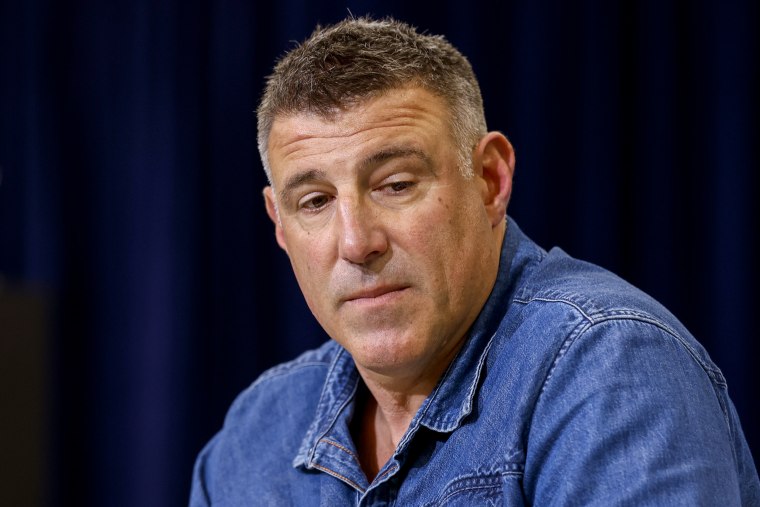
Mike Vrabel of the New England Patriots on Feb. 25 in Indianapolis.Lauren Leigh Bacho / Getty Images file
Semel said he “reviewed 903 stories and 77 videos published on The Athletic site and app that carried Russini’s byline, co-byline, a contributor line or a mention of her reporting” in addition to “204 episodes of the Scoop City podcast, produced by The Athletic and co-hosted by Russini.”
Semel also looked over “25 off-platform appearances or interviews for which she was in some way representing The Athletic and interviewed 14 Athletic staffers.
Semel’s piece did not mention any interviews with Russini herself for this probe.
Russini, 43, could not be immediately reached for comment on Thursday.
“Russini’s relationship with Vrabel was in clear violation of The Athletic’s standards,” according to Semel. “Regardless of whether the relationship was romantic, it was a breach and should have been disclosed.”
In addition to several gushing comments Russini has made about Vrabel on various platforms, Semel zeroed in on a 2023 “What I’m Hearing” column, in which she wrote that Vrabel, then head coach of the Tennessee Titans, wouldn’t be fired.
“Angry Tennessee Titans fans can stop hoping owner Amy Adams Strunk fires Vrabel. It’s not happening. Based on multiple conversations with high-ranking Titans officials, the franchise strongly and collectively believes it has the right coach for long-term success,” according to Russini.
The Titans fired Vrabel two months later.
Vrabel returned to coaching in 2025 and led New England to one of the greatest turnarounds in recent NFL history. The 2025 coach of the year, Vrabel took a squad, which had gone 4-13 in consecutive campaigns, to a 14-3 mark and AFC title this past season.
This post appeared first on https://www.nbcnews.com
Oil giant Chevron confirmed that it will expand operations in Venezuela after President Donald Trump announced an ambitious deal to develop the nation’s oil reserves and give the Pentagon a stake in the profits.
Chevron, the only U.S. oil company with a major presence in Venezuela, said Wednesday that it has been assigned additional acreage in the Orinoco Belt, where it has active operations. The company plans to invest more than $7 billion over the next five years, with the goal of more than doubling its current production to about 600,000 barrels a day.
“Chevron’s history in Venezuela spans more than a century, and our expanded position reflects our confidence in the country’s deep resource potential,” CEO Mike Wirth said in a prepared statement.
Venezuela holds the world’s largest proven reserves, totaling more than 303 billion barrels of crude oil, according to OPEC’s 2025 Annual Statistical Bulletin. Saudi Arabia is a distant second with 267 billion barrels.
Yet because Venezuela’s energy infrastructure is severely degraded and the nation is operating under international sanctions, its daily production is just over 1 million barrels, compared with the 10 million to 11 million barrels that Saudi Arabia produces each day. The U.S. produces almost 14 million barrels per day.
Venezuela holds the world’s largest proven reserves, totaling more than 303 billion barrels of crude oil, according to OPEC’s 2025 Annual Statistical Bulletin.Diko Betancourt / Anadolu via Getty Images
Chevron, the second-largest U.S. oil company, has had a presence in Venezuela since 1923.
U.S. Energy Secretary Chris Wright on Wednesday attended a ceremony in Venezuela’s capital in which Chevron, Italian oil company Eni and other energy companies signed agreements with the South American country’s government.
“President Trump’s mission in Venezuela is straightforward. The mission is to bring peace, freedom, opportunity and prosperity to the people of Venezuela,” Wright said in Caracas. “I believe the deals that are signed today — tens of billions of dollars of investment, ultimately many thousands of jobs — are critical in starting this ball rolling of peace, opportunity and prosperity for everyone in Venezuela.”
The White House confirmed Monday that it is partnering with North American Blue Energy Partners, NABEP, as part of Trump’s push to tap into Venezuela’s oil industry.
Yet the agreement has been met with skepticism from energy experts who say it will take years to revive Venezuela’s oil industry, which is in disarray after years of neglect.
There are also questions about whether Venezuela’s acting president, Delcy Rodríguez, has the authority to give NABEP 100-year rights over 17 oil fields with reserves of 65 billion barrels — and whether future Venezuelan or American administrations would overturn the agreement.
An oil tanker is anchored in Lake Maracaibo in Cabimas, Venezuela, on Monday. Ariana Cubillos / AP
Venezuela’s constitution states that arrangements like the one that the United States has entered must be approved by the National Assembly, which has not happened, wrote Ian Vásquez, vice president for international studies at the Cato Institute.
“The deal lacks legitimacy since it was agreed to with a dictatorship that has clung to power for decades through violence and by committing what was probably the largest electoral fraud in Latin American history in 2024,” Vásquez wrote. “The agreement was also reached under overwhelming pressure, military and otherwise, from the United States. As such, any future Venezuelan democracy will question the deal, thus undermining confidence in the current arrangement.”
The ruling party-controlled National Assembly expressed support for the agreement during its Tuesday session, but lawmakers held no debate or voted to approve it.
Wright on Wednesday pushed back on criticism, telling reporters that the deal is “a massive win” for both countries.
“Because what it’s going to do is take resources that are underground, not helping anyone, and invest capital and money and technology and bring them to the surface to better the lives of Venezuelans, better supply energy to Americans,” Wright said during a joint press conference with Rodríguez.
Trump has eyed Venezuela’s oil since the January capture of then-President Nicolás Maduro and has pressed to get U.S. businesses back into the country. “We have Exxon going in, we have Chevron going in. We have our big oil companies going in,” he said that same month.
He suggested again on Monday that other U.S. oil majors were preparing for a return, though other than Chevron, there is no evidence of that.
Exxon Mobil CEO Darren Woods said in January that Venezuela was “uninvestable.” An Exxon spokesman said this week that “nothing has changed.”
Venezuela nationalized its oil industry in 1976 and created the state-owned company Petróleos de Venezuela S.A. A second nationalization occurred in 2007, when President Hugo Chávez pushed foreign oil companies into state-controlled joint ventures. Ronaldo Schemidt / AFP via Getty Images
The history of U.S. oil majors in Venezuela explains the hesitation.
Venezuela nationalized its oil industry in 1976 and created the state-owned company Petróleos de Venezuela S.A. A second nationalization occurred in 2007, when President Hugo Chávez pushed foreign oil companies into state-controlled joint ventures and seized the assets of companies that refused. Chevron agreed to a joint venture. Others, including Exxon and ConocoPhillips, refused, and Venezuela took their assets.
Trump has said that the agreement with Venezuela would “substantially lower” gasoline prices in the U.S. However, analysts have repeatedly warned that Venezuela’s dilapidated oil infrastructure will require years of restoration work and tens of billions of dollars to resuscitate.
“It could take 2 to 4 years to get new greenfield facilities online in the Orinoco region,” Amy Jaffe, director of the Global Energy, Climate, and Sustainability Lab at New York University, said in an email. “Other places where there is no pipeline and other kinds of support infrastructure could take longer.”
Meanwhile, the national average price for a gallon of regular gasoline jumped overnight to $4.12, according to the motor club AAA. That is 93 cents more than it cost at this point last year.
This post appeared first on https://www.nbcnews.com
HONG KONG — Shares in online fast-fashion retailer Shein fell 8% in their first day of Hong Kong trade on Tuesday, with investors worried about the impact of setbacks that long delayed its listing and have undermined its competitive advantages.
Known globally for selling $5 tops and $10 dresses, Shein has been humbled by tariff and duty changes in the U.S. and Europe. Intense scrutiny of its business practices in the West also hampered its attempts to list in New York and London, which were ultimately blocked by Chinese authorities.
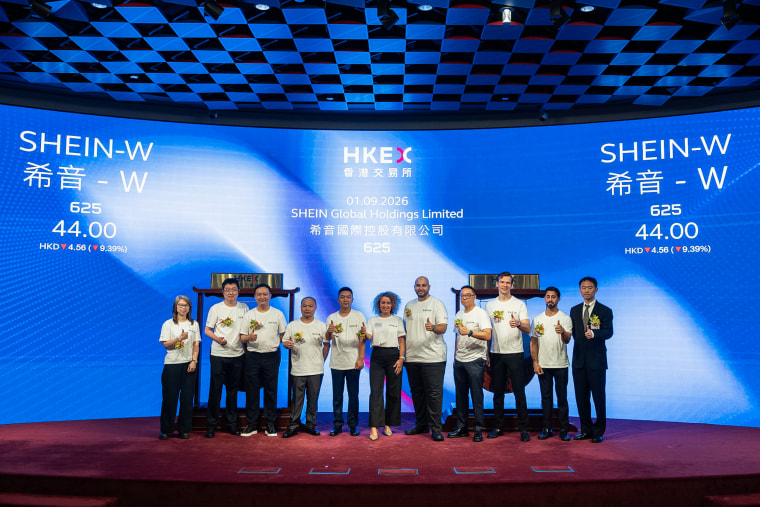
The stock was trading at around 44.6 Hong Kong dollars ($5.68) in morning trade, valuing the company at around $24 billion ($3 billion), far below its 2022 peak of nearly $100 billion ($12.8 billion). Hong Kong’s Hang Seng Index was down 0.6%.
“As a new company listed in Hong Kong, we will continue to innovate, optimize and cooperate with our supply chain partners for mutual benefit and win-win results,” Shein Chief Financial Officer Leigh Gui said at the opening gong ceremony.
Shein CEO Sky Xu, second left, with other guests at the company’s listing ceremony in Hong Kong on Tuesday. Chan Long Hei / AP
Founder and CEO Sky Xu, known for disliking the limelight, did not speak at the event though later took pictures with Shein employees onstage. He declined to respond to Reuters’ questions.
“I think the weak debut shows that even after the huge valuation reset, investors still don’t see Shein as obviously cheap,” said Charu Chanana, chief investment strategist at Saxo.
Chanana said Shein was valued at 15 times forward earnings, more than double the multiple for PDD, the owner of rival Temu, which meant “investors were being asked to pay a premium despite weaker growth visibility and significant regulatory and trade risks.”
Demand for Shein’s stock during the IPO was tepid compared with high-profile offerings from the AI and robotics sectors.
The retail tranche was subscribed 5.63 times, while the international portion was subscribed 2.59 times. Some deals have been hundreds of times oversubscribed, especially from Hong Kong’s army of retail investors who track IPOs very closely.
The amount sold in the IPO represents about 6.6% of Shein’s enlarged share capital. Cornerstone investors took about one-fifth of the IPO and are locked up for six months, leaving roughly 5% freely tradable.
Last year, the U.S. ended the de minimis duty exemption for e-commerce shipments under $800 that had powered Shein’s direct-shipping model. The European Union recently followed suit, imposing fees on low-value packages.
Shein’s net income slid 39% last year, and it swung to a loss in the first quarter.
Shein has said it expects first-half operating profit margin to be slightly lower than in the first quarter, hurt by higher customs duties, tariffs, fees and logistics costs in Europe and the Middle East.
“New markets could help offset slower growth in the U.S. and Europe, but lower spending power in developing markets may limit the benefit if delivery costs stay high,” said Lorraine Tan, director of equity research at Morningstar.
Shein has been trying to widen beyond its own-label ultra-cheap fast fashion, having expanded its third-party marketplace and bought U.S. apparel brand Everlane in May.
In its prospectus, it said it aims to offer marketplace and supply chain services to more brands, in the footsteps of French brand Pimkie and British brand Missguided, which it bought in 2023.
The IPO has helped Shein compensate early investors who invested at much higher valuations. The company has agreed to make cash payments totaling about $3.5 billion and share adjustments to some preferred shareholders.
“This IPO is not just a fundraising event — it is also, and probably more of, a capital-structure event,” said Jianggan Li, CEO of consultancy Momentum Works.
This post appeared first on https://www.nbcnews.com
WASHINGTON — The White House on Monday said it’s partnering with North American Blue Energy Partners as part of President Donald Trump’s push to tap into Venezuela’s oil industry, setting up a deal that will give the Pentagon a stake over roughly a fifth of the country’s vast oil reserves.
The Trump administration released more details about the agreement on Monday night, days after Trump announced what he described as the biggest oil deal in history. The sweeping deal has been met with skepticism from analysts who say it will take years to revive Venezuela’s production, but Trump and his aides are pitching it as a chance to develop a new oil giant in the Western Hemisphere.
As part of the deal, the U.S. is creating a private company as part of a joint venture with NABEP — a detail the White House withheld for days. NABEP, owned by Venezuelan businessman Alejandro Betancourt, is already the second-largest operator in Venezuela behind Chevron.
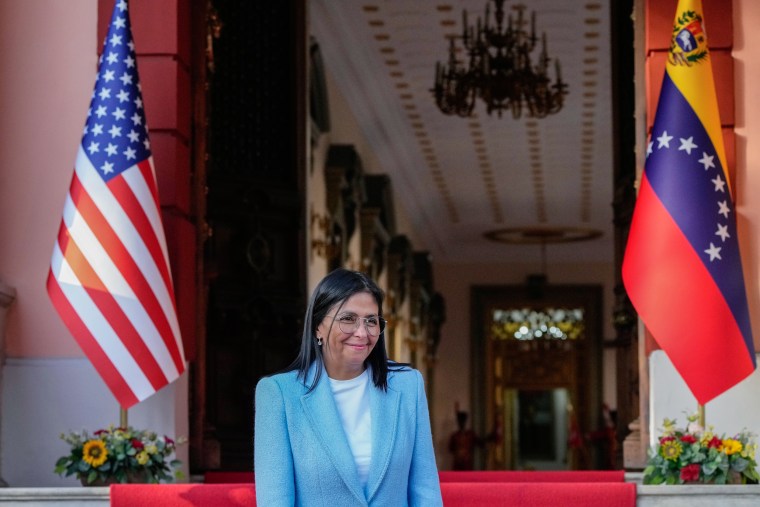
Venezuela’s acting president, Delcy Rodríguez, is giving the company 100-year rights over 17 oil fields with proven reserves of 65 billion barrels. Many of those fields were previously owned by Russian or Chinese firms, the White House said.
Acting Venezuelan President Delcy Rodriguez in February. Ariana Cubillos / AP
The deal will give the Pentagon a 35% ownership stake in the company, and the State Department will get a guarantee to purchase 20% of the output at cost, the White House disclosed Monday. Betancourt’s company has agreed to put up $100 billion in new oil infrastructure.
In a statement Monday, Betancourt said Venezuela is “blessed with an abundance of natural resources, hardworking people and untapped potential,” adding that the deal will “unleash that potential to the great benefit of both Venezuelans and Americans.”
The company said Betancourt had been involved in the Venezuelan oil industry for more than 15 years and said the company has more than 5,000 employees and more than 10,000 contractors.
Trump has been pushing to boost oil production in Venezuela since the January military mission that captured then-President Nicolás Maduro on federal narcoterrorism and drug trafficking charges.
The White House said the deal would be “at zero cost” to the U.S. and said the government would have veto power on board members — the majority of whom would be U.S. citizens.
“NABEP will have reputable U.S. auditors, lawyers, and advisers and the U.S. government’s agreement with NABEP is governed by U.S. law and is subject to the jurisdiction of U.S. courts,” the White House said in a fact sheet about the deal.
Former U.S. government energy advisers have cautioned that the deal comes with political risk, since future administrations in Venezuela or the United States could challenge the deal. Even if the agreement holds, analysts say it could take years to turn around Venezuela’s dilapidated energy sector.
Even Trump, who says the plan will reduce gas prices, acknowledged Monday that Americans won’t see change right away. Asked about it at the White House, Trump said “it could be a little bit” for prices to fall, though he played down analyst predictions that it could take years.
“If it was two years, you know, that’s a short period of time,” he said.
An oil tanker anchored in Lake Maracaibo in Cabimas, Venezuela, on Monday. Ariana Cubillos / AP
Rodríguez has spoken in favor of the deal, describing it as a chance to modernize Venezuela’s oil industry and accelerate its revival. Facing criticism that the deal cedes Venezuelan resources to the U.S., Rodríguez insisted her country’s sovereignty remains secure.
Lawmakers on Capitol Hill said they were looking for more information about the agreement.
Rep. Rick Crawford, the Republican chairman of the House Intelligence Committee, said he wanted to hear details from the Trump administration “hopefully sooner rather than later.”
Sen. Jack Reed, the top Democrat on the Senate Armed Services Committee, said a deal that uses the military to boost a private oil venture should be rejected and said he wanted a full accounting of the legal authority for the agreement.
“President Trump’s effort to turn the U.S. military into an investor in Venezuelan oil is a blatant abuse of power and taxpayer dollars,” Reed said in a statement.
Trump plans to meet Tuesday with a group of large and small oil refiners to discuss ways to increase America’s capacity to refine oil into gasoline.
The meeting occurs as the Iran war has driven prices at the pump to a national average of $4.08, a 28% increase over the past year, according to AAA.
The White House has said that increasing the number of refineries and expanding the capacity at existing facilities would eventually reduce prices for consumers. The administration also sees the need for more refineries to process oil from Venezuela.
Also attending the meeting will be Interior Secretary Doug Burgum, Energy Secretary Chris Wright and Jarrod Agen, the director of the White House National Energy Dominance Council.
This post appeared first on https://www.nbcnews.com
President Donald Trump on Monday called for bipartisan tax incentives to help a domestic TV and movie industry that has seen large chunks of its business move overseas in recent years.
Trump wrote on Truth Social that meetings were “being set up with the Leaders of both Parties in order to get this done.”
“It should be Bipartisan, especially since so much money is being lost in California, and other largely Blue States,” he wrote. “I am going to suggest that Republicans and Democrats get together, and immediately craft Legislation to save the Movie, Television, and Entertainment Business in America.”
Trump indicated that his call to help Hollywood — an industry that Republicans often rail against and one that resides in solidly blue California — was influenced in part by actor Jon Voight, who was a 2024 campaign surrogate for him.
Voight, whom Trump has called his “Hollywood ambassador,” has helped shape Trump’s policy toward the entertainment industry during his second term. In May 2025, Trump met with Voight before he proposed tariffs on films produced overseas.
Voight did not immediately respond to a request for comment Monday night.
President Donald Trump in the Oval Office of the White House on Monday.Annabelle Gordon / Bloomberg via Getty Images
Trump’s Truth Social post drew immediate support from Democrats who are usually critical of him and his administration’s policies.
Sen. Adam Schiff, D-Calif., a frequent Trump target, said he was in “strong agreement” with Trump on this one.
“Congress should immediately take up and pass a federal film tax incentive to bring back these good-paying jobs that we’ve lost to other countries,” Schiff wrote on X. “Let’s work together — Republicans and Democrats — to get this done, and bring the movie magic back to America.”
Rep. Laura Friedman, D-Calif., praised the proposed measure and called for swift passage.
“For more than a year I’ve been sitting down with Jon Voight, Congressional colleagues, the unions, studios, and producers to build the case for a national film and television tax credit,” Friedman said in a statement. “There’s no reason Canada, the UK, or Australia should be taking our jobs. We still have the best crews on the planet. It’s time we made it possible for them to stay where they belong: in America.”
Friedman said last September that the proposed tariffs on foreign films were recognition from Trump that the U.S. was losing its domestic film and TV industry but that the path forward was a tax credit, not tariffs.
Trump’s announcement Monday was also embraced by the industry itself.
Charles Rivkin, the CEO of the Motion Picture Association, the trade group representing major film studios in the U.S., said in a statement that the group applauded Trump’s support for tax incentives.
“For over a century, American studios, casts, and crews have produced the films and series that the world wants to see. A federal incentive would be a landmark step toward bringing more production to local communities in all 50 states, strengthening our nation’s economy, and making our country a more competitive place to produce, create, and tell great stories,” Rivkin said in his statement.
While Trump did not lay out any financial details in his post, he predicted that the money spent on the tax incentives “will be made up tenfold by the money pouring into the Treasury’s coffers.”
This post appeared first on https://www.nbcnews.com
Panda Express is famous for its orange chicken. But the founders of the iconic fast-casual Asian chain also want to be known for something else: helping their workers realize the American dream.
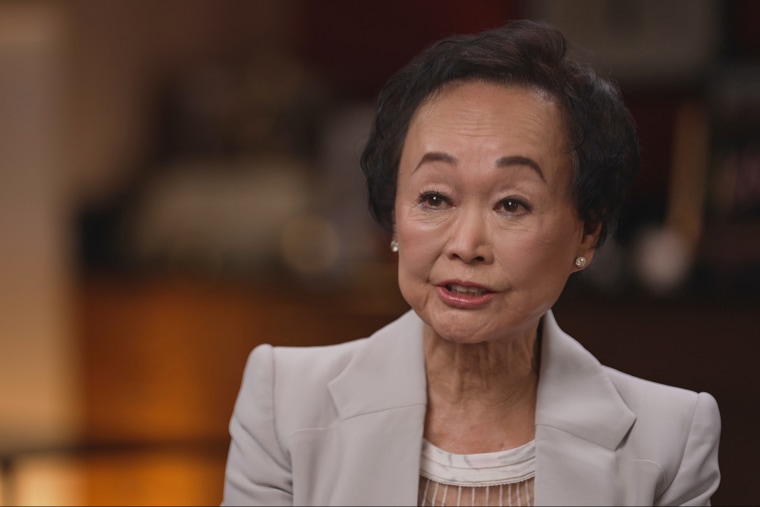
“I always believe that when you do well, you know, personally, then you can go out and take care of other people,” said Andrew Cherng, who is co-founder, co-chair and co-CEO of Panda Express along with his wife, Peggy Cherng.
“You want people to do well,” he said. “And you want to treat them well.”
Cherng measures progress in part by how many of his managers make $100,000 or more annually. He also tracks whether those managers can afford to buy homes, and he considers that a barometer of his own success.
Yet over the past decade, that American dream of homeownership has slipped out of reach for millions of middle-class families.
With low housing stock across the country, mortgage rates hovering at 6.8% and home prices in some cities at record levels, there is little relief in sight.
Panda Express co-CEO Peggy Cherng wants to help employees establish their careers and “mark that accomplishment by owning a home.”NBC News
Immigrant families are also less likely to own their homes than families headed by native-born U.S. residents, according to census data. Experts point to several factors that are likely to contribute to the disparity, including limited employment and income prospects, language barriers and inconsistent access to banks and financing.
Peggy Cherng said the couple recognize elements of their own journeys in those of their employees. “Most of our associates are first-generation immigrants,” she said.
Andrew was born in China and immigrated to the U.S. in 1966 after having grown up in Taiwan and Japan. Peggy was born in Myanmar and raised in Hong Kong.
The couple met at the University of Missouri and opened their first Panda Express in 1983 in Glendale, California. At the time, they envisioned it as a casual offshoot of Panda Inn, the full-service Chinese restaurant Andrew opened with his father in the early 1970s.
That immigrant experience remains central to how the couple run the business today, particularly a focus on investing in their employees, whom they consider their extended family.
Today, Panda Express is America’s largest Asian restaurant chain, with more than 2,500 locations across 49 states and restaurants in 12 countries. The privately held company employs around 55,000 people and generates around $7 billion in annual sales, according to data compiled by market research firm Technomic.
For Andrew, the foundation of that success is built from the ground up — starting with his employees.
“How do we help these people to have a better life? That’s our mission,” he said in an interview at the company’s headquarters outside Los Angeles, part of NBC News’ “Business in America” initiative.
Peggy said, “Our mission, our calling, is how we are able to help more associates realize their American dream, establish their business, their career, but most importantly, mark that accomplishment by owning a home.”
And despite the long list of obstacles to first-time homeownership, Andrew wants to help his Panda Express employees focus on what is possible rather than what stands in their way.
“We actually help everybody to think about owning a home very quickly,” he said.
Many of the managers he hires initially seem to view the position as just another job, he said, not a potential career path.
Managers “have to do a lot of things,” he said. “We teach them [those skills], but to have a good life, you turn that person from being sort of ‘task-based’ to ‘life-based.’”
That transformation, according to Andrew, often instills a deeper sense of purpose in his employees — one that extends to caring for others and their communities.
“We get people to see that quickly and see it clearly,” he said.
This post appeared first on https://www.nbcnews.com
House and Senate Republicans on Friday criticized President Donald Trump’s decision to suspend tariffs on ground beef imports, with lawmakers from agricultural states decrying the impact Trump’s decision will have on farmers.
Nebraska’s GOP senators, Deb Fischer and Pete Ricketts, said in separate posts on X that Trump’s decision was unwise.
“I’m extremely disappointed by this decision from the White House,” Fischer wrote. “We all want lower grocery prices, but as I’ve said for months, we cannot do it at the expense of American producers. Flooding the market with foreign beef hurts our livestock industry.”
Ricketts wrote: “I appreciate the Administration’s work to lower grocery prices. Short term policy shifts do not equal long term solutions. Flooding the market with lower quality beef compromises Nebraska farmers and ranchers.”
The president announced Friday on Truth Social that “the United States will allow up to 300,000 metric tons of product for ground beef to be imported with no out of quota tariff. We have a commitment that this beef will be sold at 25 percent below current market prices.”
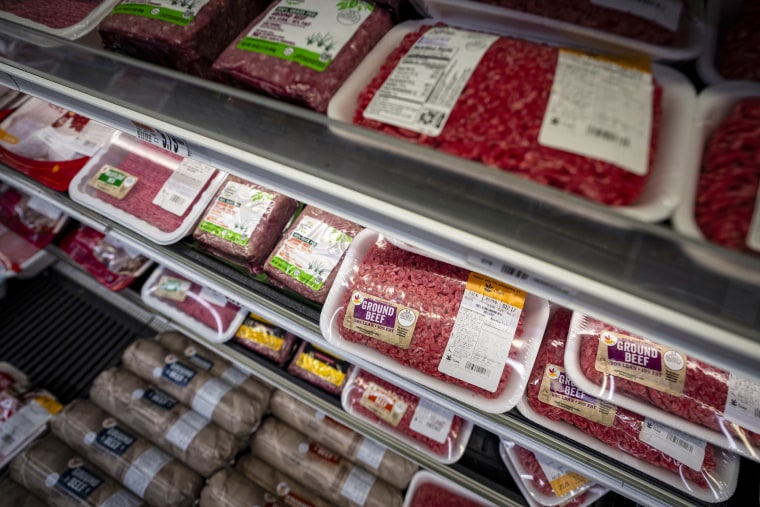
Beef prices have gone up in recent years, in part due to reduced domestic supply.Al Drago / Getty Images
Trump did not say which companies that import beef had agreed to this commitment or what countries would supply the meat.
Explaining his decision, the president pledged that this deal “will reduce prices for Americans while giving space for our Great American Beef Herd to grow again.”
Sen. Tim Sheehy, R-Mont., also cited the hardships American cattle farmers would face as a result of the president’s decision and referred to conversations he’s had with Trump about this issue.
“The President’s heart is in the right place on wanting lower prices for the American people, and beef prices have been impacted by the Mexican screwworm,” Sheehy wrote on X. “But the reality is this action will make it more difficult for American ranchers to rebuild our herd and bring prices down for the American people. And most importantly, this will harm our ranching families who feed the nation.”
Rep. Ashley Hinson, R-Iowa, who is running for Senate and received Trump’s endorsement in the race, also panned his announcement, writing in a post on X, “I want to lower prices but this is a bad idea.”
Hinson said that instead of allowing beef imports without tariffs, “We should be focused on cutting red tape for cattle producers, lowering the cost of production, and supporting market-based solutions to support Iowa producers and lower costs for consumers.”
Sen. Chuck Grassley, R-Iowa, writing in his custom shorthand on X, also expressed concern about Trump’s announcement, writing that “USA cattlemen shld always be put 1st thru America 1st policies.”
Grassley also expressed a “need 2keep up progress fighting screwworm+ expanding domestic herd.”
On Friday, the president defended his decision when asked at Joint Base Andrews about the criticism he was facing from fellow Republicans.
“Well, we want to get the beef prices down, so we’ll get them down a little bit, and that’s what people want. That’s what the voters want, and that’s what I want,” he told reporters. “The ranchers are great. They’re my people. I love the ranchers. They’ve done a fantastic job, but they admit that we need a little help, and in order to get the prices down, so that’s what we’re doing.”
The White House did not immediately respond to NBC News’ request for comment on the lawmakers’ criticisms of Trump’s plan.
U.S. cattle ranchers have faced headwinds for years that have sent beef prices higher, including shrinking supply. According to the American Farm Bureau Federation, the United States’ current cattle herd is the nation’s smallest since 1951.
A flesh-eating screwworm that targets cattle was also detected in the U.S. earlier this year for the first time in decades, further threatening cattle herds.
Trump first floated the idea of lowering imports on beef last year, but the notion was quickly shot down by a similar group of GOP senators from agricultural states.
“I represent a beef-producing state. We have four times as many cattle as people,” Senate Majority Leader John Thune, R-S.D., said at the time, explaining his opposition.
On Friday, leaders for a top industry group representing cattle farmers, the National Cattlemen’s Beef Association, also said they were “disappointed” with Trump’s announcement.
“NCBA is disappointed by the President’s statement,” said Colin Woodall, the group’s chief executive officer. “While America’s cattle producers share the goal of keeping groceries affordable for consumers, flooding the market with government-subsidized, below-market beef is not the way to rebuild the American cattle herd.”
“Today’s announcement and other market interventions throw cold water on the prospect of herd expansion and sacrifices long-term stability for short term messaging,” Woodall added.
This post appeared first on https://www.nbcnews.com
For a rocket company, SpaceX is spending a lot of money to build out its AI capacities.
Too much, according to investors.
The company reported revenue in its first quarterly update as a public company that surpassed analysts’ expectations. Most of its revenue came from its Starlink satellite offering.
But investor focus turned to capital expenditures related to its xAI unit, which runs the Grok AI service. Those hit $15.8 billion, higher than expectations of $13.09 billion, according to Bloomberg News data, and about double the previous quarter. The AI spending also accounted for most of SpaceX’s overall $18.4 billion quarterly spending on capital expenditures.
The report caused SpaceX shares to reverse a healthy run-up during regular trading hours Tuesday. The stock fell over 10% before Wednesday’s market open, after having surged 9% ahead of its report Tuesday.
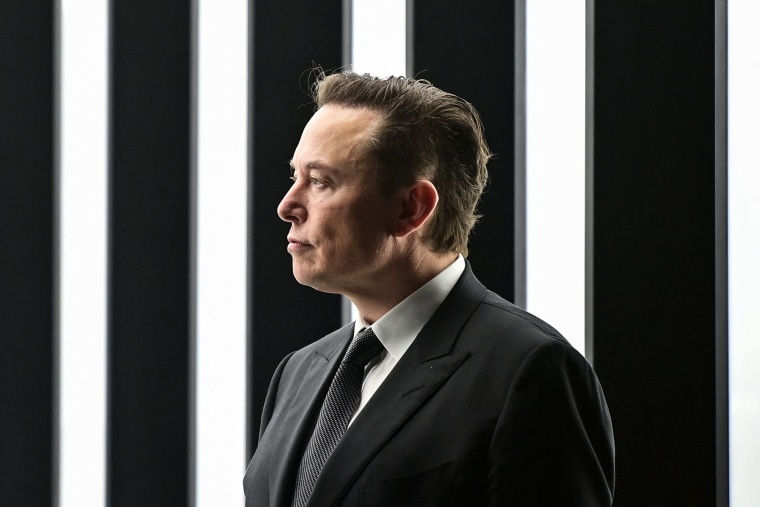
Musk at Tesla’s Gigafactory in Grünheide, Germany, in March 2022. Patrick Pleul / AFP via Getty Images file
SpaceX immediately became a multitrillion-dollar company after a record-setting IPO on June 12 — but nearly just as quickly, it erased $1 trillion in value as the stock plunged amid anticipation of insider stock sales and broader jitters about the pace of AI spending.
Still, it continues to enjoy a market valuation of more than $1 trillion, making it one of the most valuable companies in the world. The stock got an additional boost Tuesday when the company announced a deal with Nvidia to partner on a future satellite project.
That announcement sent shares of other data center infrastructure providers like AMD lower. SpaceX’s strong results in its Starlink connectivity division also knocked shares of major wireless carriers, including AT&T and Verizon, as well as Viasat, which now faces competition from SpaceX for providing uplinks on airplanes.
Investor speculation that SpaceX may try to merge with its sister company Tesla has grown. That would give Elon Musk even more control over his multifaceted technology empire than he already exerts.
The vast majority of SpaceX’s stock is privately held, with just 5% of the 13.9 billion shares trading on the open market.
Along with Musk, who owns about 42%, the other shareholders are known to regulators as “insiders” and have been barred so far from selling their shares.
That “lockup period” will expire Wednesday, when up to 20% of the total SpaceX shares held by insiders may be sold on the open market.
More shares on the market equals more supply, which means the price per share is likely to fall further.
But some retail investors aren’t concerned by the steep drop in SpaceX’s share price.
Forde Todd, 20, received three shares of SpaceX stock as part of the company’s IPO, then bought and sold several more on the open market.
Todd told NBC News he plans to hold on to his IPO shares despite the stock’s plunge.
“I’m in it for the love of the game — like, I’m in it for SpaceX,” Todd said. “I truly believe in this company.”
“At the end of the day, everybody is going to want a part in the space economy,” he added.
This post appeared first on https://www.nbcnews.com
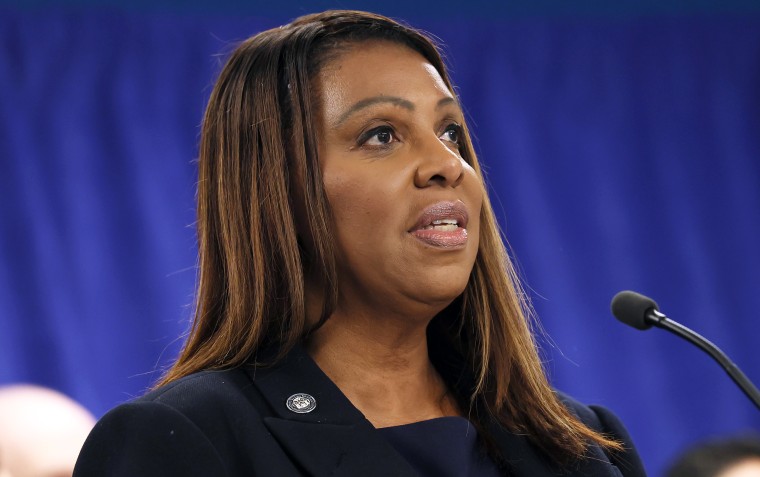
New York’s attorney general sued prediction market operator Kalshi on Friday, claiming that its platform violates state laws against illegal gambling.
In a petition filed in a state court in Manhattan, Attorney General Letitia James said Kalshi failed to obtain a New York State Gaming Commission license to operate its platform, where people trade based on the predicted outcomes of sports, elections and other events.
The attorney general said such platforms can encourage problem gambling, including by people under age 21, and endanger people’s financial, emotional and physical health.
She filed similar petitions in April against two other prediction market operators, Coinbase Financial Markets and Gemini Titan, saying all three companies’ so-called event contracts were “quintessentially” gambling.
“New York’s gambling laws protect children from underage betting and help combat gambling addiction,” James said in a statement. “No matter what they call themselves, prediction markets like Kalshi are gambling platforms, plain and simple.”
New York Attorney General Letitia James in 2025.Michael M. Santiago / Getty Images
CFTC Challenges New York
Prediction markets such as Kalshi and Polymarket have soared in popularity since the 2024 U.S. presidential election, when they fared better than pollsters in predicting Republican Donald Trump’s victory over Democrat Kamala Harris.
Their growth has sparked a flurry of lawsuits and countersuits over the authority of individual U.S. states, rather than the federal government, to regulate the industry.
The U.S. Commodity Futures Trading Commission has claimed exclusive oversight and challenged regulatory activity in at least nine states including New York, which it sued in April.
“It’s sad to see this type of political theater from the leadership in our own state,” New York-based Kalshi said in a statement. “States can’t just shut down a federally licensed exchange.”
Less than one hour before New York sued Kalshi, the CFTC filed an “emergency” motion in Manhattan federal court to stop the state’s enforcement activity, calling it “overreach” that would irreparably harm the agency and markets it regulates.
The CFTC filing followed Wednesday’s rejection by the federal appeals court in Manhattan of Kalshi‘s request to avoid being subjected to New York’s gambling laws, while it appeals U.S. District Judge Analisa Torres’ refusal on July 8 to issue an injunction against the state.
Kalshi had preemptively sued New York last October to block enforcement.
According to New York’s petition, Kalshi‘s prediction markets are gambling because people can wager on events whose outcomes they don’t control, such as who will win the Super Bowl or the reality TV show “Big Brother.”
New York also objected to Kalshi letting 18- to 20-year-olds use its platform, despite a minimum age of 21 under state law for mobile sports betting.
“Kalshi has chosen to ignore New York’s gaming laws, which exist to protect consumers, prevent problematic gambling, deliver funding for critical public services, and ensure that every company plays by the same rules,” New York Governor Kathy Hochul said in a statement. “This choice has consequences.”
At least four states — Massachusetts, Michigan, Nevada and Washington — have won court orders restricting Kalshi‘s activities.
In refusing to stop potential New York enforcement activity, Torres found the state’s interests in preventing gambling addiction, preserving the integrity of sports, and avoiding a proliferation of unregulated contracts “heavily” outweighed Kalshi‘s interests in ensuring the primacy of federal law and avoiding “intractable” technology issues for customers.
New York’s lawsuit seeks a halt to Kalshi‘s alleged unlawful conduct, the forfeiture of illegal gains, civil fines equal to triple those gains, and restitution to customers.
This post appeared first on https://www.nbcnews.com