Brightstar Resources (BTR:AU) has announced Exceptional result of 32m @ 7gt Au in Lord Byron drilling
Download the PDF here.
This post appeared first on investingnews.com


Brightstar Resources (BTR:AU) has announced Exceptional result of 32m @ 7gt Au in Lord Byron drilling
Download the PDF here.

In the high-stakes world of resource extraction, a nation’s mineral wealth is a powerful magnet for investment, fueling economic growth and national prosperity. But not all countries are created equal.
For investors in the mining sector it’s key to understand that jurisdictional risk can be profoundly impacted by political changes, as new administrations can swiftly alter the regulatory landscape. These policy shifts can present both opportunities and setbacks, introducing a complex layer of uncertainty to even the most promising ventures.
At the same time, regions traditionally seen as stable and secure for resource development can face their own challenges, including rigorous permitting regimes that can slow mine development activity.
Read on for three case studies on jurisdictional risk and how to navigate this type of complexity.
Perhaps the most notable example in recent years of how politics can affect operations is the closure of First Quantum Minerals’ (TSX:FM,OTC Pink:FQVLF) Cobre Panama mine in Panama.
As with many mining operations, Cobre Panama took decades to bring into production. First Quantum received approval to begin work at the site in February 1997; however, it would take 22 years and US$10 billion to build the mine and the required infrastructure before production commenced in September 2019.
When it was placed on care and maintenance in November 2023, the mine was one of the largest in the world, accounting for approximately 1 percent of total copper supply.
The closure came after Panama’s government faced intense public backlash for granting First Quantum a 20 year mining contract; it was quickly declared unconstitutional by the Supreme Court.
The Panamanian government also introduced an indefinite moratorium on all mining concessions. The move put the country’s mining sector in a state of limbo and led other companies to cease activities in Panama. For example, Orla Mining (TSX:OLA,NYSEAMERICAN:ORLA) decided to halt funding of its Cerro Quema project until it had “greater certainty with respect to the mining concessions, as well as fiscal and legal stability in Panama.”
Cobre Panama’s closure and the subsequent moratorium led Fitch to downgrade its investment outlook for Panama in March 2024, from BBB- to BB+. The credit agency cited fiscal governance challenges that arose following the mine’s closure, noting that Cobre Panama accounted for 5 percent of the nation’s GDP.
Although the International Monetary Fund expects Panama’s GDP to rebound to 4.5 percent in 2025 as non-mining sectors of the nation’s economy grow, the changes have already had a significant impact on the national economy, with GDP growth slowing to 2.9 percent in 2024, from 7.4 percent in 2023.
Another recent example is the impact of unrest on Barrick Mining’s (TSX:ABX,NYSE:B) operations in Mali.
The African nation has experienced a prolonged period of instability, with the government being overthrown in three coup d’états within a 10 year span, in 2012, 2020 and 2021.
The most recent two came following months of turmoil after election irregularities and accusations of corruption in 2020, then calls for a more legitimate government to be installed in 2021.
Ultimately, the government was replaced by a military junta, and in 2022, it was announced that elections would be held in 2024. However, these were delayed until early 2025, at which time they were again postponed.
This past July, Malian military authorities granted current leadership a five year mandate, renewable as many times as necessary without requiring an election, which guarantees control of the government until 2030.
The impact on the mining sector has been notable. In 2022, the new government ordered an audit of the mining sector, which led to Mali adopting a new mining code in 2023 after limited industry consultation.
The code aims to generate more revenue for the government from mining operations by increasing government ownership to 35 percent from 20 percent and removing tax-exempt status for some operations.
Existing mining contracts were also reviewed, which limited the ability to renegotiate, leading to a protracted negotiation process between the Malian government and Barrick over its Loulo-Gounkoto complex.
While Barrick has said its commitment to Mali remains firm, going so far as to make a good-faith payment of US$83 million, the two parties were unable to reach an agreement. The stalled negotiations led the government to arrest or issue arrest warrants for key personnel over unpaid taxes and contract disputes, including Barrick CEO Mark Bristow.
With no resolution, Barrick was ultimately forced to shut down the mine in January of this year. Although arbitration proceedings continue, the operation was placed under provisional administration on June 16, and government helicopters were seen onsite removing more than 1 metric ton of gold on July 10.
According to the Extractive Industry Transparency Initiative, the mining sector makes a significant contribution to the nation’s economy, representing 79 percent of exports and 9.2 percent of GDP. Although other companies haven’t ceased operations in the country, the government’s action has created tensions for investors, with CEOs suggesting that the new rules make it economically unfeasible for new mines or takeovers in the country.
The Fraser Institute gave Mali a policy perception score of 14.94 in its 2024 Annual Survey of Mining Companies, a significant decrease from 2023, when it achieved 33.34, and a precipitous decline from 2020’s score of 78.18. In the overall ranking, Mali fell to 74 out of 82 countries included in the survey, down from 37 out of 77 in 2020.
The institute notes that companies say policy accounts for about 40 percent of their decision when choosing where to establish operations. The other 60 percent is based on the mineral potential. In this regard, Mali improved to 55.26 from 41.18 in 2023; however, it remains in the bottom half of all jurisdictions, ranking 40 out of 58.
The institute uses these scores to determine the overall investment attractiveness of jurisdictions. In 2024, Mali scored 39.13 and ranked 72 out of 82. Respondents to the survey suggested that the rejection of gold mining permits and the lack of transparency created uncertainty and deterred investment.
Even when investment is in the national interest, underlying issues can be hard to overcome.
The Democratic Republic of the Congo (DRC) is endowed with a vast wealth of minerals, ranging from copper to cobalt and diamonds, but a lack of infrastructure and geopolitical instability have hindered investment.
However, the mining sector has seen steady growth in recent years as the government looks to attract investment. One project is the construction of the Lobito Corridor, Africa’s first open-access transcontinental rail link. It connects Zambia and the DRC with the port of Lobito in Angola, providing improved shipping opportunities for producers.
Among the operations that have signed on to use the rail link is Ivanhoe Mines’ (TSX:IVN,OTCQX:IVPAF) Kamoa-Kakula mine. The asset is one of the world’s largest copper mines, producing 964 million pounds in 2024.
In February 2024, the company signed a term sheet to access the corridor, allowing it to transport between 120,000 and 240,000 metric tons of copper concentrates per year for a five year term, commencing in 2025.
In a press release, Robert Friedland, Ivanhoe’s founder and executive co-chair, said the corridor is “fast becoming one of the most important trade routes for vital copper metal in the world.”
He added that the rail link will unlock projects due to the lower logistical costs.
While development in the DRC is moving in the right direction, it’s not without its problems. Tensions remain with neighboring Rwanda, as Rwanda has backed anti-government M23 rebels. The groups have been warring since 2022, with much of the violence occurring in the Eastern DRC, a mineral-rich area of the country.
In April 2024, M23 seized the town of Rubaya, the center of coltan production in the DRC; coltan is a critical mineral for the tech sector. While Ivanhoe’s mine has avoided the violent uprisings elsewhere in the country, it still highlights key security challenges for operations in the country and underscores the fragility of stability.
Like Mali, the DRC declined in the Fraser Institute’s survey last year.
It dropped to 12.97 on policy, down from 24.93 in 2023, ranking 77 out of 82. However, its mineral potential ranked much higher, scoring 73.53 — that’s up from 55 in 2023 and a rank of 14 out of 58.
On overall investment attractiveness, the DRC was middling, scoring 49.31 and ranking 58 out of 82. The report points to issues such as disputes over land tenure ownership, which have led to uncertainty and deterred investment.
The mining community has looked mainly to North America, Europe and Australia to minimize jurisdictional risk.
Canada, the US and Australia are widely considered safe places to invest in due to the stability of their governments and the absence of cross-border conflicts. Despite changes in government, political parties in these nations tend to support extractive industries through tax credits and investment programs.
As a whole, challenges in these jurisdictions tend to be more regulatory than geopolitical in nature, with strict environmental and social regulations adding years to development timelines.
Recently, however, there have been some moves to break down these barries.
The US and Canada have both made promises to streamline the permitting process to decrease timelines for critical minerals. Additionally, under the Biden administration, the US Department of Defense, increased funding for projects deemed critical to national interests, including those involving Canadian companies Fortune Minerals (TSX:FT,OTCQB:FTMDF) and Lomiko Metals (TSXV:LMR,OTC Pink:LMRMF).
The program has continued under US President Donald Trump, with the most recent award being announced on July 22, for US$6.2 million in funding for Guardian Metal Resources (LSE:GMET,OTCQX:GMTLF).
Although challenges in these regions still exist, in general they remain stable. For investors, it can help to de-risk portfolios and avoid the geopolitical tensions and uncertainty that arise elsewhere.
Securities Disclosure: I, Dean Belder, hold no direct investment interest in any company mentioned in this article.

Questcorp Mining Inc. (CSE: QQQ,OTC:QQCMF) (OTCQB: QQCMF) (FSE: D910) (the ‘Company’ or ‘Questcorp’) is pleased to provide an update on the Phase I drilling program at its La Union Gold and Silver project in northwest Sonora, Mexico. Drill holes have now been completed at two of the 4 target areas:
Saf Dhillon, President and Chief Executive Officer, states: ‘The drilling is indicating oxidation is consistent with past mining and targets are coming along with a positive exploration drilling so far. The drilling is intersecting more quartzite than expected which is favorable for fracture-controlled mineralization. The Riverside operations team is progressing the current exploration program working with the surface rancher and the drilling company to efficiently progress a high-quality exploration program.’
Drilling has now moved to the Famosa Target to progress exploration program. The Mexico Mining Ministry has approved many permits and are actively supporting the environmentally, socially conscious mineral exploration practices as a key aspect for the new Mexican government initiatives.
The technical content of this news release has been reviewed and approved by R. Tim Henneberry’, P.Geo (BC) a Director of the Company and a Qualified Person under National Instrument 43-101.
About Questcorp Mining Inc.
Questcorp Mining is engaged in the business of the acquisition and exploration of mineral properties in North America, with the objective of locating and developing economic precious and base metals properties of merit. The company holds an option to acquire an undivided 100-per-cent interest in and to mineral claims totalling 1,168.09 hectares comprising the North Island copper property, on Vancouver Island, B.C., subject to a royalty obligation. The company also holds an option to acquire an undivided 100-per-cent interest in and to mineral claims totalling 2,520.2 hectares comprising the La Union project located in Sonora, Mexico, subject to a royalty obligation.
ON BEHALF OF THE BOARD OF DIRECTORS,
Saf Dhillon
President & CEO
Questcorp Mining Inc.
saf@questcorpmining.ca
Tel. (604-484-3031)
Suite 550, 800 West Pender Street
Vancouver, British Columbia
V6C 2V6.
Certain statements in this news release are forward-looking statements, which reflect the expectations of management regarding completion of survey work at the North Island Copper project. Forward-looking statements consist of statements that are not purely historical, including any statements regarding beliefs, plans, expectations or intentions regarding the future. Such statements are subject to risks and uncertainties that may cause actual results, performance or developments to differ materially from those contained in the statements. No assurance can be given that any of the events anticipated by the forward-looking statements will occur or, if they do occur, what benefits the Company will obtain from them. Except as required by the securities disclosure laws and regulations applicable to the Company, the Company undertakes no obligation to update these forward-looking statements if management’s beliefs, estimates or opinions, or other factors, should change.
To view the source version of this press release, please visit https://www.newsfilecorp.com/release/265741
News Provided by Newsfile via QuoteMedia

Tackling soaring inflation in the US is the job of the country’s central bank, known as the US Federal Reserve, or the Fed.
The US Fed has consistently made headlines in recent years due to its role in managing inflation through the use of interest rate changes.
Between mid-2021 and 2023, the US economy experienced high inflation, peaking at 8.5 percent in July 2022. The Fed has helped bring it largely under control through careful interest rate increases during that time period.
According to US Labor Department data, the inflation rate in July 2025 was 2.7 percent. As this is still above the Fed’s target of 2 percent, the bank has been slow to lower interest rates so far.
It’s important for any investor to understand the ins and outs of the Fed’s role in US monetary policy and interest rates, as its decisions have a strong impact on US and global markets as well as precious metals prices.
The Federal Reserve, often referred to as the Fed, is the US central bank and monetary authority. It was established by the Federal Reserve Act in 1913, which gave the Fed responsibility for setting monetary policy in response to the 1907 Banker’s Panic.
“The Panic was caused by a build-up of excessive speculative investment driven by loose monetary policy,” explains Investopedia. “Without a government central bank to fall back on, U.S. financial markets were bailed out from the crisis by personal funds, guarantees, and top financiers and investors, including J.P. Morgan and John D. Rockefeller.”
Although it is an independent government agency, the Fed is accountable to the public and US Congress. The current Fed Chair is Jerome Powell, an investment banker who served as assistant secretary and undersecretary of the Department of the Treasury under former President George H.W. Bush. Powell took the helm at the Fed in 2018.
The Fed has a dual mandate: to achieve stable prices and stable employment. The government agency also provides banking services and is the main regulator of the nation’s banks. In times of economic turmoil, the Fed also acts as a lender of last resort.
It’s important to note that while the Fed manages the national monetary policy and regulates the financial system in the US, its actions also have a powerful influence on the global economy.
The Federal Open Market Committee (FOMC) is the Fed’s monetary policy-making body. The 12 members of the FOMC are the seven members of the board of governors of the Federal Reserve System, the president of the Federal Reserve Bank of New York and four of the 11 reserve bank presidents who rotate through the positions for one year terms.
For more than a century, the Fed has been tasked with keeping a watchful eye on any structural risk to monetary stability in the US financial system, and rising inflation and high unemployment are two of the biggest threats to monetary stability.
In the face of rising inflation, the Fed raises interest rates in the hopes of reigning in rapidly rising prices by curbing demand. When interest rates are higher, borrowing money becomes more expensive, which ultimately slows consumer spending and curtails corporate growth.
During times of slow economic growth, the Fed lowers interest rates in order to stimulate the economy. Lower interest rates in effect lower the cost of borrowing and investing for both businesses and individuals.
The Fed’s goal is to keep inflation around its target rate of 2 percent, and unemployment around 4 to 4.5 percent.
“The principle of inflation targeting is based on the belief that long-term economic growth is best achieved by maintaining price stability, and price stability is achieved by controlling inflation,” according to Investopedia.
Inflation is calculated through factoring in price changes of a weighted basket of goods and services, as well as housing.
For example, the COVID-19 pandemic that began in 2020 caused a surge of inflation in the US and globally.
Prices of goods were driven higher by a mix of factors, including significant supply chain disruptions hurting product availability, and economic stimulus packages increasing spending power and demand.
Additionally, the lasting switch to work-from-home for many led to increased demand for homes with space for offices, driving up housing prices. As housing is the highest weighted factor when calculating US inflation, this was one of the biggest drivers of inflation in the 2020s.
Global supply chains have since been hampered by factors like Russia’s ongoing war in Ukraine and growing conflict in the Middle East. There is also the uncertainty generated from the global wave of tariffs sparked by US President Donald Trump’s trade policies, which will raise the cost of goods purchased by American consumers.
This global supply and demand imbalance has led to rising prices for a wide range of consumer products, from gas to groceries. The result has been a loss in purchasing power for US consumers as their dollar needs to stretch further.
In an effort to fight inflation, the American central bank consistently increasing rates from its March 2022 meeting with an initial boost of 25 basis points. Its hike of 75 basis points in June 2022 was at the time its largest since 1994, and it was followed by another three hikes of this magnitude in 2022.
The Fed raised interest rates by 5.25 percentage points between March 2022 and July 2023 before holding at 5.50 percentage points for more than a year. The Fed’s current rate cutting cycle began with a .50 drop in September 2024.
|
_FOMC meeting date___ |
Rate hike in basis points_ |
Target federal funds rate_ |
|
January 25 to 26, 2022 |
N/A |
0 to 0.25 percent |
|
March 15 to 16, 2022 |
+25 |
0.25 to 0.5 percent |
|
May 3 to 4, 2022 |
+50 |
0.75 to 1 percent |
|
June 14 to 15, 2022 |
+75 |
1.5 to 1.75 percent |
|
July 26 to 27, 2022 |
+75 |
2.25 to 2.5 percent |
|
September 20 to 21, 2022 |
+75 |
3.0 to 3.25 percent |
|
November 1 to 2, 2022 |
+75 |
3.75 to 4.0 percent |
|
December 13 to 14, 2022 |
+50 |
4.25 to 4.5 percent |
|
January 31 to February 1, 2023 |
+25 |
4.5 to 4.75 percent |
|
March 21 to 22, 2023 |
+25 |
4.75 to 5.0 percent |
|
May 2 to 3, 2023 |
+25 |
5.0 to 5.25 percent |
|
July 25 to 26, 2023 |
+25 |
5.25 to 5.5 percent |
The FOMC holds eight meetings per year, typically scheduled every seven weeks. According to the Fed’s website, during these meetings the FOMC “reviews economic and financial conditions, determines the appropriate stance of monetary policy, and assesses the risks to its long-run goals of price stability and sustainable economic growth.”
As of August 21, three more Fed meetings are scheduled for 2025, and market participants will be closely watching these events.
It’s too soon to know what exactly the Fed will do at these remaining meetings, but its July statement gives some clues — in it, the central bank said that it ‘seeks to achieve maximum employment and inflation at the rate of 2 percent over the longer run. Uncertainty about the economic outlook remains elevated. The Committee is attentive to the risks to both sides of its dual mandate.’
At the time, the Federal Reserve decided to hold rates steady at 4.25 to 4.5 percent for the fifth straight meeting as inflation remained elevated and job numbers appeared strong. The decision placed downward pressure on the gold price as a better economic outlook dimmed demand for the safe-haven asset.
While the current tariff war between the US and many of its major trading partners has some calling for a return to higher inflation, weak unemployment figures and other economic data published since the last meeting has caused others to consider the potential for a recession before the end of the year.
‘At present, the latest economic data have been sufficiently mixed as to support either policy alternative,’ according to analysts writing for the Peterson Institute for International Economics. ‘The case for a rate cut is driven by the pronounced slowing in job creation, the failure of inflation to respond much to the initial tariff increases, and the fact that most FOMC participants view the current stance of policy as slightly tighter than neutral.’
Securities Disclosure: I, Melissa Pistilli, hold no direct investment interest in any company mentioned in this article.
Jindalee Lithium (JLL:AU) has announced JLL Signs Non-Binding LOI to List McDermitt on a US Exchange
Download the PDF here.

Brightstar Resources (BTR:AU) has announced North American Mining Conferences Presentation
Download the PDF here.

American Uranium (AMU:AU) has announced Snow Lake Completes AMU Investment
Download the PDF here.
Jindalee Lithium (JLL:AU) has announced Reinstatement to Official Quotation
Download the PDF here.

Shares of Kenvue fell more than 10% on Friday after a report that Health Secretary Robert F. Kennedy Jr. will likely link autism to the use of the company’s pain medication Tylenol in pregnant women.
HHS will release the report that could draw that link this month, The Wall Street Journal reported on Friday.
That report will also suggest a medicine derived from folate — a water-soluble vitamin — can be used to treat symptoms of the developmental disorder in some people, according to the Journal.
In a statement, an HHS spokesperson said, “We are using gold-standard science to get to the bottom of America’s unprecedented rise in autism rates.”
“Until we release the final report, any claims about its contents are nothing more than speculation,” they added.
Tylenol could be the latest widely used and accepted treatment that Kennedy has undermined at the helm of HHS, which oversees federal health agencies that regulate drugs and other therapies. Kennedy has also taken steps to change vaccine policy in the U.S., and has amplified false claims about safe and effective shots that use mRNA technology.
Kennedy has made the disorder a key focus of HHS, pledging in April that the agency will “know what has caused the autism epidemic” by September and eliminate exposures. He also said that month that the agency has launched a “massive testing and research effort” involving hundreds of scientists worldwide that will determine the cause.
In a statement, Kenvue said it has “continuously evaluated the science and [continues] to believe there is no causal link” between the use of acetaminophen, the generic name for Tylenol, during pregnancy and autism.
The company added that the Food and Drug Administration and leading medical organizations “agree on the safety” of the drug, its use during pregnancy and the information provided on the Tylenol label.
The FDA website says the agency has not found “clear evidence” that appropriate use of acetaminophen during pregnancy causes “adverse pregnancy, birth, neurobehavioral, or developmental outcomes.” But the FDA said it advises pregnant women to speak with their health-care providers before using over-the-counter drugs.
The American College of Obstetricians and Gynecologists maintains that acetaminophen is safe during pregnancy when taken as directed and after consulting a health-care provider.
Some previous studies have suggested the drug poses risks to fetal development, and some parents have brought lawsuits claiming that they gave birth to children with autism after using it.
But a federal judge in Manhattan ruled in 2023 that some of those lawsuits lacked scientific evidence and later ended the litigation in 2024. Some research has also found no association between acetaminophen use and autism.
In a note on Friday, BNP Paribas analyst Navann Ty said the firm believes the “hurdle to proving causation [between the drug and autism] is high, particularly given that the litigation previously concluded in Kenvue’s favor.”
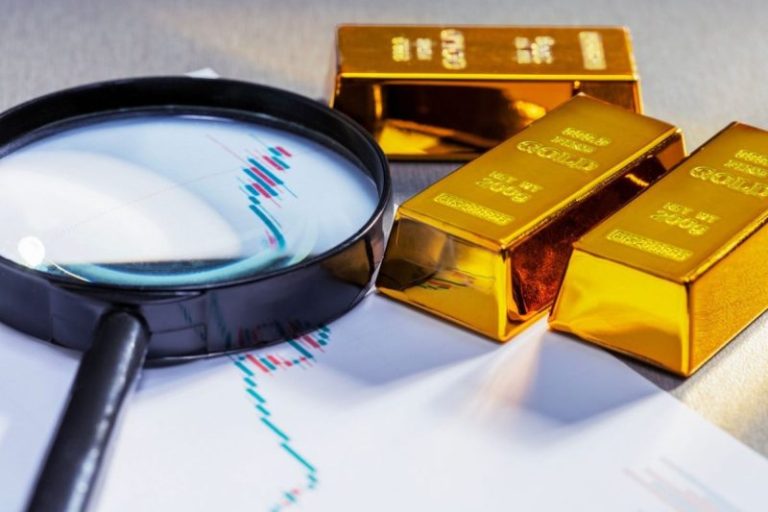
Gold has long been considered a store of wealth, and the price of gold often makes its biggest gains during turbulent times as investors look for cover in this safe-haven asset.
The 21st century has so far been heavily marked by episodes of economic and sociopolitical upheaval. Uncertainty has pushed the precious metal to record highs as market participants seek its perceived security.
And each time the gold price rises, there are calls for even higher record-breaking levels.
Gold market gurus from Lynette Zang to Chris Blasi to Jordan Roy-Byrne have shared eye-popping predictions on the gold price that would intrigue any investor — gold bug or not.
Some have posited that the gold price may rise as high as US$4,000 or US$5,000 per ounce, and there are those who believe that US$10,000 gold or even US$40,000 gold could become a reality.
These impressive price predictions have investors wondering, what is gold’s all-time high (ATH)?
In the past year, gold has reached a new all-time high dozens of times. Find out what has driven it to these levels, plus how the gold price has moved historically and what has driven its performance in recent years.
Before discovering what the highest gold price ever was, it’s worth looking at how the precious metal is traded. Knowing the mechanics behind gold’s historical moves can help illuminate why and how its price changes.
Gold bullion is traded in dollars and cents per ounce, with activity taking place worldwide at all hours, resulting in a live price for the metal. Investors trade gold in major commodities markets such as New York, London, Tokyo and Hong Kong. London is seen as the center of physical precious metals trading, including for silver. The COMEX division of the New York Mercantile Exchange is home to most paper trading.
There are many popular ways to invest in gold. The first is through purchasing gold bullion products such as bullion bars, bullion coins and rounds. Physical gold is sold on the spot market, meaning that buyers pay a specific price per ounce for the metal and then have it delivered. In some parts of the world, such as India, buying gold in the form of jewelry is the largest and most traditional route to investing in gold.
Another path to gold investment is paper trading, which is done through the gold futures market. Participants enter into gold futures contracts for the delivery of gold in the future at an agreed-upon price.
In such contracts, two positions can be taken: a long position under which delivery of the metal is accepted or a short position to provide delivery of the metal. Paper trading as a means to invest in gold can provide investors with the flexibility to liquidate assets that aren’t available to those who possess physical gold bullion.
One significant long-term advantage of trading in the paper market is that investors can benefit from gold’s safe-haven status without needing to store it. Furthermore, gold futures trading can offer more financial leverage in that it requires less capital than trading in the physical market.
Interestingly, investors can also purchase physical gold via the futures market, but the process is complicated and lengthy and comes with a large investment and additional costs.
Aside from those options, market participants can invest in gold through exchange-traded funds (ETFs). Investing in a gold ETF is similar to trading a gold stock on an exchange, and there are numerous gold ETF options to choose from. For instance, some ETFs focus solely on physical gold bullion, while others focus on gold futures contracts. Other gold ETFs center on gold-mining stocks or follow the gold spot price.
It is important to understand that you will not own any physical gold when investing in an ETF — in general, even a gold ETF that tracks physical gold cannot be redeemed for tangible metal.
With regards to the performance of gold versus trading stocks, gold has an interesting relationship with the stock market. The two often move in sync during “risk-on periods” when investors are bullish. On the flip side, they tend to become inversely correlated in times of volatility. There are a variety of options for investing in stocks, including gold mining stocks on the TSX and ASX, gold juniors, precious metals royalty companies and gold stocks that pay dividends.
According to the World Gold Council, gold’s ability to decouple from the stock market during periods of stress makes it “unique amongst most hedges in the marketplace.” It is often during these times that gold outperforms the stock market. For that reason, it is often used as a portfolio diversifier to hedge against uncertainty.
The gold price peaked at US$3,599.61, its all-time high, during trading on September 5, 2025.
What drove it to set this new ATH? Gold reached its new highest price following the release of unexpectedly weak US job data. Following the release, FedWatch’s odds for a 25 basis point rate cut at the upcoming US Federal Reserve meeting dropped from 99 to 90.2 percent, while odds of a 50 point drop jumped to 9.8 percent. The meeting will take place from September 16 to 17.
Gold set new highs several times in the preceding week amid significant uncertainty in the US and global economies and surging gold ETF purchases.
One significant driver came on August 29, when a US federal appeals court ruled that US President Donald Trump’s ‘liberation day’ tariffs, announced in April, are illegal, stating that only Congress has the power to enact widespread tariffs. The Trump administration is expected to appeal the ruling, which will go into effect on October 14.
Stock markets fell during trading September 2, while treasury yields in the US and abroad rose significantly, providing tailwinds to the gold price. Gold was also boosted by the expectation of interest rate cuts by the US Federal Reserve at the September meeting.
News surrounding the tariffs had previously led gold to reach multiple new highs back in April, as we dive into below.
Gold price chart, December 31, 2024, to September 5, 2025.
This string of record-breaking highs this year are caused by several factors.
Increased economic and geopolitical turmoil caused by the new Trump administration has been a tailwind for gold this year, as well as a weakening US dollar, sticky inflation in the country and increased safe haven gold demand.
Since coming into office in late January, Trump has threatened or enacted tariffs on many countries, including blanket tariffs on longtime US allies Canada and Mexico and tariffs on the European Union. Trump has also implemented 25 percent tariffs on all steel and aluminum imports.
The gold price set a string of new highs in the month of April amid high market volatility as markets reacted to tariff decisions from Trump and the escalating trade war between the US and China. By April 11, Trump had raised US tariffs on Chinese imports to 145 percent and China has raised its tariffs on US products to 125 percent.
As for the effect of these widespread tariffs raising prices for the American populace, Trump has reiterated his sentiment that the US may need to go through a period of economic pain to enter a new ‘golden age’ of economic prosperity. Falling markets and a declining US dollar support gold, as did increased gold purchasing in China in response to US tariffs on the country. Elon Musk’s call to audit the gold holdings in Fort Knox has also brought attention to the yellow metal.
Despite these recent runs, gold has seen its share of both peaks and troughs over the last decade. After remaining rangebound between US$1,100 and US$1,300 from 2014 to early 2019, gold pushed above US$1,500 in the second half of 2019 on a softer US dollar, rising geopolitical issues and a slowdown in economic growth.
Gold’s first breach of the significant US$2,000 price level in mid-2020 was due in large part to economic uncertainty caused by the COVID-19 pandemic. To break through that barrier and reach what was then a record high, the yellow metal added more than US$500, or 32 percent, to its value in the first eight months of 2020.
Gold price chart, August 31, 2020, to September 1, 2025.
The gold price surpassed that level again in early 2022 as Russia’s invasion of Ukraine collided with rising inflation around the world, increasing the allure of safe-haven assets and pulling the yellow metal up to a price of US$2,074.60 on March 8, 2022. However, it fell throughout the rest of 2022, dropping below US$1,650 in October.
Although it didn’t quite reach the level of volatility as the previous year, the gold price experienced drastic price changes in 2023 on the back of banking instability, high interest rates and the breakout of war in the Middle East.
After central bank buying pushed the gold price up to the US$1,950.17 mark by the end of January, the US Federal Reserve’s 0.25 percent rate hike on February 1 sparked a retreat as the dollar and Treasury yields saw gains. The precious metal went on to fall to its lowest price level of the year at US$1,809.87 on February 23.
The banking crisis that hit the US in early March caused a domino effect through the global financial system and led to the mid-March collapse of Credit Suisse, Switzerland’s second-largest bank. The gold price jumped to US$1,989.13 by March 15. The continued fallout in the global banking system throughout the second quarter of the year allowed gold to break above US$2,000 on April 3, and go on to flirt with a near-record high of US$2,049.92 on May 3.
Those gains were tempered by the Fed’s ongoing rate hikes and improvements in the banking sector, resulting in a downward trend in the gold price throughout the remainder of the second quarter and throughout Q3. By October 4, gold had fallen to a low of US$1,820.01 and analysts expected the precious metal to drop below US$1,800.
That was before the October 7 attacks by Hamas on Israel ignited legitimate fears of a much larger conflict erupting in the Middle East. Reacting to those fears, and to rising expectations that the Fed would begin to reverse course on interest rates, gold broke through the important psychological level of US$2,000 and closed at US$2,007.08 on October 27. As the fighting intensified, gold reached a then-new high of US$2,152.30 in intraday trading on December 3.
That robust momentum in the spot gold price continued into 2024, chasing new highs on fears of a looming US recession, the promise of Fed rate cuts on the horizon, the worsening conflict in the Middle East and the tumultuous US presidential election year. By mid-March, gold was pushing up against the US$2,200 level.
That record-setting momentum continued into the second quarter of 2024 when gold broke through US$2,400 in mid-April on strong central bank buying, sovereign debt concerns in China and investors expecting the Fed to start cutting interest rates. The precious metal went on to hit US$2,450.05 on May 20.
Throughout the summer, the hits kept on coming.
The global macro environment was highly bullish for gold in the lead up to the US election. Following the failed assassination attempt on Trump and a statement about coming interest rate cuts by Fed Chair Powell, the gold spot price hit a then new all-time high on July 16 at US$2,469.30. One week later, news that then-President Joe Biden would not seek re-election and would instead pass the baton to Vice President Kamala Harris eased some of the tension in the stock markets and strengthened the US dollar. This also pushed the price of gold down to US$2,387.99 on July 22, 2024.
However, the bullish factors supporting gold remained in play, and the spot price for gold went on to breach US$2,500 on August 2 that year on a less than stellar US jobs report; it closed just above the US$2,440 level. A few weeks later, gold pushed past US$2,500 once again on August 16, closing above that level for the first time ever after the US Department of Commerce released data showing a fifth consecutive monthly decrease in a row for homebuilding.
The news that the Chinese government issued new gold import quotas to banks in the country following a two month pause also helped fuel the gold price rally. Central bank gold buying has been a significant tailwind for the gold price this year, and China’s central bank has been one of the strongest buyers.
Market watchers expected the Fed to cut interest rates by a quarter point at their September 2024 meeting, but news on September 12 that the regulators were still deciding between the expected cut or a larger half-point cut led gold prices on a rally that carried through into the next day, bringing gold prices near US$2,600.
At the September 18 Fed meeting, the committee ultimately made the decision to cut rates by half a point, news that sent gold even higher. By September 20, it moved above US$2,600 and held above US$2,620.
In October 2024, gold first breached the US$2,700 level and continued to higher on a variety of factors, including further rate cuts and economic data anticipation, the escalating conflict in the Middle East between Israel and Hezbollah, and economic stimulus in China — not to mention the very close race between the US presidential candidates.
While the gold price fell following Trump’s win in early November and largely held under US$2,700 through the end of the year, it began trending upwards in 2025 to the new all-time high discussed earlier in the article.
What’s next for the gold price is never an easy call to make. There are many factors to consider, but some of the most prevalent long-term drivers include economic expansion, market risk, opportunity cost and momentum.
Economic expansion is one of the primary gold price contributors as it facilitates demand growth in several categories, including jewelry, technology and investment. As the World Gold Council explains, “This is particularly true in developing economies where gold is often used as a luxury item and a means to preserve wealth.”
Market risk is also a prime catalyst for gold values as investors view the precious metal as the “ultimate safe haven,” and a hedge against currency depreciation, inflation and other systemic risks.
Going forward, in addition to the Fed, inflation and geopolitical events, experts will be looking for cues from factors like supply and demand. In terms of supply, the world’s five top gold producers are China, Australia, Russia, Canada and the US. The consensus in the gold market is that major miners have not spent enough on gold exploration in recent years. Gold mine production has fallen from around 3,200 to 3,300 metric tons (MT) each year between 2018 and 2020 to around 3,000 to 3,100 MT each year between 2021 and 2023.
On the demand side, China and India are the biggest buyers of physical gold, and are in a perpetual fight for the title of world’s largest gold consumer. That said, it’s worth noting that the last few years have brought a big rebound in central bank gold buying, which dropped to a record low in 2020, but reached a 55 year high of 1,136 MT in 2022.
World Gold Council data shows 2024 central bank gold purchases came to 1,044.6 MT, marking the third year in a row above 1,000 MT. In H1 2025, the organization says gold purchases from central banks reached 415.1 MT.
In addition to central bank moves, analysts are also watching for escalating tensions in the Middle East, a weakening US dollar, declining bond yields, and further interest rate cuts as factors that could push gold higher as investors look to secure their portfolios. “When it comes to outside factors that affect the market, it’s just tailwind after tailwind after tailwind. So I don’t really see the trend changing,” Coffin said.
Joe Cavatoni, senior market strategist, Americas, at the World Gold Council, believes that market risk and uncertainty surrounding tariffs and continued demand from central banks are the main drivers of gold.
It’s important for investors to be aware that gold price manipulation is a hot topic in the industry.
In 2011, when gold hit what was then a record high, it dropped swiftly in just a few short years. This decline after three years of impressive gains led many in the gold sector to cry foul and point to manipulation.
Early in 2015, 10 banks were hit in a US probe on precious metals manipulation.
Evidence provided by Deutsche Bank (NYSE:DB) showed “smoking gun” proof that UBS Group (NYSE:UBS), HSBC Holdings (NYSE:HSBC), the Bank of Nova Scotia (TSX:BNS,NYSE:BNS and other firms were involved in rigging gold and silver rates in the market from 2007 to 2013. Not long after, the long-running London gold fix was replaced by the LBMA gold price in a bid to increase gold price transparency. The twice-a-day process, operated by the ICE Benchmark Administration, still involves a variety of banks collaborating to set the gold price, but the system is now electronic.
Still, manipulation has by no means been eradicated, as a 2020 fine on JPMorgan Chase & Co. (NYSE:JPM) shows. The next year, chat logs were released in a spoofing trial for two former precious metals traders from the Bank of America’s (NYSE:BAC) Merrill Lynch unit. They show a trader bragging about how easy it is to manipulate the gold price.
Gold market participants have consistently spoken out about manipulation. In mid-2020, Chris Marcus, founder of Arcadia Economics and author of the book “The Big Silver Short,” said that when gold fell back below the US$2,000 mark after hitting close to US$2,070, he saw similarities to what happened with the gold price in 2011.
Marcus has been following the gold and silver markets with a focus specifically on price manipulation for nearly a decade. His advice? “Trust your gut. I believe we’re witnessing the ultimate ’emperor’s really naked’ moment. This isn’t complex financial analysis. Sometimes I think of it as the greatest hypnotic thought experiment in history.”
While we have the answer to what the highest gold price ever is as of now, it remains to be seen how high gold can climb, and if the precious metal can reach as high as US$5,000, US$10,000 or even US$40,000.
Even so, many market participants believe gold is a must have in any investment profile, and there is little doubt investors will continue to see gold price action making headlines this year and beyond.
Securities Disclosure: I, Lauren Kelly, hold no direct investment interest in any company mentioned in this article.