Author

admin

Browsing

WASHINGTON — The Senate agreed unanimously early Friday to fund the Department of Homeland Security, but without funding for immigration enforcement and deportation operations.

Senators approved the package at 2:20 a.m. by voice vote following a marathon session.

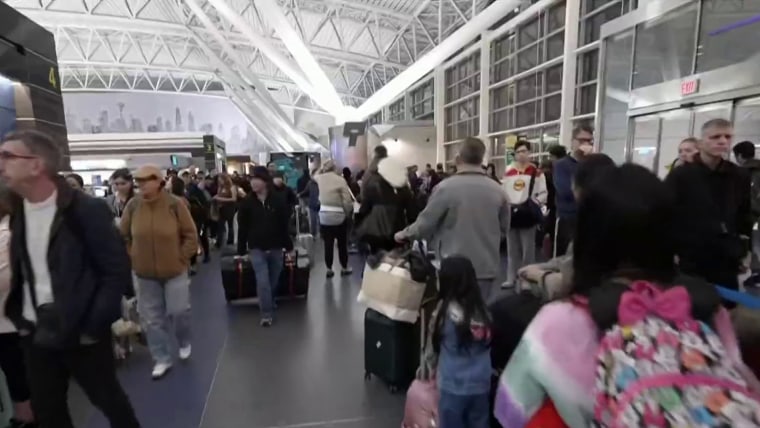
The 42-day funding lapse has seen them go without pay, leading many to call out of work and causing long lines at airports. While the measure still needs to pass the House, the Senate vote paves the way to allow airports to fully function again.

The legislation would fund all of DHS except Immigration and Customs Enforcement and Customs and Border Protection, which Democrats have refused to vote for without significant reforms to immigration raids and deportation practices.

The deal followed arduous bipartisan negotiations that occurred in fits and starts over the last six weeks, succumbing to the impasse around policy changes to immigration enforcement. Under the new plan, Democrats get their weeks-long demand to fund the department with the exceptions of ICE or CBP, but also without the restrictions they sought on how immigration officers may conduct operations.

“This could have been done three weeks ago,” Senate Minority Leader Chuck Schumer, D-N.Y., said. “This is exactly what we wanted.”

Long wait lines at a TSA checkpoint at New York’s LaGuardia airport Friday.Gabrielle Korein / NBC News

The bill faces an uncertain future in the Republican-controlled House. It is expected to have President Donald Trump’s support, which could help corral conservatives who have been skeptical about splitting off ICE funding from the underlying bill.

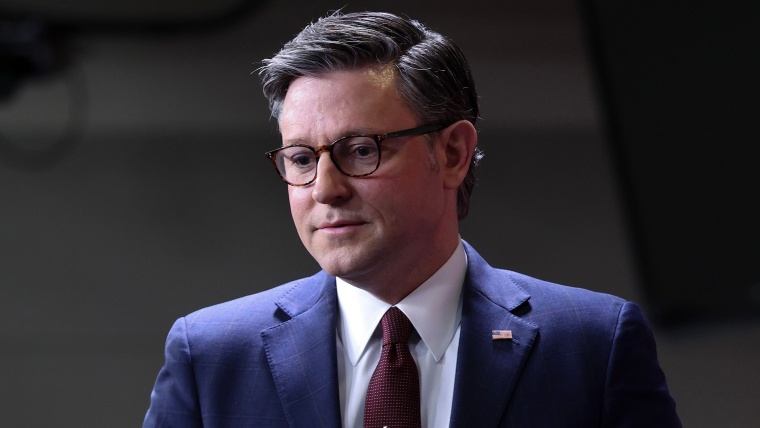
“Hopefully they’ll be around, and we can get at least a lot of the government opened up again, and then we’ll go from there,” Senate Majority Leader John Thune, R-S.D., said of the House and a potential vote on Friday. He said he texted with Speaker Mike Johnson, R-La., on Thursday night.

The Senate adjourned for a two-week recess, leaving the House with few options other than to accept their bill as written.

Thune separately blamed Democrats. “President Trump should never have had to step in to rescue TSA workers and U.S. air travel. We are here because, thanks to Democrats’ determined refusal to reach an agreement, there will be no Homeland Security funding bill this year.”

Speaking after the vote, Schumer said: “In the wake of the murders of Renee Good and Alex Pretti, Senate Democrats were clear. No blank check for a lawless ICE and Border Patrol.”

He added that the “long overdue agreement” funds TSA, the Coast Guard, the Federal Emergency Management Agency and the Cybersecurity and Infrastructure Security Agency, and “strengthens security at the border and the ports of entry, and keeps Americans safe.”

He added that the deal “could have been accomplished weeks ago if Republicans hadn’t stood in the way.”

The White House and Republicans declined to grant Democrats’ demands to restrict Trump’s immigration practices. They now plan to pursue the remainder for funding for ICE and CBP in a separate party-line bill, which they could also use to pass Iran war funding and elements of the Trump-backed SAVE America Act.

Senate Republicans held a vote open for hours Thursday as the two sides continued to negotiate, having traded offers for days.

Trump, meanwhile, announced earlier Thursday that he would instruct newly sworn-in Homeland Security Secretary Markwayne Mullin to “immediately pay our TSA Agents in order to address this Emergency Situation.”

That move may not be needed if the House passes the Senate legislation, according to a senior administration official, who said the White House is waiting to see what will happen.

This official also said the funds to pay TSA agents would come from the so-called One Big Beautiful Bill, the tax-cut and spending legislation Trump signed into law in July. It’s not clear exactly how that would work, but the administration has dipped into those unspent funds before to cover pay gaps during funding lapses.

The House can either debate and vote out the Senate-passed measures in the Rules Committee before bringing them to the floor under a simple majority vote, or Johnson can seek to fast-track it to the floor.

The House was set to hold an unrelated vote at 10 a.m. before leaving for recess.

We’d like to hear from you about how you’re experiencing the partial government shutdown, whether you’re a TSA agent who can’t work right now or a federal employee who is feeling the effects at your agency. Please contact us at tips@nbcuni.com or reach out to us here.

TSA officers missed their first full paychecks in mid-March, leading many to call out of work. Call-out rates for TSA officers have exceeded 11% nationally, with rates at some airports passing 40%.

Trump sent ICE agents to airports to help TSA earlier this week. Unlike TSA officers, ICE agents continue to receive paychecks during the partial shutdown as a result of funding from the so-called One Big Beautiful Bill, a sweeping GOP domestic policy package, that Trump signed into law last year.

A federal judge in California has blocked the Trump administration from designating Anthropic as a supply chain risk to national security and cutting off the AI company’s work with federal agencies.

Anthropic sued the Defense Department and other federal agencies this month after the Pentagon labeled it a “supply-chain risk to national security.” President Donald Trump said he would also ban the use of Anthropic’s products across other federal agencies.

“Defendants’ designation of Anthropic as a ‘supply chain risk’ is likely both contrary to law and arbitrary and capricious,” U.S. District Judge Rita Lin of Northern California wrote in her order Thursday night. “The Department of War provides no legitimate basis to infer from Anthropic’s forthright insistence on usage restrictions that it might become a saboteur.”

Lin paused her order for a week to allow the administration time to appeal.

The Defense Department and the White House did not immediately respond to a request for comment Thursday evening.

“We’re grateful to the court for moving swiftly, and pleased they agree Anthropic is likely to succeed on the merits,” an Anthropic spokesperson said in a statement Thursday. “While this case was necessary to protect Anthropic, our customers, and our partners, our focus remains on working productively with the government to ensure all Americans benefit from safe, reliable AI.”

The supply chain risk designation requires the Pentagon and its contractors to stop using Anthropic’s commercial AI services for all defense business.

Defense Secretary Pete Hegseth said on X in late February that he was issuing a directive to give the company the “supply chain risk” label. Trump also said he was ordering all federal agencies, including the Treasury and State departments, to cease using Anthropic’s AI technology.

“The record reflects that the Challenged Actions were taken without any meaningful notice or pre-deprivation process (and, in the case of the Presidential Directive and the Hegseth Directive, without any post-deprivation process either),” Lin wrote in her order.

The order Thursday also bars other agencies from cutting off their work with Anthropic. Lin wrote that the order restores the status quo.

“This Order does not require the Department of War to use Anthropic’s products or services and does not prevent the Department of War from transitioning to other artificial intelligence providers, so long as those actions are consistent with applicable regulations, statutes, and constitutional provisions,” the order said.

Anthropic filed two lawsuits against the Defense Department — one in U.S. District Court for Northern California and the other in U.S. Circuit Court of Appeals for Washington, D.C. — alleging that the federal government’s moves go beyond a normal contract dispute and instead are an “unlawful campaign of retaliation” that followed months of heated negotiations about how the military should be able to use Anthropic’s AI systems.

Anthropic had sought stronger guarantees that the Pentagon would not use its AI systems for autonomous weapons or mass domestic surveillance.

Anthropic is the creator of the Claude chatbot system and the only AI company whose services were cleared for use on the Defense Department’s classified networks.

Hours after Hegseth’s announcement last month, OpenAI CEO Sam Altman said his company had reached an agreement with the Pentagon to use its services in classified settings.

Lin wrote: “Although Anthropic was on notice that the government objected to its contracting terms, it had no notice or opportunity to object before Defendants publicly barred it from all federal government work and blacklisted it with private companies working with the U.S. military. It also had no notice or opportunity to object to the factual basis for its designation as a supply chain risk, which it learned of in this litigation.”

Federal authorities are investigating a close call this week involving a military helicopter and a United Airlines plane approaching John Wayne Airport in Santa Ana.

United Airlines Flight 589 was approaching the airport in Orange County around 8:40 p.m. Tuesday when a Sikorsky Black Hawk helicopter crossed its path, according to the Federal Aviation Administration.

Pilots on the United Airlines plane were advised by air traffic control to watch for the military helicopter flying near the airport, United Airlines said.

“They saw the helicopter, and also received a traffic alert, which they responded to by leveling the aircraft,” United said.

The United flight with 162 passengers and six crew members landed safely.

The new investigation comes a week after the FAA issued a new airport safety order designed to improve safety near airports where helicopters cross both arrival and departure paths. The order suspends use of visual separation between airplanes and helicopters and requires air traffic controllers to use radar to manage lateral and vertical separation between aircraft.

A close call earlier this month between a twin-engine Beechcraft 99 and helicopter at Hollywood Burbank Airport was cited by federal authorities as a key factor behind a new airport safety measure.

In another example, the agency said American Airlines Flight 1657 was cleared to land at San Antonio International Airport when a police helicopter was on its final approach path. The helicopter turned to avoid the American Airlines plane, the FAA said.

The new requirement applies to more than 150 of the nation’s busiest airports and extends a restriction already in place at Ronald Reagan Washington National Airport.

The upgraded safety measure was rolled out after a year-long FAA safety team review. In a news release, the FAA also referenced the Jan. 29 American Airlines jet and Army Black Hawk crash that killed 67 people. A key factor in the crash was the placement of a helicopter route in the approach path of Reagan National Airport’s secondary runway, the NTSB board said, also identifying air traffic controllers’ over reliance on asking helicopter pilots to avoid other aircraft as a factor.

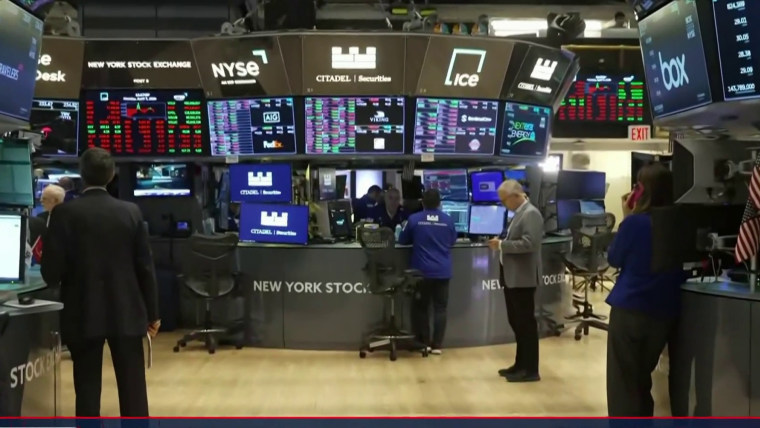
U.S. stocks and bonds sold off Thursday and oil continued its weekslong upward trajectory, as optimism faded about possible peace talks or a U.S.-Iran ceasefire.

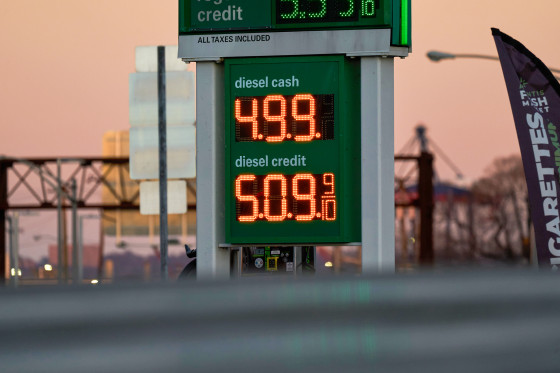
The price of U.S. crude oil rose near $95 per barrel, up more than 4%. International Brent crude rose 5%, to more than $109 per barrel. Since the war started, the cost of U.S. crude oil is up more than 40%. Since the start of the year, it has risen more than 60%.

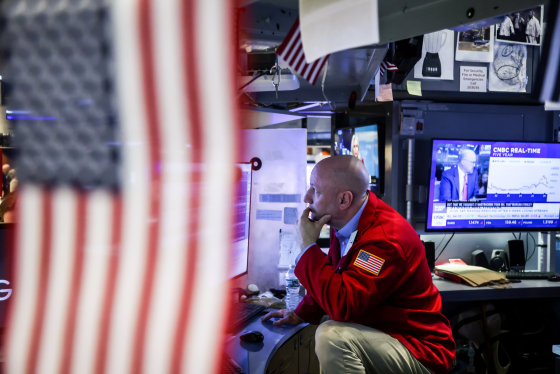
The S&P 500 closed down by 1.7%, the Dow tumbled 470 points and the Russell 2000 ended the day down 1.7%. For the S&P 500, Thursday was its worst single day since the war began.

The Nasdaq Composite fared the worst though, and dropped nearly 2.4%, pushing the index into correction territory. A correction is when an index falls 10% or more from its most recent all-time high. As of Thursday’s close, the index is now down 10.9% from its October high.

Heating oil, a proxy for jet fuel prices, also spiked 8% on Thursday afternoon. The nationwide average price of unleaded gas was $3.98 a gallon.

Nonetheless, Trump downplayed the severity of the oil and gas price spikes.

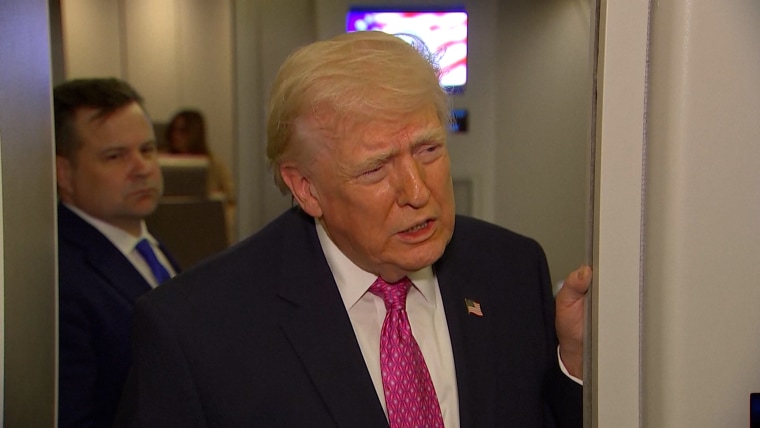
Energy prices “have not gone up as much as I thought,” Trump said at a Cabinet meeting in Washington.

The military campaign is “not over, so maybe it’ll go up a little bit more,” Trump said. “It’s all going to come back down to where it was and probably lower.”

Trump also cast doubt on a deal with Iran. “They are begging to work out a deal,” he said. “I don’t know if we’ll be able to do that. I don’t know if we’re willing to do that.”

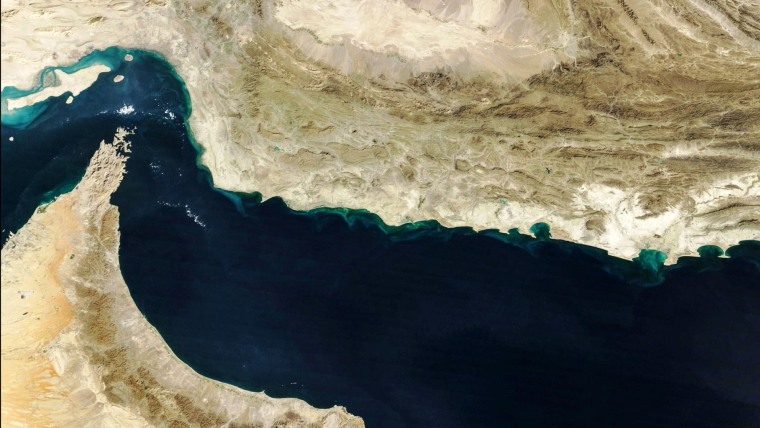
But analysts widely believe that oil prices will continue to remain elevated over the long run, factoring in the risk that shippers will now have to assume for oil tankers that transit through the Strait of Hormuz.

Also impacting market sentiment was a report from the Organisation for Economic Co-operation and Development, which predicted that as a result of the war with Iran, the average inflation rate for G20 countries this year would rise to 4%, up from its December prediction of 2.8%. The United States is a member of the OECD.

Bonds also sold off, driving yields higher. The 10-year U.S. Treasury bond yield rose to 4.42%. The yield on 20-year bond hit 4.97% and the 30-year yield hit 4.93%.

Treasury yields, especially for the 10-year bond, heavily influence consumer lending rates. As a result, mortgage rates have risen from around 6% at the start of the war on Feb. 28 to more than 6.5% as of Thursday afternoon.

Stock indexes in Asia had already begun to sell off overnight. China’s Shanghai index and Hong Kong’s Hang Seng index both fell 1%, while Korea’s Kospi slid 3.2%.

These indexes were also weighed down by big drops in shares of tech companies, including Samsung, after Google revealed a new, more efficient use of storage and memory systems for artificial intelligence.

The Stoxx 600 in Europe followed, closing down more than 1%. Flagship stock indexes in Germany, France and the U.K. also ended the trading session down by around 1%.

LOS ANGELES — A jury found Meta and YouTube negligent in the design or operation of their social media platforms, producing a bellwether verdict in the first lawsuit to take tech giants to trial for social media addiction.

The Los Angeles County Superior Court jury said that Meta’s and YouTube’s negligence were a substantial factor in causing harm to the plaintiff, identified in court by her initials, K.G.M., and that the companies failed to adequately warn users of the dangers of Instagram (Meta’s platform) and YouTube (which is owned by Google).

It awarded K.G.M. $3 million in compensatory damages, finding Meta 70% responsible for harm caused to the now 20-year-old plaintiff, and YouTube responsible for 30%.

The trial, which began last month in a Los Angeles County courtroom and included testimony from Mark Zuckerberg and other tech executives, was the first in a consolidated group of cases brought against Meta and other companies by more than 1,600 plaintiffs, including over 350 families and over 250 school districts.

Outside the courtroom, families who say their children were harmed by social media embraced as they celebrated the verdict, telling reporters they feel “vindicated.”

Spokespeople for Meta and Google said the companies disagree with the verdict and plan to appeal.

“Teen mental health is profoundly complex and cannot be linked to a single app,” a Meta spokesperson said. “We will continue to defend ourselves vigorously as every case is different, and we remain confident in our record of protecting teens online.”

José Castañeda, a spokesperson for Google, also said the case “misunderstands YouTube, which is a responsibly built streaming platform, not a social media site.”

In a joint statement, co-lead counsel for K.G.M. said the verdict is “a historic moment” for thousands of children and their families.

“But this verdict is bigger than one case,” the lawyers said. “For years, social media companies have profited from targeting children while concealing their addictive and dangerous design features. Today’s verdict is a referendum — from a jury, to an entire industry — that accountability has arrived.”

The jury decided on $2.1 million in punitive damages for Meta and $900,000 for YouTube, totaling $3 million. It’s a small fraction of the $1 billion in punitive damages the plaintiff’s counsel sought.

Plaintiff K.G.M., center, arrives at Los Angeles County Superior Court on Feb. 26.Mario Tama / Getty Images file

K.G.M.’s lead attorney, Mark Lanier, has said he hopes the proceedings produce transparency and accountability “so that the public can see that these companies have been orchestrating an addiction crisis in our country and, actually, the world.”

The plaintiff was a minor at the time of the incidents outlined in her lawsuit. K.G.M. testified in court that her nearly nonstop use of social media caused or contributed to depression, anxiety and body dysmorphia. It “really affected my self-worth,” she said last month.

Speaking about her social media use, K.G.M. testified that she felt she wanted to constantly be on the platforms and feared missing out if she wasn’t.

Attorneys for Meta and YouTube have disputed claims brought by the plaintiff, arguing their platforms aren’t purposefully harmful and addictive.

A spokesperson for Meta said K.G.M.’s “profound challenges” weren’t caused by social media and pointed to “significant emotional and physical abuse” that she experienced when she was younger.

In his closing argument, an attorney for YouTube said there wasn’t a single mention of addiction to that platform in K.G.M.’s medical records.

The verdict comes after jurors in a separate trial in New Mexico held Meta liable for failing to protect children from online predators and sexual exploitation on Facebook and Instagram.

The New Mexico jury found Tuesday that Meta violated the state’s consumer protection laws and ordered it to pay $375 million in civil penalties. Meta has said it disagrees with the verdict and plans to appeal.

In Los Angeles, deliberations took longer, wrapping up after nearly 44 hours over nine days. The jurors had told Judge Carolyn B. Kuhl that they were having trouble coming to a consensus on one defendant.

Social media companies have historically been shielded by Section 230, a provision added to the Communications Act of 1934 that says internet companies aren’t liable for the content users post.

Meta CEO Mark Zuckerberg leaves Los Angeles County Superior Court on Feb. 18. Kyle Grillot / Bloomberg via Getty Images file

K.G.M.’s lawsuit was the first civil action seeking to hold the platforms accountable for allegedly causing addiction and mental health problems.

TikTok and Snap, who were also named as defendants in K.G.M.’s lawsuit, reached settlements before the trial. They remain defendants in a series of similar lawsuits expected to go to trial this year.

Matt Bergman, founding attorney of the Social Media Victims Law Center — which is representing hundreds of plaintiffs in state and federal proceedings — said the jury’s decision Wednesday “establishes a framework for how similar cases across the country will be evaluated and demonstrates that juries are willing to hold technology companies accountable when the evidence shows foreseeable harm.”

“Families pursuing justice in other jurisdictions can now point to this outcome as proof that these claims deserve to be heard and taken seriously,” Bergman said in a statement.

Lanier told NBC News in an interview that this was the most difficult case he’s tried in his 42 years as a lawyer.

“I think the jury understood that they were the very first case in the history of our country to look at social media addiction, and they wanted to leave no question, but that they seriously considered the evidence,” Lanier said. “So they took forever, then they looked carefully at each of the questions and answered everyone was, yes, guilty.”

California Attorney General Rob Bonta also weighed in on the Los Angeles and New Mexico verdicts, writing in an X statement that California “looks forward to holding Meta accountable in our own upcoming August trial in the Bay Area.”

“TODAY” co-anchor Savannah Guthrie will return to the NBC morning show on April 6, as investigators continue to search for her 84-year-old mother in Arizona.

In her first interview since Nancy Guthrie went missing in February, Savannah Guthrie told Hoda Kotb she believes returning to “TODAY” is “part of my purpose right now” — even if it’s hard to imagine coming back to a workplace “of joy and lightness.”

“I can’t come back and try to be something that I’m not. But I can’t not come back because it’s my family,” Guthrie said in the interview about returning to work. “I don’t know if I can do it. I don’t know if I’ll belong anymore, but I would like to try. I would like to try.”

“I’m not gonna be the same. But maybe it’s like that old poem, ‘More beautiful in the broken places,’” she added.

Tune into “Savannah Speaks: A Dateline Special” at 9 p.m. EST on NBC.

Kotb revealed Guthrie’s return Friday on “TODAY.” Her co-host, Craig Melvin, added that the team “can’t wait to welcome her back with open arms.”

“It’s where she belongs. It’s where we all want her to be,” Melvin said.

A spokesperson for “TODAY” did not have additional comment.

Nancy Guthrie was reported missing Feb. 1 after she did not show up at a friend’s house for virtual church services, authorities said. She was last seen the previous night around 9:45 p.m. after having dinner at her daughter Annie Guthrie’s home.

Authorities have described the case as a possible kidnapping or abduction, but clues have been scarce. The Pima County Sheriff’s Office has not publicly specified a motive.

Guthrie told Kotb that her religious faith is “how I will stay connected to my mom.” She alluded to her mother’s experience with loss after her husband, Charles Guthrie, died at the age of 49 in 1988.

“I saw her belief. I saw her faith. She taught me, she taught all of us,” said Guthrie, who was 16 at the time of her father’s death. “I may not do it as well as her, but I will do it. I will do it for my kids. I will. I will not fall apart. I will not let whoever did this take my children’s mother from them.”

Guthrie repeated her pleas for information about her mother’s possible abduction, saying in part: “We need someone to tell the truth. I have no anger in my heart. I have hope in my heart. I have love. But this family needs peace.”

“We need an answer, and someone has it in their power to help,” she added.

Guthrie also opened up about her visit earlier this month to the New York City set of the “TODAY” show, describing her NBC colleagues as her “greater family.”

“I really wanted to come and see everybody. I just love this beautiful place that we call home, where we get to come and be every day,” she said, adding, “When times are hard, you want to be with your family.”

U.S. stocks rose Wednesday and global oil prices fell in yet another volatile trading session as traders and investors were buffeted by constant headlines about the war in Iran.

News of a 15-point U.S. peace plan proposal sparked hopes early in the day that the Trump administration was moving to end its monthlong war against Iran. Initially, the S&P 500 and the Nasdaq 100 futures rose more than 1%.

But reports that Iran had responded negatively to the proposal briefly knocked index futures off their pre-market highs and lifted oil prices off their morning lows.

Despite the early setback, stocks closed the trading day higher. At 4 p.m. ET, the S&P 500 index was up about 0.4%, the Nasdaq Composite closed 0.7% higher, and the Dow jumped 305 points. The Russell 2000 index of smaller companies rose 1.1%.

The price of U.S. crude oil also traded off its lowest levels of the day and was down only 1.4% to about $90 per barrel by late afternoon. West Texas Intermediate crude oil has soared more than 30% since the start of the war on Feb. 28. The cost per barrel is up 50% since the beginning of the year.

International Brent crude prices traded near breakeven, at around $102 per barrel. The price of heating oil, a proxy for jet fuel, dropped 6%.

The global price of oil directly affects what Americans pay at the gas pump and what it costs them to heat and cool their homes. The average nationwide price of unleaded gas Wednesday was $3.98 per gallon, according to AAA data.

“Markets desperately want to believe in the positive,” UBS Global Wealth Management chief economist Paul Donovan wrote. “Focus on the apparent 15-point US plan to end the war has received more attention than Iranian dismissals of this, or the fact that passage through the Strait of Hormuz is minimal.”

Iran’s response to the U.S. proposal included a list of five conditions for ending the war, according to Iranian state TV, which cited a senior political-security official with knowledge of the details of the proposal.

Pakistan has also offered to mediate talks to end the hostilities, four sources told NBC News. A Persian Gulf official said Pakistan had been passing messages between the two countries for the past two days.

An in-person meeting between the U.S. and Iran could be held in the coming days, two sources added.

But President Donald Trump has continued to give conflicting signals.

On March 16, Trump said he was delaying his scheduled visit to China “by a month or so” to monitor the war. On Monday, he said the Strait of Hormuz would be “open very soon.”

And on Tuesday, Trump told reporters in the Oval Office, “This war has been won.” At the same time, the U.S. is sending more than 1,000 additional troops to the Middle East, sources said.

A motorist drives past a sign displaying prices at a gas station in Oakland, Calif., on Tuesday.Godofredo A. Vásquez / AP

Since the war started, the market has experienced several days like this, when markets are whipsawed by constant back-and-forth comments.

“There’s really no way to know at this point what the facts are regarding the state of negotiations, as neither side has any real incentive to conduct talks via the press, so expect more whipsaw action as things continue to progress,” analysts at Bespoke Investment Group wrote in a client note.

They added that the “ongoing tensions continue to support higher prices [and] stoke inflation concerns” and are likely to cause central banks to remain on hold, rather than cut rates.

On the contrary, traders believe the European Central Bank and the Bank of England will both raise interest rates.

“Uncertainty remains high,” analysts at ING wrote in a note Wednesday morning. “Overall, volatility remains elevated and a geopolitical risk premium persists.”

In the 18 trading sessions since the war began, U.S. oil prices have closed down only five times. Likewise, over the same period, the S&P 500 has closed higher only seven times. Three of those higher closes were only fractional.

After Wednesday’s close, the Nasdaq was down nearly 6% for the year, while the S&P 500 was on track for a 3.5% loss so far. The majority of those losses were concentrated in the weeks since the war began.

Meanwhile, the Strait of Hormuz, through which 20% of the world’s oil supply typically passes, has remained at a near standstill since the war began.

On Monday, just five ships passed through the strait, according to data compiled by S&P Global Market Intelligence. On Tuesday, the total was six. On many days since the war started, not a single ship has passed through.

However, some of the ships passing through the strait have taken an unusual course that put them close to the Iranian coastline, potentially signaling that Tehran was keeping a tight grip on traffic flows. Two Indian ships were granted passage Tuesday after a deal with Iran, Bloomberg News reported. The Iranian navy also guided the ships.

Otherwise, hundreds of other ships loaded up with cargo, oil and liquefied natural gas remain stuck.

At least 40% of Russia‘s oil export capacity is at a halt following Ukrainian drone attacks, a disputed attack on a major pipeline and the seizure of tankers, according to Reuters calculations based on market data.

The shutdown is the most severe oil supply disruption in the modern history of Russia, the world’s second largest oil exporter, and has hit Moscow just as oil prices exceeded $100 a barrel due to the Iran war.

Russia’s oil output is one of the main sources of revenue for the national budget and is central to the $2.6 trillion economy.

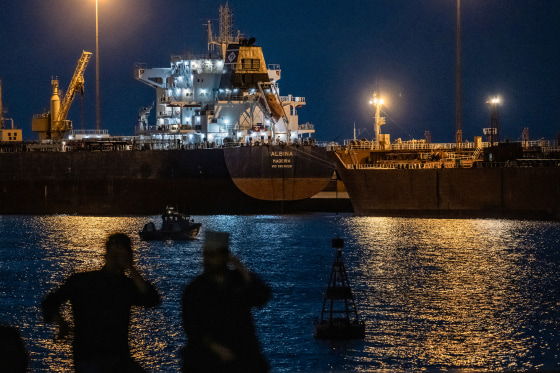
An oil tanker moored in Novorossiysk, Russia, in 2022.AP

Ukraine intensified drone attacks on Russia‘s oil and fuel export infrastructure this month, hitting all three of Russia‘s major western oil export ports, including Novorossiysk on the Black Sea and Primorsk and Ust-Luga on the Baltic Sea.

According to Reuters calculations, about 40% of Russia‘s crude oil export capabilities — or around 2 million barrels per day, were shut as of Wednesday after the most recent attack.

That includes Primorsk and Ust-Luga as well as the Druzhba pipeline, which runs through Ukraine to Hungary and Slovakia.

Kyiv has also targeted pipeline oil pumping stations and refineries. Kyiv says it aims to diminish Moscow’s oil and gas revenue, which accounts for around a quarter of Russia‘s state budget proceeds, and weaken its military might.

Russia says the Ukrainian strikes are terrorist attacks and has tightened security across its 11 time zones.

Firefighters extinguish a blaze at a chemical transport terminal at Russia’s Ust-Luga port on Jan. 21, 2024. Local media reported that Ukrainian drones attacked the port.Telegram Channel of head of the Kingisepp district via AP

Ukraine said that part of the Druzhba pipeline was damaged by Russian strikes at the end of January, while both Slovakia and Hungary demanded Kyiv restart the supplies immediately.

The Novorossiysk oil terminal, which can handle up to 700,000 bpd, has been loading oil below plan since damage from a heavy Ukrainian drone attack early this month.

In addition, frequent seizures of Russia-related tankers in Europe have disrupted 300,000 bpd of Arctic oil exports flowing from the port of Murmansk, traders said.

With its westward export routes under fire, Moscow must rely on oil exports to Asian markets, but those routes are limited due to capacity, traders said.

Russia continues uninterrupted supplies via pipelines to China, including the Skovorodino-Mohe and Atasu-Alashankou routes, as well as ESPO Blend exports by sea via the port of Kozmino.

Together, the three routes account for some 1.9 million bpd of oil.

Russia also continues to load oil from its two far eastern Sakhalin projects, shipping about 250,000 bpd from the island.

Traders also say that Russia is supplying the refineries in neighboring Belarus with around 300,000 bpd of oil.

The two pilots killed in the collision between a passenger jet and a Port Authority fire truck at New York’s LaGuardia Airport late Sunday have been identified as Antoine Forest and Mackenzie Gunther.

The pair have yet to be officially named by authorities, who have said only that both pilots of the Canada Air Express plane died and that they were based in Canada. Their identities were confirmed by Canadian news reports and by a college that one pilot attended.

Antoine Forest, one of the pilots who reportedly died in the LaGuardia plane collision.via Facebook

The Federal Aviation Administration, the National Transportation Safety Board and other agencies are investigating the crash. They will seek to determine how the truck was able to cut across the jet’s path moments after it touched down on the runway.

Here’s what we know about the fatal crash.

At a news conference Tuesday afternoon, NTSB officials released preliminary information gleaned from the final three minutes of the plane’s cockpit voice recorder that showed that the fire truck was cleared to cross the runway 20 seconds before the crash.

At 2 minutes and 22 seconds, the flight crew checked in with the tower at LaGuardia, said Doug Brazy, NTSB’s senior aviation investigator.

At 2 minutes and 17 seconds, the tower cleared the airplane to land on Runway 4.

Brazy said that at 1 minute and 3 seconds, an airport vehicle made a radio transmission to the tower but that the transmission was “stepped on” by another radio transmission. NTSB Chairwoman Jennifer Homendy said that means there was some sort of interference with the transmission.

At 54 seconds, the tower advised the flight crew that the plane was at a stable approach, Brazy said.

At 40 seconds, the LaGuardia tower asked which vehicle needed to cross a runway. Brazy said the fire truck made a transmission to the tower, which the tower acknowledged. At 25 seconds, the truck requested permission to cross Runway 4. Brazy said that at 20 seconds, the tower cleared the truck to cross.

At 17 seconds, the fire truck read back the runway crossing clearance, he said. According to Brazy, the tower instructed a Frontier Airlines flight to hold position, and at 9 seconds, the tower told the fire truck to stop.

At 8 seconds, there was a sound consistent with the airplane’s landing gear touching down on the runway, he said. At 6 seconds, there was a pilot transfer of controls. Homendy told reporters that the first officer was flying the plane and transferred control to the captain.

At 4 seconds, the tower again instructed the fire truck to stop, Brazy said.

This article is part of “Unaffordable America,” a series examining rising economic inequality in the U.S. and the policies that drive it.

How’s the economy?

Not bad if you’re rich.

Demand for luxury yachts and private jets is surging thanks to last year’s tax law. Sales of $10 million-plus mansions are booming as stocks hit new highs. And the wealthy and powerful will get to enjoy a new ballroom for galas at the White House.

What if you aren’t rich?

The typical American can’t afford the median-priced home. A new car is out of reach for many, with the average monthly payment exceeding $700. Food banks are seeing a growing number of people skipping meals because they can’t afford groceries, and more middle-class Americans are selling their plasma to make ends meet.

The divide between rich and poor in America is the widest it’s been in at least a generation — and growing. The amount of wealth held by the top 1% increased at more than double the rate of the bottom 90% in the first nine months of last year, according to Federal Reserve figures. At the very top, Elon Musk’s fortune is approaching that of legendary 19th-century businessman John D. Rockefeller when looked at as a share of the overall U.S. economy.

A variety of factors have shaped the struggles of everyday Americans and fueled the gains of the wealthy: The pandemic disrupted the housing market, making it harder to afford a home. Stocks have surged, driven by enthusiasm over AI. Manufacturing has waned, hiring has slipped and costs continue to rise.

President Donald Trump’s policies are amplifying these trends. One year into his second term, his administration has cut programs helping lower-income households while advancing policies benefiting the wealthy and corporations. He’s signed legislation to cut food stamps and Medicaid benefits and put new restrictions on low-income housing assistance and student loans. To cope with higher costs from tariffs, he has suggested Americans buy fewer dolls for their children.

Meanwhile, the Trump administration has given billions of dollars in tax cuts to corporations and the wealthy and loosened regulations on banks while easing rules around cryptocurrency, which he’s benefited from personally.

“Donald Trump talks a lot about the working class, his MAGA base is primarily working class, but if you look at the data, the working class is doing very badly in the second Trump administration,” said Robert Reich, a professor emeritus at the University of California, Berkeley, who led the Labor Department during the Clinton administration. “The real growth in the second Trump administration has been in corporate profits and in the wealth of the people at the top.”

Trump has defended his economic record, referring to concerns over affordability as a hoax and blaming weakness in the economy on Democrats. He’s dismissed numerous polls showing increasing economic anxiety, saying in his State of the Union address in February that he has ushered in a “golden age of America.” As evidence, he cited rising 401(k) balances, a drop in mortgage rates and lower gas prices — though gas prices have since spiked after his attacks on Iran disrupted the global flow of oil. The S&P 500, fueled by an AI boom, grew around 13% during the first year of his second term.

Trump’s allies argue that, while it may take time, all Americans will benefit from last summer’s tax cuts, with the average refund rising by around $1,000 this year, according to data cited by the White House. They also say that Trump’s still-evolving tariffs will eventually boost U.S. manufacturing jobs, which declined last year, noting announcements by foreign governments and corporations about plans to invest in the U.S.

A White House official also pointed to signs of improvement, including a lower rate of inflation than in the past several years and wages that are rising faster than inflation.

Some economists, including those who have served in past Republican administrations, have questioned whether those improvements will be enough to offset pressures elsewhere in the economy, including from a slowing job market, which shed 92,000 jobs in February across a broad range of industries.

For “Unaffordable America,” a yearlong series on the causes and effects of rising economic inequality, NBC News asked readers how they were faring and heard from hundreds of people. In interviews and written responses, many described struggling to find a job and afford higher food prices and health care costs, while others said they were benefiting from gains in the stock market and lower interest rates.