
Author

admin

Browsing

Exploring for gold is a costly endeavor that often comes with great risks, especially for junior mining companies.

These small-scale companies are faced with the challenge of locating a metal that is extremely rare, and even if they do find it, they need to ensure gold is present in economically viable quantities.

That’s where the use of satellite imagery and remote sensing comes in. Using satellite systems scanning for gold helps explorers survey land without having to invest heavily in equipment or develop on-site infrastructure.

What was the original Landsat system?

When the first Landsat satellite was launched in 1972, geologists used sensors to collect simple data, such as surface features. They were able to get clues on potential mineral deposits beneath the surface, and could use the data for mapping. However, since then, imaging sensor technology has undergone rapid advancements that have allowed explorers to collect increasingly more useful data.

The very first sensors used on satellites were problematic, mainly because of their poor spectral resolution and inadequate spectral coverage. These limitations rapidly changed in the early 1980s with the launch of Landsat 4 and 5, which carried the Thematic Mapper scanning system. The system added coverage of the short-wave infrared and mid-infrared regions of the spectrum.

The Thematic Mapper scanning system is still used as an exploration tool, but newer satellites have been launched with better spectral resolution and accuracy when determining surface mineralogy.

Satellites are now fitted with hyperspectral sensors that identify materials without having to view them in person. Spectral data is collected by aircraft and satellites using infrared, near-infrared, thermal-infrared and short-wave technology. Geologists can use this data to pick out rock units and find clues about subsurface deposits of minerals, oil and gas and groundwater.

The technology in satellite systems has advanced to the point where they can be used to identify and map not only individual mineral species, but also chemical variations within the molecular structure of the crystal lattice of the mineral.

The resolution of sensors on satellites can’t be compared to aircraft spectral remote sensors, but these satellites do come with other advantages. For example, gold-prospecting satellite systems are able to collect more data from larger areas without having to fly any aircraft over the land of interest.

What are the benefits of satellite imagery in mineral exploration?

With the ability to determine texture and type from miles above the ground, locating, analyzing, identifying and mapping the composition of the Earth’s surface is now greatly advanced. Here are a few benefits of using satellites for detecting gold in mineral exploration.

Lower costs and risks

Satellite imagery helps reduce the cost of surveying land due to the fact that on-site personnel and equipment aren’t needed. Explorers can instead use a number of data sources to draw valuable insights for potential projects. This is especially helpful for juniors that have to justify risks to gather financing or begin operations.

Value across the lifecycle

Geospatial data is critical to mineral exploration, but it can also be applied to all phases of the mining lifecycle. Satellite images can be used to inform activities like building mine infrastructure or anticipating risks that are linked to a site’s geography. The relatively low cost and high utility of satellite imagery makes it a versatile technology for explorers.

Data abundance

The advancement of sensor technologies has allowed companies to combine valuable satellite data with other information sources like drone mapping, feasibility studies and historical data about geographical sites.

Satellite imagery also helps gather data that otherwise wouldn’t be attainable due to challenges in topography or climate. Diversifying information sources and increasing the sheer amount of available data means miners and scientists can gather new insights through their analysis.

Companies are also able to feed these large data sets into artificial intelligence and machine learning tools that assist with pattern recognition and dataset interpretation, speeding up target identification.

Satellite imagery certainly isn’t the only tool available to explorers, but it serves as an excellent complement to more accurate and resource-intensive technologies like LiDAR, GPS surveying and unmanned aerial vehicles.

Securities Disclosure: I, Melissa Pistilli, hold no direct investment interest in any company mentioned in this article.

This post appeared first on investingnews.com

A lot has happened in the stock market since Liberation Day, keeping us on our toes. Volatility has declined significantly, stocks have bounced back from their April 7 low, and the economy has remained resilient.

If you’re still feeling uncertain, though, you’re not alone. The stock market’s in a bit of a “wait and see” mode, going through a period of consolidation as it figures out its next move. 

The S&P 500 ($SPX) is hesitating to hit 6000 despite reclaiming its 200-day simple moving average (SMA). This indecision can leave investors feeling stuck in “no man’s land.” And it’s not just the S&P 500, either; most major indexes are in a similar scenario, except for small caps, which have been left behind. This could be because the market has priced in a delay in interest rate cut expectations.

Tech Is Taking the Lead

If you drill down into the major indexes, there is some action you shouldn’t ignore. Tech stocks have started to take the lead again, although momentum has been lacking. Over the past month, the Technology sector has been up over 4%.

FIGURE 1. S&P SECTOR ETF PERFORMANCE OVER THE LAST 30 DAYS. Technology is the clear leader with a gain of over 4%.Image source: StockCharts.com. For educational purposes. It’s encouraging to see tech stocks regain their leadership position. Tech is a major force behind the S&P 500 and Nasdaq Composite ($COMPQ). The daily chart of the Technology Select Sector SPDR Fund (XLK) shows the ETF has been trying to break above a consolidation range it has been stuck in since mid-May.

FIGURE 2. DAILY CHART OF XLK. Although the ETF has barely broken above its consolidation range, we need to see greater momentum to confirm a follow through to the upside.Chart source: StockCharts.com. For educational purposes.Nothing is standing in the way of XLK reaching its all-time high, but the momentum isn’t quite there yet. The 14-period relative strength index (RSI) is below 70 and looks to be stalling, pretty much in line with the overall stock market’s price action.

So, what’s the market waiting for? Maybe a catalyst, like Friday’s non-farm payrolls report. This week’s JOLTS, ADP, and ISM Services data didn’t move the needle much, but the NFP report could be the game changer.

S&P 500 Technical Forecast

Where could the S&P 500 go from here? Let’s dive into the weekly chart.

FIGURE 3. WEEKLY CHART OF THE S&P 500. The index is spitting distance to its all-time high. A break above the November high would clear the path to new highs.Chart source: StockCharts.com. For educational purposes.

The S&P 500 broke above its 40-week SMA on the week of May 12 and has held above it. However, it has been in a consolidation for the last month, similar to that of XLK.

The S&P 500 is approaching its November high of 6017. A break above it could push it toward new highs. On the flip side, if it slides below the 40-week SMA, it would be a cause for concern and could mean the May 12 gap-up could get filled. Keep an eye on the 5688 level. If the S&P 500 pulls back close to that level and turns around, it would be a healthy correction — an opportunity to buy the dip. A further downside move would mean exercising patience or unloading some of your positions.

What’s Going On With Gold and Bonds?

While stocks are grinding sideways, gold prices are rising, and bond prices are showing green shoots. This price action tells us that investors could be bracing for slower growth ahead. It’s not something to panic about — just something to watch.

You can get a quick look at what gold, bonds, and all the major indexes are doing by checking out the StockCharts Market Summary page and Your Dashboard.

So, what should you do?

Hold, add, or fold? That’s the big question. The market needs time to digest a lot, from economic data to geopolitical risks and policy headlines. Keep checking in and monitor the sectors, observe index performance, and note how other areas of the market, such as precious metals and bonds, are reacting.


 Disclaimer: This blog is for educational purposes only and should not be construed as financial advice. The ideas and strategies should never be used without first assessing your own personal and financial situation, or without consulting a financial professional.

Infinity Lithium Corporation Limited (‘Infinity’, or ‘the Company’) is pleased to announce that it has engaged a drilling contractor and has committed to testing the exciting CST (Comstock) gold-silver prospect (the CST Prospect) within the Cobungra Project (EL 7073) in July. Cobungra is located within the Lachlan Fold Belt in NE Victoria and was recently acquired by Infinity from Highland Resources Limited (ASX announcement 31 March 2025) as part of the Company’s transition to a focus on precious metals in Australia.

KEY POINTS

  • Drilling contractor contracted, drilling set to commence early July.
  • Exploration will test high priority CST Prospect (gold-silver) at Cobungra.
  • Undrilled geophysical target with coincident high-grade gold rock chip samples.
  • Gold focus in Australia the immediate priority to enhance company value going forward.

Infinity has moved quickly to commit to drill testing its recently acquired gold-silver-copper Projects and expand its holding of high-grade gold exploration ground within the Victorian portion of the rich Lachlan Fold Belt (Figure 1).

CST Prospect, Cobungra Project

The CST Prospect is located along strike (approx. 2,000m) from the previously drilled (5 holes) Forsyth Prospect also located within EL7073 which returned high-grade gold and silver intercepts including 5.35m @ 4.7g/t gold (Au), 334 g/t silver (ag) from 143m (ASX release dated 31 March 2025). Gold and silver mineralisation at both the Forsyth and CST Prospects is interpreted to be related to the Ensay Shear which is a laterally continuous structure running NW-SE through the tenement. Along strike, approx. 5km to the SE, is the proximal to the +300,000 oz Au Cassilis gold deposit (319,500 oz Au deposit JORC 2012, ABA Resources https://www.abaresources.com.au/portfolio.php). The Company believes that the strike of the Ensay Shear is a prospective exploration horizon.

The CST Prospect (Comstock) is an obvious and exciting initial drilling priority as Infinity targets precious metals in Australia. The CST Prospect presents an excellent drill target based on some historic gold-silver workings with a programme of rock chip sampling and geophysical surveying (I.P) 2013-2014 identifying coincident anomalies. These will be drilled in a small, first-pass drill campaign (approximately 6 holes for 800m). The CST Prospect has never been drilled and this is a first pass drilling campaign designed to identify further priority targets and areas of geological interest.

There are at least seven quartz vein-type gold (silver) lodes distributed in the CST Prospect Mineral Occurrence, with traced length of 20m~80m and width of 0.1m~2.0m. These lodes are nearly parallel, strike NNE and dip to SEE at a dip angle of 65°~80° (Figure 2). These lodes are interpreted to be ‘tension gashes’ running oblique within the dominant NW-SE striking Ensay Shear.

Refer to ASX release 31 March 2025 “Infinity Acquires Gold Projects”. Infinity is not aware of any new information that materially affects the information included in this announcement

Click here for the full ASX Release

This post appeared first on investingnews.com

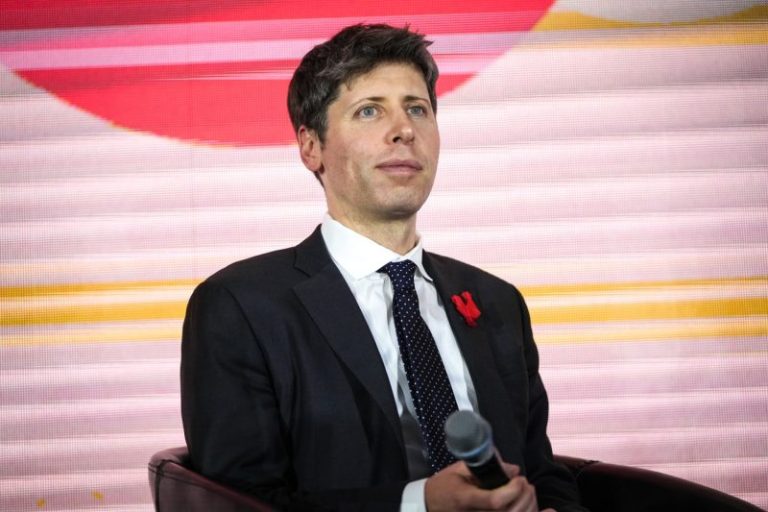
OpenAI on Wednesday announced that it now has 3 million paying business users, up from the 2 million it reported in February.

The San Francisco-based startup rocketed into the mainstream in late 2022 with its consumer-facing artificial intelligence chatbot ChatGPT, and began launching workplace-specific versions of the product the following year.

The 3 million users include ChatGPT Enterprise, ChatGPT Team and ChatGPT Edu customers, OpenAI said.

“There’s this really tight interconnect between the growth of ChatGPT as a consumer tool and its adoption in the enterprise and in businesses,” OpenAI’s chief operating officer Brad Lightcap told CNBC in an interview. The company supported 400 million weekly active users as of February.

OpenAI expects revenue of $12.7 billion this year, a source confirmed to CNBC. In September of last year, the company expected to see an annual loss of $5 billion on $3.7 billion in revenue, according to a person close to the company who asked not to be named because the financials are confidential.

Lightcap said OpenAI is seeing its business tools adopted across industries, including highly regulated sectors like financial services and health care. Companies including Lowe’s, Morgan Stanley and Uber are users, OpenAI said.

The company also announced new updates to its business offerings on Wednesday.

ChatGPT Team and ChatGPT Enterprise users can now access “connectors,” which will allow workers to pull data from third-party tools like Google Drive, Dropbox, SharePoint, Box and OneDrive without leaving ChatGPT. Additional deep research connectors are available in beta.

OpenAI launched another capability called “record mode” in ChatGPT, which allows users to record and transcribe their meetings. It’s initially available with audio only.

Record mode can assist with follow up after a meeting and integrates with internal information like documents and files, the company said. Users can also turn their recordings into documents through the company’s Canvas tool.

Lightcap said enterprise customers have been asking for updates like these, and that they will help make OpenAI’s workplace offerings more useful.

“It’s got to be able to do tasks for you, and to do that, it’s got to really have knowledge of everything going on around you and your work,” Lightcap said. “It can’t be the intern locked in a closet. It’s got to be able to see what you see.”

OpenAI said it has been signing up nine enterprises a week, and Lightcap said the company will try to sustain that pace over time.

“People are starting to really figure out that this is a part of the modern tool stack in the knowledge economy that we live in,” he said.

This post appeared first on NBC NEWS

A nationwide coordinated crackdown on retail crime — what authorities are calling the first of its kind — led to hundreds of arrests in 28 states last week.

The blitz, led by Illinois’ Cook County regional organized crime task force, involved more than 100 jurisdictions and over 30 retailers including Home Depot, Macy’s, Target, Ulta Beauty, Walgreens, Kroger and Meijer.

“When you give specific focus to a crime, it reverberates,” Cook County Sheriff Tom Dart told CNBC. “When they see it is being prosecuted and taken seriously, it deters conduct. They don’t want to get caught.”

Organized retail crime — a type of shoplifting where groups of thieves work together in targeted operations to turn stolen goods into cash — has grown in scale and scope in recent years. CNBC previously reported on the extensive law enforcement efforts to take down retail crime organizations.

While aggregate numbers for retail theft are difficult to quantify, retailers reported 93% more shoplifting incidents on average in 2023 compared with 2019, according to a survey conducted by the National Retail Federation. Those surveyed also reported a 90% increase in the associated dollar losses over that same time period.

Some critics point to a lack of enforcement and felony thresholds for allowing criminals to continue committing theft. It’s something Cook County State’s Attorney Eileen O’Neill Burke has been focused on since taking office in December.

On her first day in office, O’Neill Burke said prosecutors would pursue felony retail theft charges in accordance with state law, when the value of the goods exceeds $300 or when the suspect already has a felony shoplifting conviction.

Before her taking office, retail theft felonies were charged only if the value of the stolen goods was $1,000 or more or if the suspect had 10 or more prior convictions.

Since Dec. 1, the Cook County State’s Attorney’s Office has filed charges in 1,450 felony retail theft cases, the office said.

The goals of the coordinated operation, O’Neill Burke told CNBC, is “to have one day where we focus and concentrate on [retail theft] and we share intelligence about it — about what we learned about the network, so that gives us more tools on how to take this network down.”

It was the coordination between law enforcement and prosecuting attorneys that got a number of the involved retailers to participate in the blitz.

“Collaboration is key to making a meaningful impact,” Ulta Beauty Senior Vice President of Loss Prevention Dan Petrousek told CNBC. “That’s why we were proud to participate in the National ORC Blitz alongside dedicated law enforcement and prosecutorial partners.”

Ulta Beauty had teams participating across nine states in last week’s operation, providing law enforcement with information on incidents of retail crime.

“Organized retail crime remains one of the most significant challenges in our industry,” said Marty Maloney, Walgreens director of media relations. “In this most recent operation we worked closely with law enforcement partners across nearly 20 cities and at over 40 locations to help curb this trend.”

A representative for Home Depot told CNBC that while overall theft is down, investigated incidents of organized retail crime are still up double digits year over year.

Now that the operation has concluded, the group is pulling together each jurisdictions’ observations and sharing data to continue to help crack down on retail theft.

Other participating retailers reached for comment by CNBC, including Macy’s, T.J. Maxx and Target, said they’re committed to partnering with law enforcement and pushing for stronger laws to combat retail crime.

California Highway Patrol arrests retail crime suspect in Long Beach, CA.Courtesy: California Highway Patrol.

This post appeared first on NBC NEWS

Snacktime is nigh at the Golden Arches.

On June 3, McDonald’s announced exactly when the Snack Wrap will return to partipating restaurants nationwide: July 10. And, thankfully, it’s not a limited-time offer, either — it’s here for good.

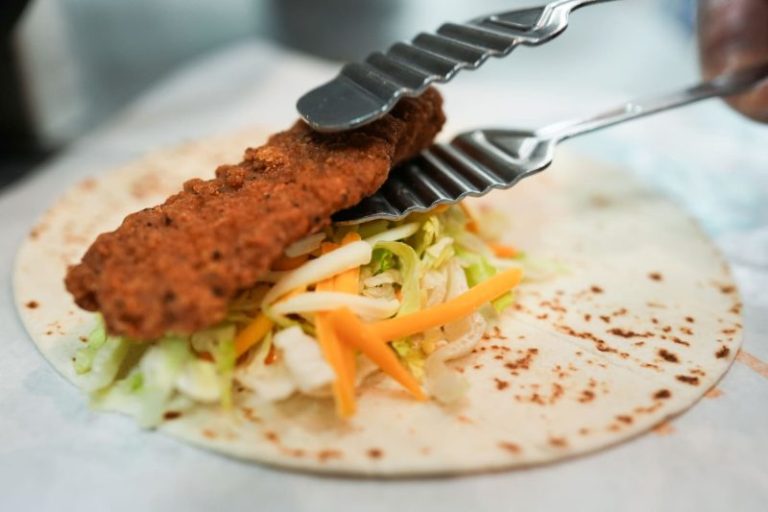
The Snack Wrap, which has been off menus for almost a decade, features one of the chain’s new McCrispy Strips — a chicken strip made with all-white meat — and is topped with shredded lettuce and shredded cheese, wrapped in a flour tortilla.

This go-round, the Snack Wrap comes in two flavors: Spicy, which McDonald’s says “brings the heat with a habanero kick” reminiscent of its Spicy McCrispy sandwich; and Ranch, which “delivers a satisfying burst of cool ranch goodness,” according to the brand, along with hints of garlic and onion.

Customers can get the Snack Wrap on its own or as a combo meal, which will come with two wraps, a medium fries and your drink of choice.

It’s been a long journey for Mickey D’s devotees: On Dec. 5, Joe Erlinger, president of McDonald’s USA, first revealed that the Snack Wrap was on its way back while discussing the new McValue menu.

“The Snack Wrap will be back in 2025,” Erlinger said at the time, declining to reveal the exact date. “It has a cult following, I get so many emails into my inbox about this product.”

Then, on April 15, the chain teased the official release date: “snack wraps 0x.14.2025,” it posted on X, without specifying the month.

Now, for the official rollout, McDonald’s is leaning into the fact that for years, fans have inundated the chain with pleas to reinstate the item after it was kicked off menus in 2016. A Change.org petition started in 2021 in its honor garnered over 17,000 signatures, and fans resorted to posting TikToks and making dedicated Instagram accounts devoted to bringing it back.

While the chicken-craving masses waited for the Snack Wrap’s return, other fast-food chains have dropped their own versions: In March 2023, Wendy’s introduced its Grilled Chicken Ranch Wrap; in July 2023, Taco Bell reintroduced its Crispy Chicken Taco for a limited time; and in August 2023, Burger King launched BK Royal Crispy Wraps for a limited time, too.

Most recently, a single day before McDonald’s announcement, Popeyes dropped its own Chicken Wraps as a limited-time offer. Let the wrap battle commence.

This post appeared first on NBC NEWS

In this market update, Frank breaks down recent developments across the S&P 500, crypto markets, commodities, and international ETFs. He analyzes bullish and bearish chart patterns, identifies key RSI signals, and demonstrates how “Go No Go Charts” can support your technical analysis. You’ll also hear updates on Ethereum, Bitcoin, the Spain ETF, silver miners, USO (oil), and sector ETFs like XLP and XLV.

This video originally premiered on June 3, 2025.

You can view previously recorded videos from Frank and other industry experts at this link.

In this video, Dave shares his weekly stock scan strategy used to identify bullish stock trends. He illustrates how to set up this powerful scan, reveals the tips and tricks he uses to identify the most constructive patterns, and explains the four winning chart setups that tend to come up week after week.

Whether you’re a beginner or seasoned trader, this guide will enhance your charting process and help you uncover winning trade setups using technical analysis.

This video originally premiered on June 3, 2025. Watch on StockCharts’ dedicated David Keller page!

Previously recorded videos from Dave are available at this link.